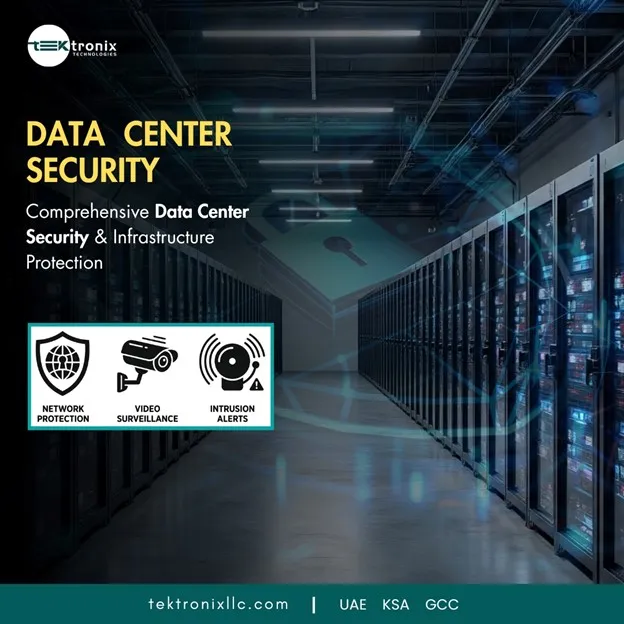

Data Center Security has never been more urgent for enterprises and government entities operating in Kuwait and across the Gulf. As organizations accelerate their digital transformation agendas — migrating mission-critical workloads to co-location facilities, hybrid clouds, and on-premises data halls — the attack surface expands in direct proportion. From state-sponsored cyber intrusions targeting Kuwait's energy sector to ransomware campaigns crippling GCC financial institutions, the threat landscape demands a multi-layered, proactively managed security posture. This guide explains why the time for advanced data center security solutions in Kuwait is right now, and what a comprehensive protection framework must look like.
1. The Escalating Threat Environment in Kuwait and the GCC
Kuwait's strategic position as a hydrocarbon exporter and regional financial hub makes its digital infrastructure a high-value target. Meanwhile, Saudi Arabia's Vision 2030, the UAE's digital economy initiatives, and Qatar's post-World Cup technology investments have collectively transformed the GCC into one of the world's fastest-growing data centre markets — and one of the most actively targeted by adversaries.
Key threat vectors that make advanced Data Center Threat Detection non-negotiable across the region include:
- Advanced Persistent Threats (APTs): Nation-state actors routinely probe GCC energy, water, and transport infrastructure. Kuwait's National Cybersecurity Centre (NCSC) has issued multiple threat advisories in the past two years.
- Ransomware-as-a-Service (RaaS): Criminal syndicates deploy automated ransomware toolkits that specifically enumerate unsecured data centre endpoints. Recovery costs in the GCC average USD 2.1 million per incident according to regional CISO surveys.
- Insider Threats: Privileged users — contractors, visiting engineers, and disgruntled employees — represent the most persistent physical and logical access risk inside co-location and enterprise data halls.
- Supply Chain Compromise: Hardware and firmware implants introduced during procurement or maintenance are increasingly discovered in GCC deployments, underscoring the need for tamper-evident physical controls.
- Regulatory Non-Compliance Exposure: Kuwait's Communications and Information Technology Regulatory Authority (CITRA) and the Central Bank of Kuwait (CBK) mandate specific data protection and incident response standards. Non-compliance carries substantial financial and reputational penalties.
2. The Six-Layer Security Model: A Framework for GCC Data Centers
Tektronix LLC's approach to Data Center Security Kuwait deployments is founded on a defence-in-depth philosophy — multiple independent security layers, each designed to contain and detect threats that bypass the layer above it. This model directly mirrors international frameworks including NIST SP 800-53, ISO/IEC 27001:2022, and the Uptime Institute's Security Operational Excellence (SOE) standard.
2.1 Data Center Firewalls — The Perimeter and Microsegmentation Layer
Data Center Firewalls in modern GCC deployments go far beyond traditional north-south traffic filtering. Next-generation firewall (NGFW) platforms — deployed at the perimeter, between network tiers, and as host-based controls — inspect east-west traffic flows inside the data hall, which is where lateral movement attacks proliferate once an initial foothold is established. For Kuwait's financial and government clients, Tektronix LLC implements stateful deep-packet inspection, application-layer visibility, and encrypted traffic analysis (ETA) to detect command-and-control beaconing even within TLS-encrypted sessions.
Critical firewall capabilities for GCC enterprise data centers:
- Microsegmentation: Workloads are isolated into granular security zones, preventing lateral movement even after a breach
- Encrypted traffic analysis: Identifies malware communications hidden within HTTPS/TLS without breaking encryption
- Geo-IP blocking and threat-intelligence feeds: Automated blocking of known malicious IP ranges updated in real time
- Dual-stack IPv4/IPv6 rule consistency: Eliminates shadow IPv6 paths exploited by attackers in dual-stack environments
2.2 Data Center Encryption — Protecting Data at Rest and in Transit
Data Center Encryption is the foundational control that renders stolen data operationally useless to adversaries. For Kuwait's banking sector and government ministries, encryption must be applied across three states: data at rest (storage arrays, backup media, and tape), data in transit (inter-site replication, management traffic, and cloud egress), and data in use (memory encryption for sensitive compute workloads using technologies such as AMD SEV or Intel TDX).
Tektronix LLC implements FIPS 140-3 validated encryption modules and hardware security modules (HSMs) for key management, ensuring that cryptographic keys are never exposed in software and that key custodianship complies with CBK and CITRA regulatory requirements. Key lifecycle management — generation, rotation, escrow, and destruction — is automated through an enterprise key management system (EKMS) integrated with the client's identity governance platform.
2.3 Data Center Access Control — Zero-Trust Identity Verification
Data Center Access Control in a zero-trust architecture means that neither physical proximity nor network location confers implicit trust. Every access request — whether from a sysadmin at a console, a service account initiating an API call, or a contractor badging into a cage — is authenticated, authorised, and logged against a continuously updated policy engine.
For Kuwait and GCC co-location deployments, Tektronix LLC deploys:
- Multi-factor authentication (MFA) enforced at every privileged access gateway, including jump servers and out-of-band management interfaces
- Privileged access workstations (PAWs) with session recording and keystroke logging for all administrative actions
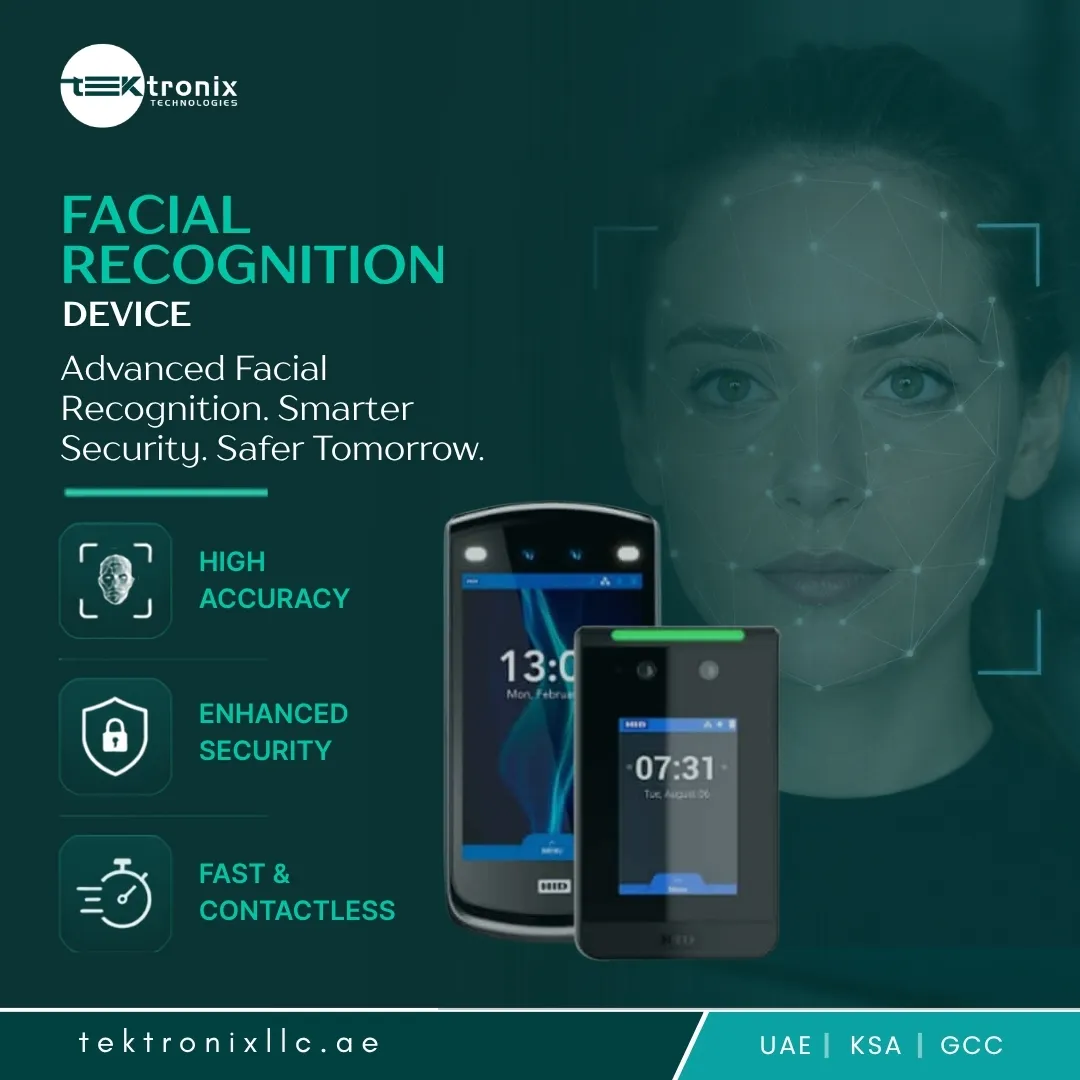
- Biometric and smart-card physical access control integrated with the logical identity provider (IdP) for unified provisioning and de-provisioning
- Time-bound, just-in-time (JIT) access for third-party maintenance contractors — eliminating standing privileged accounts
2.4 Data Center Surveillance — Physical Security Intelligence
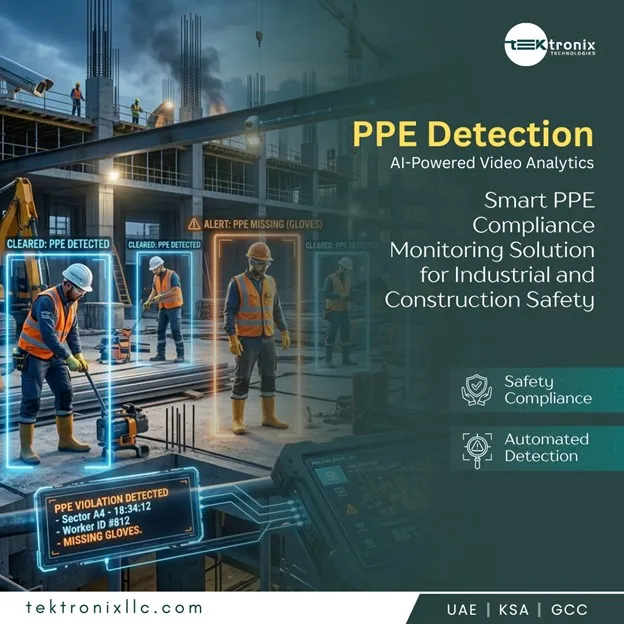
Data Center Surveillance extends security visibility from the digital plane into the physical environment. Modern surveillance architectures deployed by Tektronix LLC in Kuwait combine AI-powered video analytics, thermal imaging, and environmental monitoring to detect not only unauthorised human presence but also anomalous hardware interactions — such as a technician connecting an unapproved USB device or a visitor photographing rack configurations.
Surveillance system components for enterprise GCC deployments include:
- 4K IP cameras with edge AI analytics: Real-time detection of tailgating, loitering, and object removal without requiring cloud upload of video data
- Thermal perimeter detection: Infrared beam arrays and thermal cameras covering loading docks, raised-floor access points, and cable vault entries
- Environmental sensors: Temperature, humidity, water leakage, and airflow anomaly detection integrated with the security information and event management (SIEM) platform
- Video evidence retention: Encrypted, tamper-evident video archives retained per CITRA and client audit requirements (typically 90–180 days)
2.5 Data Center Intrusion Detection — Active Threat Identification
Data Center Intrusion Detection systems (IDS/IPS) provide the analytical layer that correlates events across physical, network, and identity planes to identify attack patterns that no individual control would detect in isolation. Tektronix LLC deploys network-based IDS (NIDS) sensors at critical traffic choke points, host-based IDS (HIDS) agents on servers and hypervisors, and file integrity monitoring (FIM) on operating systems and configurations — feeding all telemetry into a unified SIEM with Kuwait-specific threat intelligence enrichment.
Detection capabilities tuned for GCC threat actors include:
- Behavioural analytics: Baseline deviation detection that identifies anomalous authentication patterns, data exfiltration volumes, and unusual API call sequences
- Deception technology: Honeypots and canary tokens placed inside production networks to identify lateral movement with zero false-positive noise
- OT/IT convergence monitoring: Protocol-aware inspection of SCADA and BAS traffic in data centres with integrated building or industrial systems — common in Kuwait's oil-sector facilities
2.6 Remote Monitoring and Security Operations
Tektronix LLC's 24/7 Security Operations Centre (SOC), staffed by GCC-based analysts with Arabic-language capability, provides continuous threat monitoring, incident triage, and coordinated response for Kuwait and regional clients. The SOC operates on a tiered SOAR (Security Orchestration, Automation, and Response) platform that reduces mean time to detect (MTTD) to under 4 minutes and mean time to respond (MTTR) to under 15 minutes for Severity-1 incidents — benchmarks verified through quarterly red-team exercises.
3. Data Center Security GCC: Regulatory and Compliance Landscape
Data Center Security GCC strategies must navigate a complex and rapidly evolving regulatory environment. Organisations operating across multiple Gulf states face overlapping frameworks from Kuwait's CITRA and CBK, Saudi Arabia's NCA (National Cybersecurity Authority) Essential Cybersecurity Controls (ECC), the UAE's NESA IA Standards and ADIO data protection regulations, and Qatar's National Cybersecurity Framework (NCSC-Q). Failure to align with these frameworks exposes organisations to licensing suspension, cross-border data transfer restrictions, and financial penalties that can exceed USD 5 million per breach event.
Tektronix LLC's compliance engineering practice delivers:
- Gap assessments mapped to NCA ECC, ISO/IEC 27001:2022, PCI-DSS v4.0, and SWIFT CSP simultaneously
- Pre-built regulatory evidence packs that reduce external audit preparation time by up to 60%
- Continuous compliance monitoring dashboards with jurisdiction-specific risk scoring visible to CISO, CIO, and board-level stakeholders
- Data residency architecture design ensuring Kuwait and GCC personal and financial data never traverses non-compliant jurisdictions
4. Why Tektronix LLC in Data Center Security
Selecting the right security partner requires the same rigour applied to any critical infrastructure decision. When evaluating providers of enterprise Data Center Threat Detection and protection for Kuwait and GCC deployments, the following criteria are essential:
- Experience: Tektronix LLC has engineered and commissioned data centre security frameworks for Kuwait government entities, GCC financial institutions, and multinational energy operators — with documented case studies available under NDA.
- Expertise: Our security engineering team holds CISSP, CISM, CEH, and Cisco CCIE Security certifications, supported by vendor-authorised specialisations from Palo Alto Networks, Fortinet, Cisco, and CrowdStrike.
- Authoritativeness: Tektronix LLC participates in Kuwait's NCSC threat-sharing programme and is a founding member of the GCC Cybersecurity Alliance technical working group on data centre standards.
- Trustworthiness: ISO/IEC 27001:2022 certified operations, independently penetration-tested annually by a CREST-accredited third party, with full scope disclosure to clients.
5. Implementation Pathway: From Risk Assessment to Hardened Operations
A structured deployment methodology ensures that security investments deliver measurable risk reduction without disrupting business-critical data centre operations:
- Phase 1 — Threat Modelling & Risk Assessment: Enumerate assets, map attack surfaces, and prioritise risks using MITRE ATT&CK for ICS and Enterprise frameworks aligned to Kuwait and GCC threat actor profiles.
- Phase 2 — Architecture Design: Engineer the six-layer security stack — firewalls, encryption, access control, surveillance, intrusion detection, and SOC integration — into a validated reference architecture.
- Phase 3 — Deployment & Integration: Commission hardware and software controls, integrate with existing ITSM and SIEM platforms, and execute vendor-specific hardening benchmarks (CIS Benchmarks, DISA STIGs).
- Phase 4 — Validation & Red-Team Exercise: Conduct penetration testing, purple-team exercises, and table top simulations to validate detection and response capabilities before go-live.
- Phase 5 — Managed Security & Continuous Improvement: Transition to 24/7 SOC-managed operations with quarterly threat landscape reviews, annual compliance recertification, and continuous tuning of detection rules.
6. Business Case: The ROI of Proactive Data Center Protection
The financial case for investing in advanced data centre security in Kuwait is unambiguous:
- Breach cost avoidance: The IBM Cost of a Data Breach Report places the average GCC breach cost at USD 8.75 million — significantly exceeding the total lifecycle cost of a comprehensive six-layer security programme.
- Operational continuity: Ransomware-induced downtime costs GCC organisations an average of USD 300,000 per hour. Real-time intrusion detection with automated containment reduces blast radius and recovery time by up to 70%.
- Regulatory fine avoidance: A single NCA ECC non-compliance finding in Saudi Arabia can result in operational licence suspension. Continuous compliance monitoring eliminates this existential risk.
- Cyber insurance premium reduction: Documented, independently audited security controls consistently reduce cyber insurance premiums by 20–35% for GCC enterprise clients.
- Customer and investor confidence: For Kuwait-listed companies and GCC sovereign wealth fund portfolio entities, a certified security posture is increasingly a prerequisite for institutional investment and enterprise procurement.
Conclusion
The question for Kuwait and GCC enterprises is no longer whether to invest in advanced Data Center Security — it is how quickly a comprehensive framework can be put in place. The combination of robust Data Center Firewalls, FIPS-validated Data Center Encryption, zero-trust Data Center Access Control, AI-powered Data Center Surveillance, and behavioural Data Center Intrusion Detection, unified under a 24/7 threat-monitoring SOC, represents the gold standard for protecting mission-critical digital infrastructure in the region.
As Data Center Security Kuwait and broader Data Center Security GCC requirements continue to tighten under evolving regulatory mandates and an increasingly sophisticated threat landscape, organisations that act now will establish a durable competitive and compliance advantage. Tektronix LLC's proven six-layered data center security framework is engineered specifically for the Kuwait and GCC environment — contact our security team today for a complimentary risk assessment and architecture review.
FAQs
FAQ 1: What makes Data Center Threat Detection different in Kuwait compared to Western deployments?
Kuwait and GCC data centres face a distinct threat actor profile — including state-sponsored APT groups targeting hydrocarbon infrastructure and regional financial systems — that differs significantly from threats typical in European or North American environments. Detection systems must be tuned with GCC-specific threat intelligence feeds, Arabic-language social engineering indicators, and OT/IT convergence monitoring for facilities integrated with building automation or industrial control systems. Tektronix LLC's SOC maintains Kuwait-specific threat actor TTP libraries updated in partnership with Kuwait's NCSC, ensuring detection rules reflect real regional adversary behaviour rather than generic global baselines.
FAQ 2: How does Data Center Encryption interact with compliance requirements from Kuwait's Central Bank (CBK)?
CBK's Information Security Regulations require financial institutions to encrypt all sensitive data at rest and in transit using algorithms approved by international standards bodies. FIPS 140-3 validated AES-256 encryption for storage and TLS 1.3 for transit fully satisfy CBK requirements. Beyond algorithm selection, CBK mandates that encryption key management be subject to dual-control and split-knowledge procedures — which Tektronix LLC implements through HSM-based EKMS platforms with role-separated key custodian workflows. Annual key management audits are conducted by CBK-approved external auditors, and Tektronix LLC provides all necessary evidence artefacts as part of its managed security service.
FAQ 3: Can Data Center Access Control integrate with our existing Active Directory and HR systems?
Yes. Tektronix LLC's zero-trust access control architecture supports full integration with Microsoft Active Directory, Azure AD (Entra ID), and LDAP-based directories through SCIM and SAML 2.0 federation. HR system integration — via ServiceNow, SAP SuccessFactors, or Oracle HCM — enables automated provisioning and immediate de-provisioning of physical and logical access when an employee or contractor relationship changes. This eliminates the orphaned account risk that is consistently ranked as the top access control finding in Kuwait CITRA compliance audits. The unified identity fabric also provides the complete access audit trail required for CBK, NCA ECC, and ISO/IEC 27001 certification evidence.
FAQ 4: What is the typical response time for Data Center Intrusion Detection alerts managed by Tektronix LLC's SOC?
Tektronix LLC's GCC-based SOC achieves a mean time to detect (MTTD) of under 4 minutes and a mean time to respond (MTTR) of under 15 minutes for Severity-1 incidents — performance benchmarks validated through quarterly adversarial simulation exercises. Alert enrichment is automated through the SOAR platform, which correlates network IDS, HIDS, and identity events in real time, reducing analyst triage time by 65% compared to manual investigation. For Kuwait clients under CBK's 72-hour breach notification requirement, these response SLAs ensure that the organisation has actionable containment data well within the regulatory window.
FAQ 5: How does Tektronix LLC's Data Center Surveillance solution comply with Kuwait's personal data protection requirements?
Kuwait's draft Personal Data Protection Law (aligned with GCC Model Law principles) restricts continuous biometric and video surveillance to defined lawful purposes, requires data minimisation, and mandates data subject notification where applicable. Tektronix LLC's surveillance architecture addresses these requirements through on-premises AI inference — facial recognition and biometric analysis are processed at the edge and never transmitted to cloud platforms, limiting data exposure. Video archives are encrypted with client-controlled keys and subject to configurable retention policies that automatically purge recordings beyond the defined lawful retention period. A Data Protection Impact Assessment (DPIA) is conducted during design phase for every surveillance deployment to identify and mitigate privacy risks before commissioning.
For more information contact us on:
Tektronix Technology Systems Dubai-Head Office
+971 55 232 2390
Data Center Security
Rack-level Security
Data Center Cybersecurity





























Sign in to leave a comment.