
If you are running a heavy-duty facility in Sydney, you already know that the stakes are different than a standard retail shop or office block. From the manufacturing hubs in Smithfield to the massive logistics warehouses out in Western Sydney, the electrical grid is the literal heartbeat of the operation. As a contractor who has spent years on factory floors, I’ve seen exactly what happens when a business owner treats their high-voltage infrastructure like a residential utility. It usually ends with a catastrophic equipment failure, a massive insurance headache, or an unplanned shutdown that costs five figures in lost productivity before lunch.
Industrial power is a beast. We aren't just talking about a few extra power points; we are talking about massive inductive loads, harmonic distortion, and 24/7 duty cycles that place immense stress on every component in your switchboard. To keep these systems running, you don't just need a guy with a toolbox; you need a specialized Industrial Electrician Sydney who understands the engineering behind the power. Reliability in this sector isn't an accident; it is the result of a rigorous maintenance strategy and a deep understanding of how industrial machinery interacts with the grid.
The Engineering Divide: Why Industrial Capacity is Unique
The biggest mistake I see facility managers make is assuming a general electrician can handle a factory-scale problem. The physics of electricity change when you move from single-phase domestic power to the high-capacity demands of a production plant.
Mastering Three-Phase Power and Motor Controls
Almost every heavy machine in a Sydney plant operates on a three-phase system. While it is far more efficient for driving large motors, it is also significantly more complex to balance. If your phases are even slightly out of alignment, your motors will hum, vibrate, and run hot. This isn't just an efficiency issue—it is a death sentence for your equipment. A qualified Industrial Electrician doesn't just check for "live" wires; we conduct detailed load analysis to ensure your "power factor" is optimized. This reduces the strain on your main switchboard and prevents the heat buildup that causes premature insulation failure in your motors.
PLC Troubleshooting and Automation Reliability
Modern industry is driven by Programmable Logic Controllers (PLCs). These are the brains behind your assembly lines, packaging machines, and conveyor systems. When an automation system glitches, the problem is rarely a simple blown fuse. It is often a communication error between the high-voltage power delivery and the low-voltage control logic. Troubleshooting these complex interfaces requires a contractor who understands both sides of the coin. We focus on isolating interference issues and ensuring your sensors and relays are firing exactly when they should, keeping your automation as precise as the day it was installed.
Risk Mitigation: Compliance as a Business Asset
In an industrial setting, safety is a legal and operational necessity. The AS/NZS 3000 standards are the absolute floor, not the ceiling. For a Sydney plant manager, staying compliant is about protecting the business from the catastrophic legal and financial fallout of a workplace incident.
Thermal Imaging: Detecting the Invisible Fire
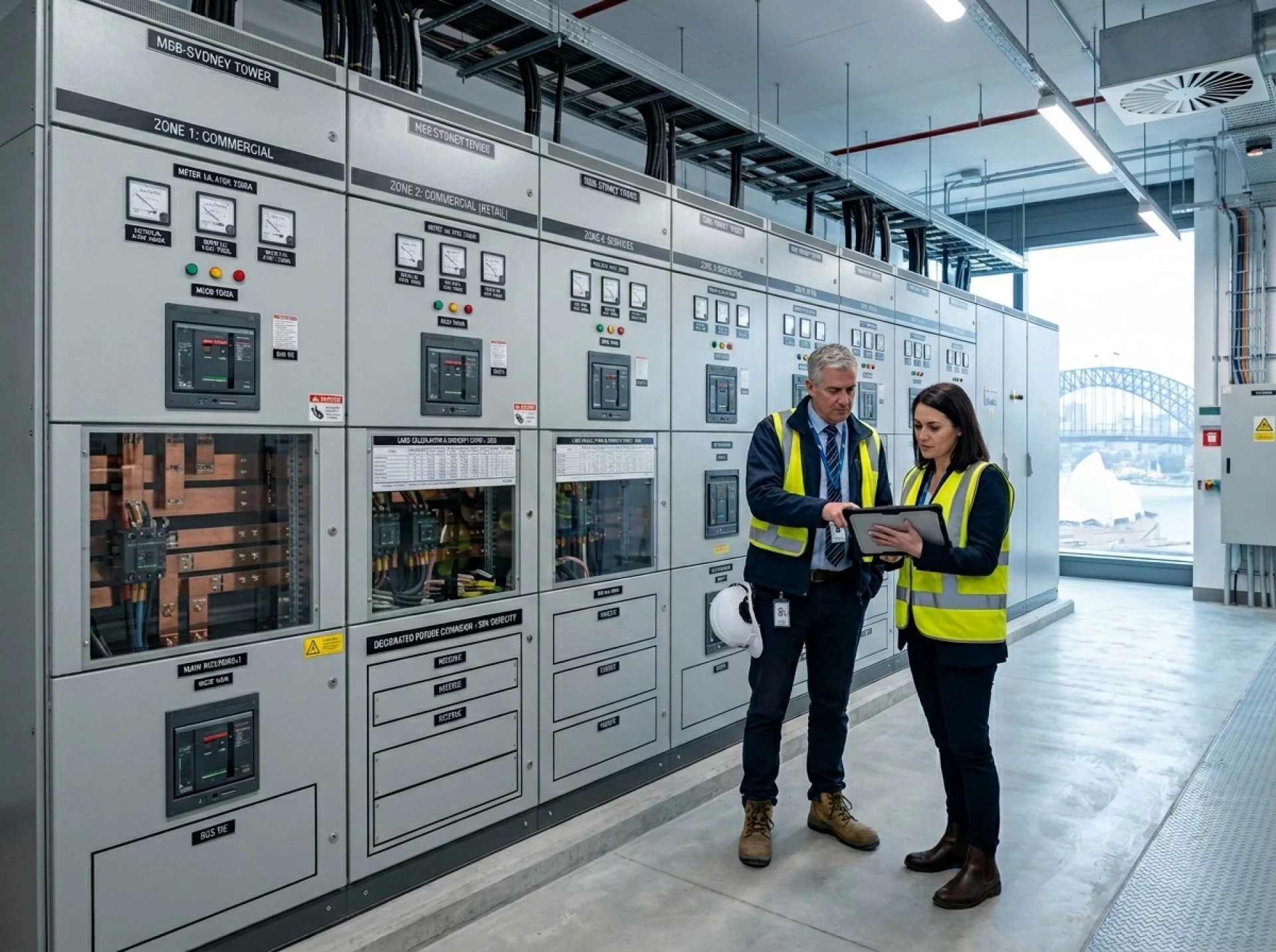
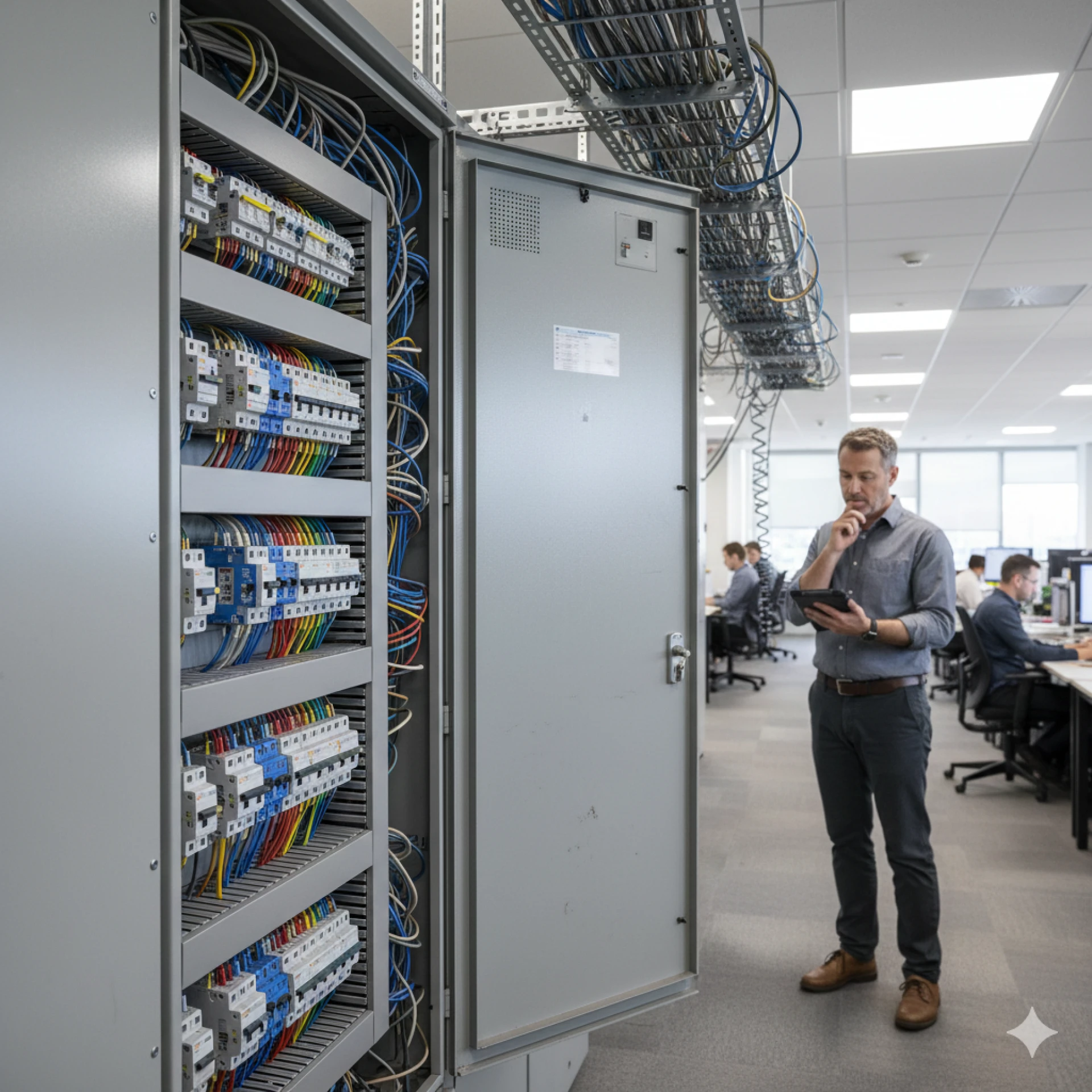
Industrial switchboards operate under immense thermal stress. Over time, the constant vibration from heavy machinery can loosen connections, leading to "hot spots" that are invisible to the eye but are a primary cause of industrial fires. We use infrared thermal imaging to scan your distribution boards while they are under full operational load. This allows us to identify a failing component weeks before it fails. Replacing a single lug during a scheduled break is a minor cost; replacing a burnt-out main switchboard after a fire is a business-ending event.
Hazardous Area Requirements and Dust Ignition Protection
Many Sydney facilities, particularly those in chemical processing or food manufacturing, deal with fine dust or flammable vapors. Standard electrical gear in these areas is a massive liability. We handle the installation of intrinsically safe wiring and explosion-proof enclosures. This requires a contractor who understands the specific Zoned classifications and can provide the documentation required by insurance providers and WorkCover. If you are operating in a high-risk environment, "standard" work is simply not an option.
Improving the Bottom Line Through Energy Intelligence
With Sydney’s energy prices continuing to climb, your electrical infrastructure should be working to save you money, not just costing you. If you haven't looked at your power quality in the last 24 months, you are likely bleeding cash.
Power Factor Correction and Harmonic Filtering
Large motors and variable speed drives create "reactive power" and "harmonics" that clog up your electrical system. This leads to inefficient energy use and potential fines from the energy distributor. We install Power Factor Correction (PFC) units that act like a buffer for your electrical system, ensuring you are only drawing and paying for the active power you actually use. This is one of the fastest returns on investment an industrial facility can make, often paying for itself within 12 to 18 months through reduced utility bills.
Industrial LED Retrofitting and Site Safety
Warehouse lighting is often left on 24/7, even in zones with low foot traffic. Retrofitting old metal-halide or mercury vapor lamps with high-output LEDs isn't just about brightness; it is about control. By integrating motion sensors and daylight harvesting, we can slash lighting overheads by up to 70%. In a large Sydney warehouse, that represents thousands of dollars back into the operating budget every single quarter. Furthermore, better lighting improves forklift safety and picking accuracy, further boosting your operational efficiency.
Choosing a Partner for the Long Haul
An industrial contractor should be more than a service provider; they should be a strategic partner who understands your production goals. We know that in the Sydney market, you are competing on efficiency and reliability. We provide the expertise that allows you to focus on your output while we ensure the power behind it is stable, safe, and cost-effective. Your facility’s electrical infrastructure is its most critical asset—make sure it’s handled by someone who understands the weight of your operations.
Sign in to leave a comment.