Why Sydney Commercial Buildings Experience Power Issues During Peak Hours
Power issues in commercial buildings don’t usually happen randomly.
They happen at the worst possible time — peak hours.
Midday. Full occupancy. HVAC running hard. Equipment in constant use.
And suddenly:
- Breakers trip
- Lights flicker
- Systems slow down
- Operations get interrupted
It feels sudden.
But it isn’t.
Peak-hour power issues are almost always the result of decisions made much earlier — during design, installation, or expansion.
Peak Demand Exposes Weak Systems
During low or moderate usage, most electrical systems appear stable.
There’s enough breathing room.
But peak hours remove that margin.
- Staff are fully present
- HVAC demand increases
- Lighting is fully utilised
- Equipment runs simultaneously
- Additional loads (kitchens, meeting rooms, devices) stack on top
If the system wasn’t designed for realistic simultaneous demand, peak hours will expose it.
That’s when hidden weaknesses surface.
The Core Issue: Underestimated Load
One of the most common causes of peak-hour instability is underestimated load during design.
This happens when:
- Diversity factors are too optimistic
- Equipment schedules aren’t stress-tested
- Future growth isn’t included
- Simultaneous usage isn’t properly modelled
On paper, the system works.
In reality, peak overlap pushes it beyond comfortable limits.
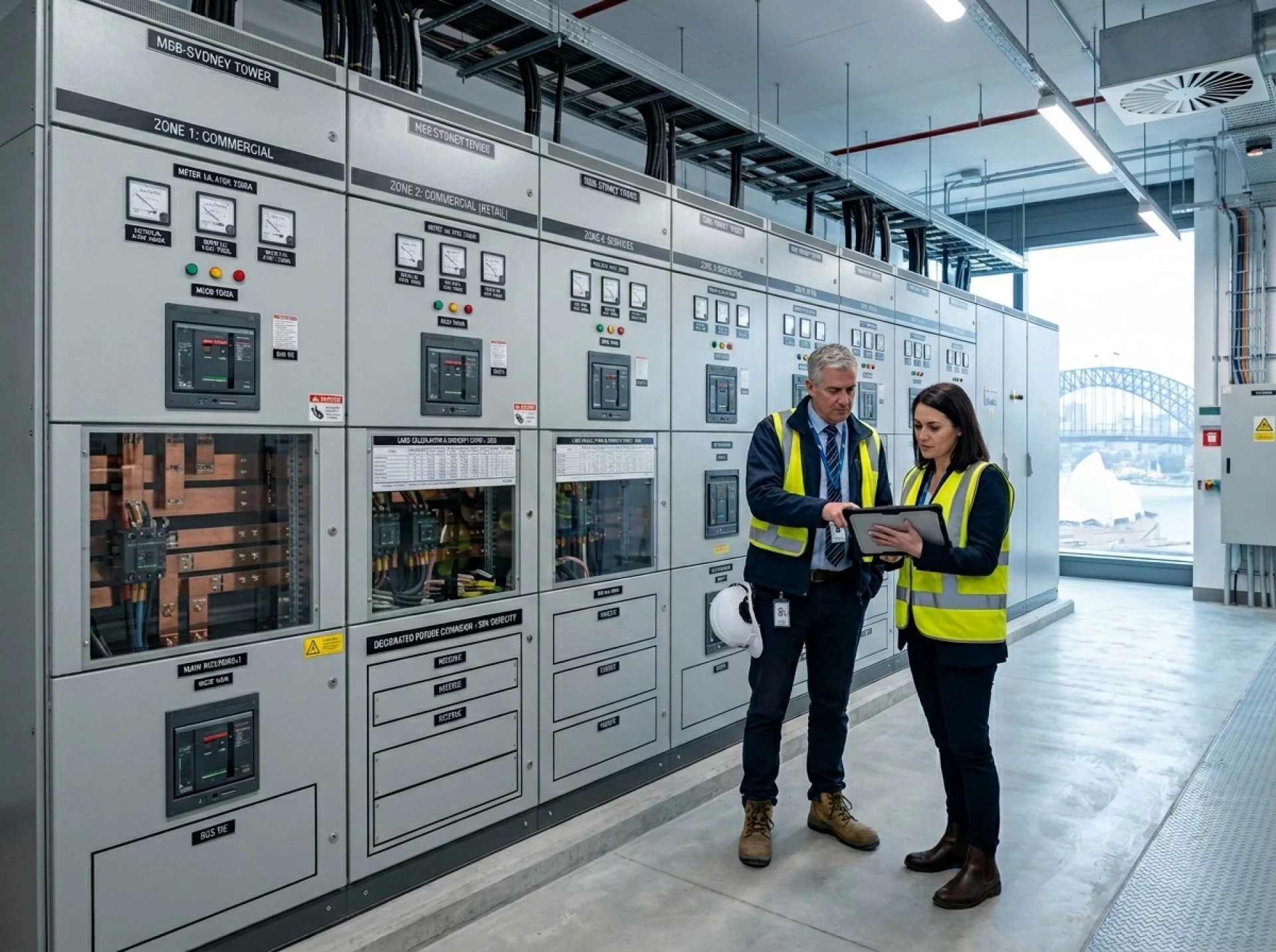
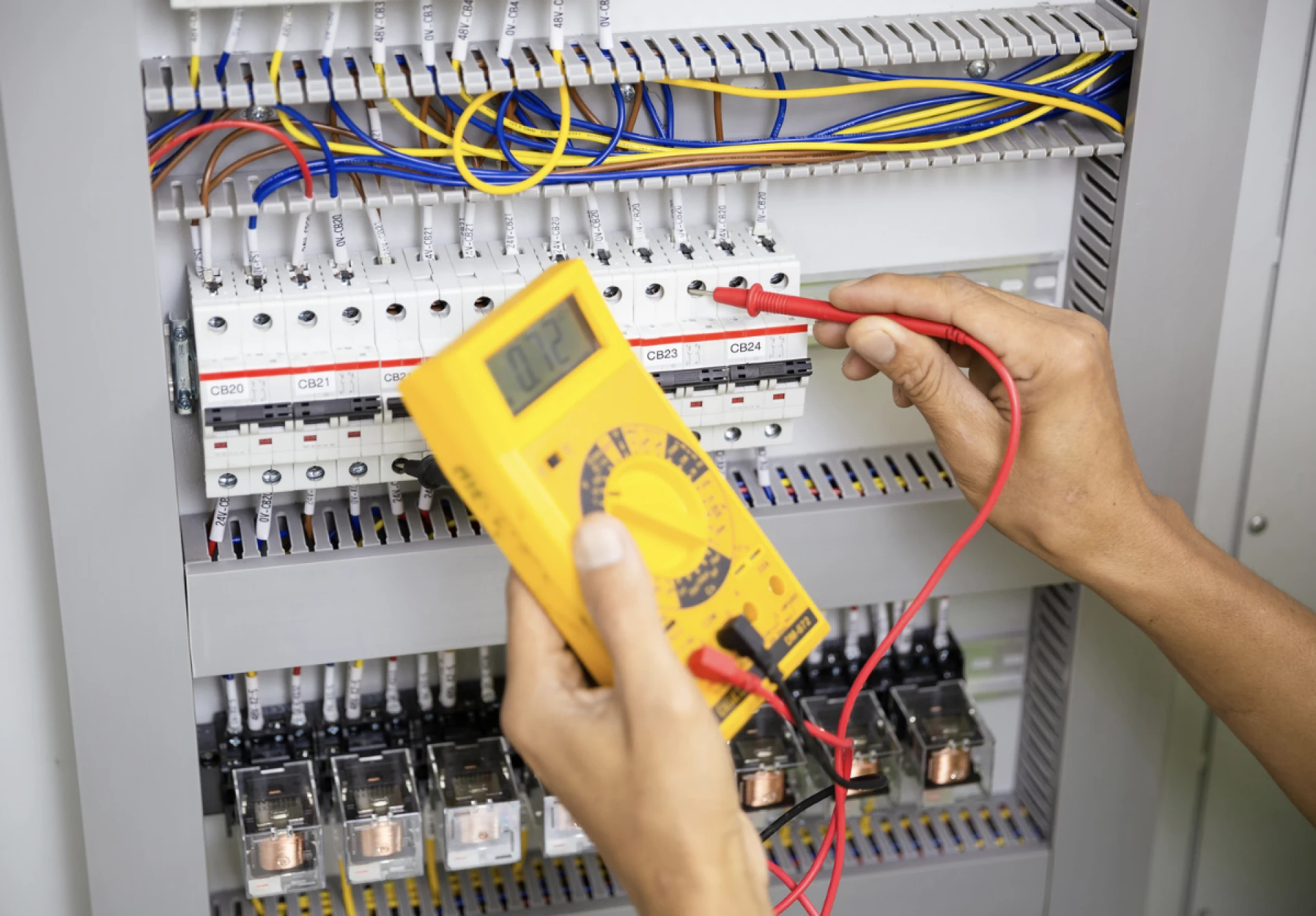
That leads to nuisance tripping, voltage instability, and thermal stress in switchboards.
Lack of Headroom Amplifies the Problem
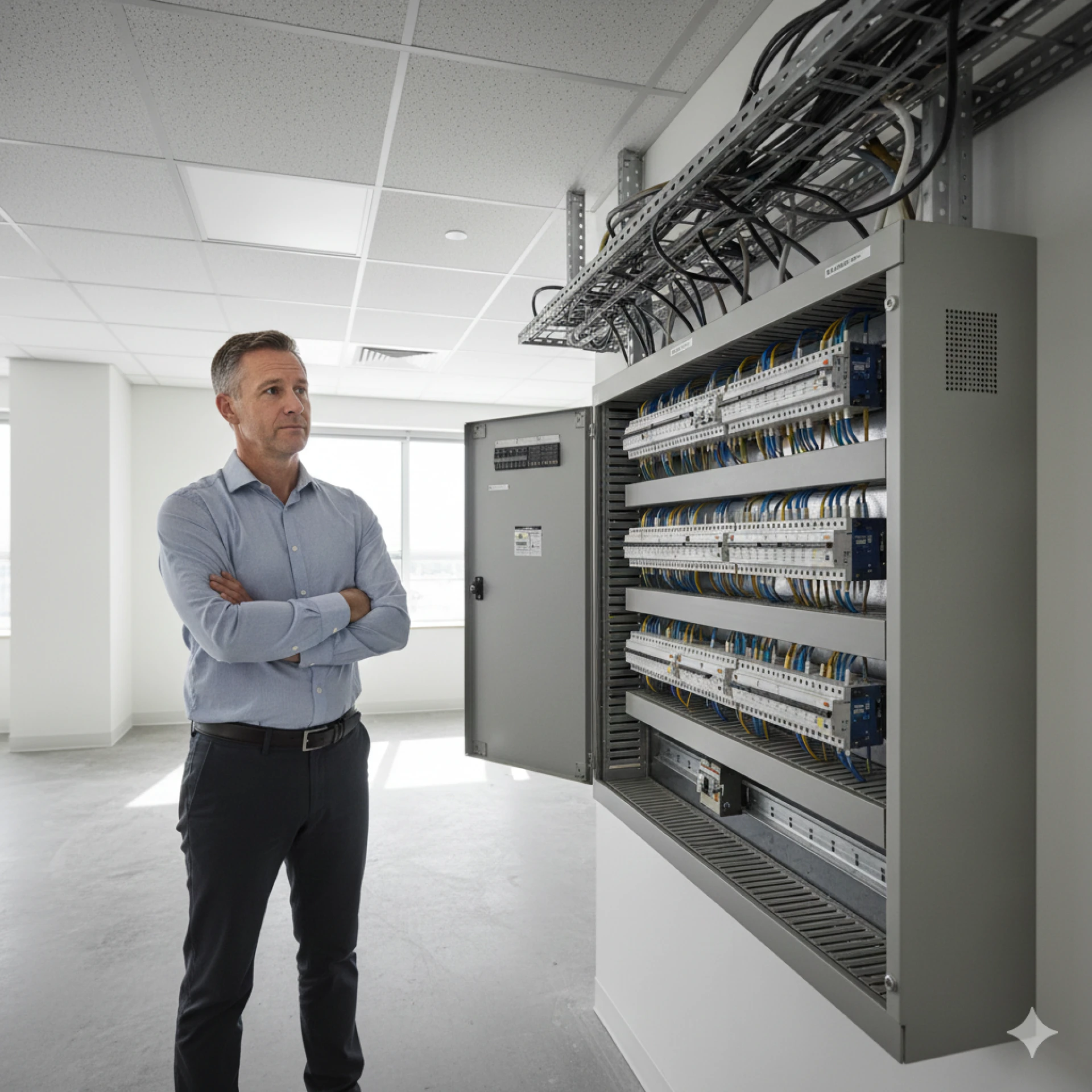
Even if load was calculated reasonably well, lack of headroom creates vulnerability.
Headroom is what allows a system to absorb spikes.
Without it:
- Small increases in demand cause disproportionate impact
- Circuits operate closer to limits
- Boards heat up faster
- Expansion becomes restricted
Peak hours don’t create problems.
They expose systems that were already running tight.
HVAC Is a Major Contributor
In cities like Sydney, HVAC demand plays a major role in peak electrical load.
During hot days:
- Cooling systems ramp up significantly
- Compressors cycle more aggressively
- Simultaneous operation increases total demand
If HVAC load wasn’t properly accounted for under extreme conditions, it can push the system over its limit — even if everything else was designed correctly.
Incremental Changes Add Up
Many commercial buildings don’t fail because of one big mistake.
They fail because of many small changes:
- Additional workstations
- New equipment installations
- Extended operating hours
- Minor fit-out modifications
Each change consumes a bit more capacity.
Without reassessment, peak demand gradually increases until the system has no margin left.
Then peak hours become a problem.
Designing for Peak Reality
A proper Commercial Electrician Sydney doesn’t design for average conditions.
They design for peak reality.
At Lightspeed Electrical, that means:
- Modelling realistic simultaneous demand
- Accounting for HVAC load under extreme conditions
- Building structured headroom into switchboards
- Separating critical systems
- Planning for future growth
Because stability isn’t measured at 50% load.
It’s proven at 100%.
👉 https://www.lightspeedelectricals.com.au/
The Difference Between Stable and “Just Working”
There’s a big difference between:
“It works most of the time.”
and
“It works when everything is running.”
Peak-hour failures usually come from systems that were designed to pass — not to perform under pressure.
And commercial environments are defined by pressure.
The Bottom Line
Sydney commercial buildings experience power issues during peak hours because that’s when electrical systems are truly tested.
Not at inspection.
Not during light use.
But when demand is highest and everything runs at once.
If the system wasn’t engineered with realistic load modelling, headroom, and growth in mind, peak hours will expose it.
Because electrical problems don’t appear out of nowhere.
They show up when the system is asked to do what it was never designed to handle.
















Sign in to leave a comment.