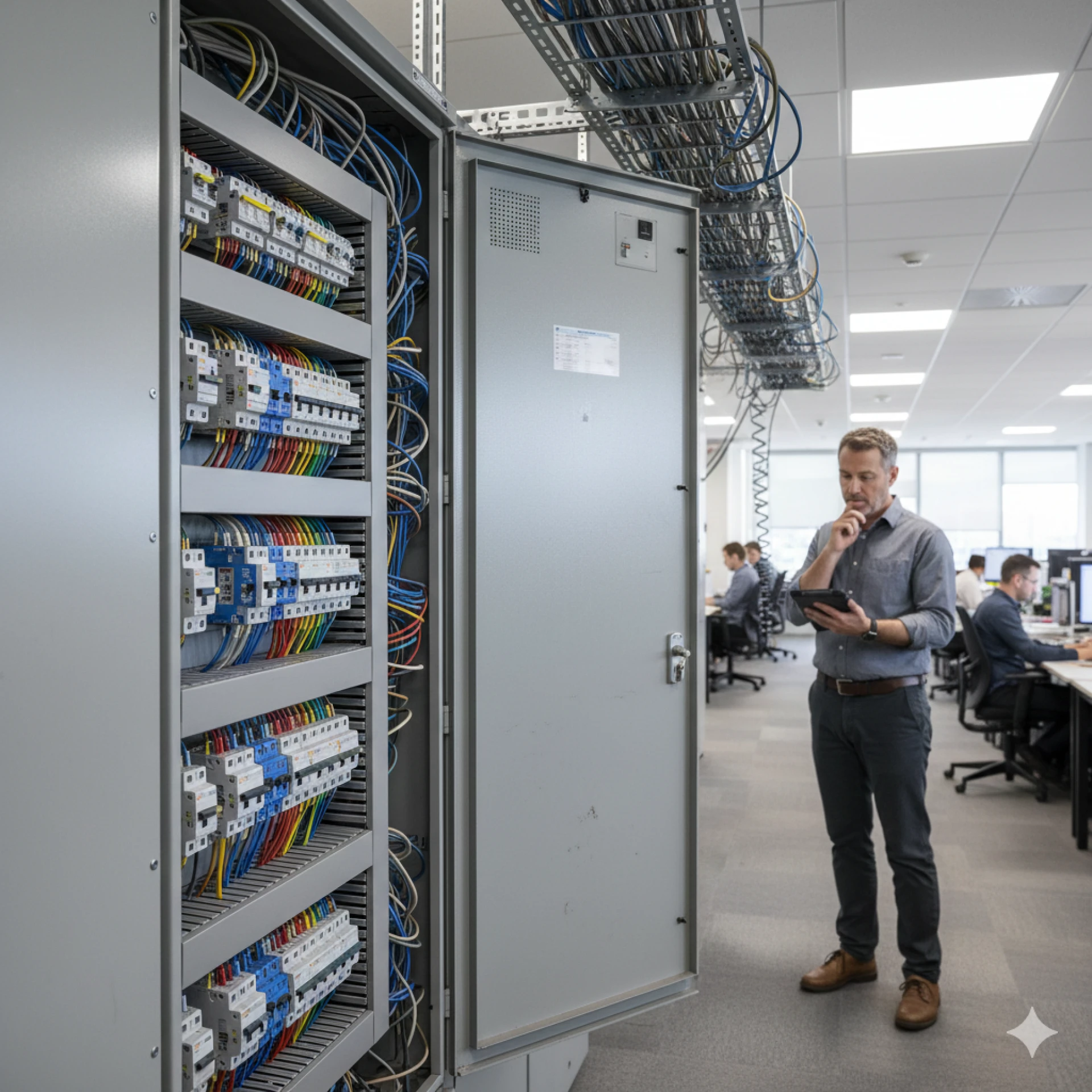

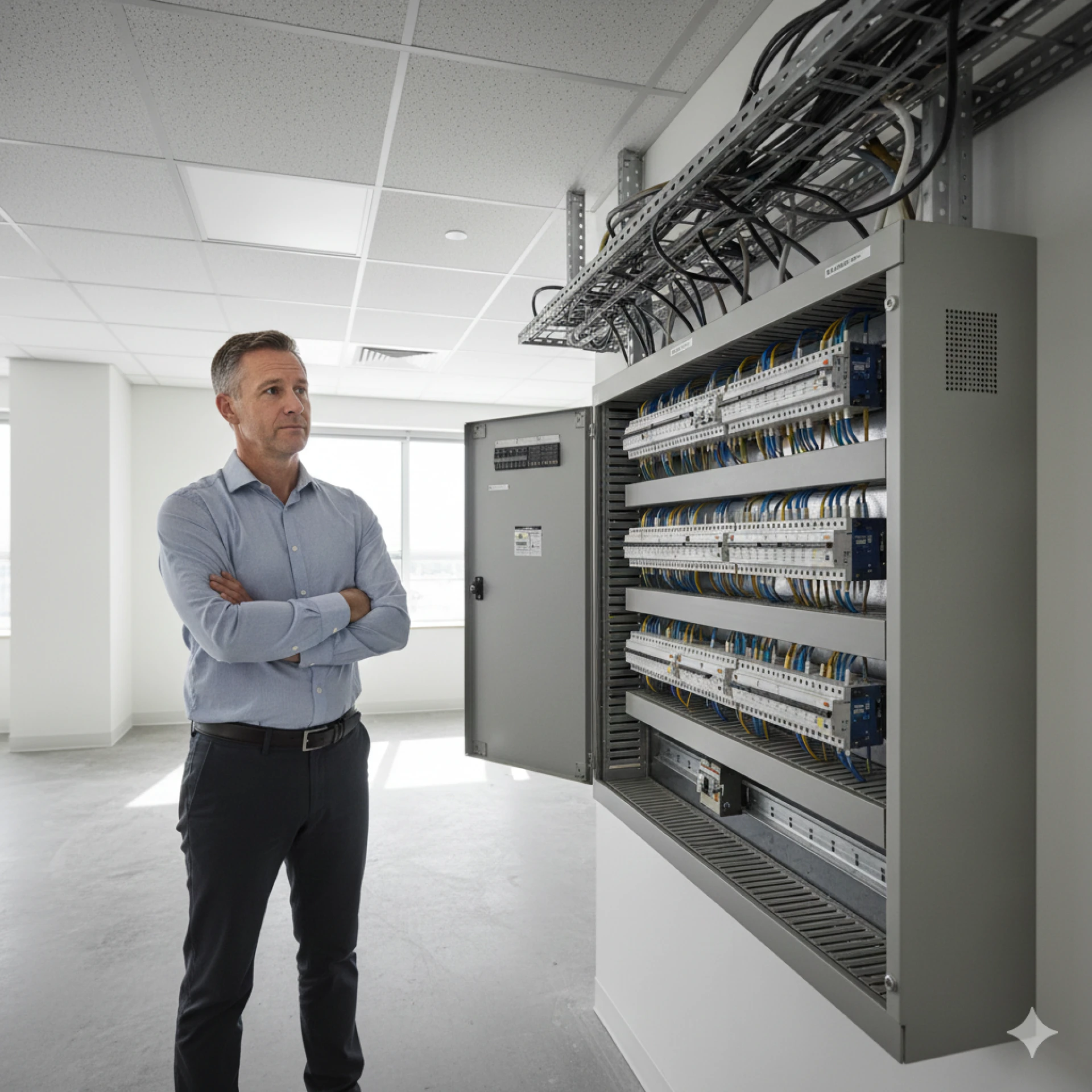
If Your Switchboard Has No Headroom, Neither Does Your Business
A switchboard without headroom is like a car engine running at redline 24/7 — it might get you where you need to go for a while, but it’s only a matter of time before something gives.
After over ten years working on commercial electrical projects, I’ve seen this happen countless times. And in commercial buildings, no headroom in the switchboard isn’t just an electrical problem — it’s a business problem.
What “Headroom” Really Means
Headroom isn’t about oversizing for no reason. It’s about planning for reality:
- Peak load situations
- Equipment additions in the future
- Unexpected expansions
- Maintenance flexibility
- Safety margins for critical systems
A switchboard running at near capacity from day one leaves zero flexibility. Any new device, tenant, or upgrade risks tripping circuits, downtime, or expensive rewiring.
How Businesses Pay the Price
When switchboards have no headroom, issues tend to appear quietly at first:
- Breakers trip unpredictably
- Lights flicker when multiple systems run
- Servers or critical equipment reset unexpectedly
- Maintenance teams struggle to isolate faults
- Emergency upgrades are disruptive and expensive
The cost isn’t just electrical — it’s operational. Downtime, lost productivity, and reactive call-outs add up quickly.
The Illusion of Compliance
A common misconception is that if a switchboard passes inspection, it’s “good enough.”
Compliance checks minimum requirements. They don’t guarantee that your business can grow without shutting down circuits or adding boards. A full switchboard might technically meet code, but it’s already a ticking time bomb when expansion or extra load comes along.
How Experienced Commercial Electricians Handle Headroom
A Commercial Electrician Sydney with real commercial experience knows that headroom is part of resilience. They:
- Size boards with future growth in mind
- Separate critical from general circuits
- Ensure redundancy and fault isolation
- Plan for load spikes and peak-hour demand
- Build flexibility for maintenance without downtime
Headroom isn’t optional — it’s insurance.
Real-Life Consequences of Ignoring Headroom
I’ve seen offices where every board was maxed out from day one:
- Adding a new printer caused the entire floor to lose power
- Temporary equipment installations became permanent headaches
- Staff and operations constantly interrupted by trips
- Emergency upgrades cost far more than proper planning would have
In every case, the problem wasn’t the devices or load itself — it was a lack of foresight at the switchboard design stage.
Red Flags That Your Switchboard Is Already Stressed
- Breakers constantly tripping during normal operations
- No spare capacity for additional circuits
- Temporary fixes are installed permanently
- Maintenance teams can’t isolate faults without downtime
- Any small upgrade requires shutting down systems
If these exist, your business is already constrained by the electrical system.
The Takeaway
A switchboard without headroom doesn’t just limit electrical flexibility — it limits your business growth.
Your operations, expansions, and upgrades are hostage to the decisions made when the system was installed.
Investing in proper sizing, redundancy, and future-proofing isn’t extra cost — it’s business insurance.
Because in commercial buildings, if your switchboard can’t handle tomorrow, neither can your business.




















Sign in to leave a comment.