

1. Introduction
Material selection is a critical factor in the success of any manufacturing process. Whether designing lightweight prototypes, high-strength aerospace components, or corrosion-resistant industrial parts, selecting the appropriate material impacts performance, durability, and cost-efficiency.
This white paper explores the range of manufacturing materials available through 3D printing, thermoforming, and machining. Each method has its own advantages, from rapid prototyping and intricate designs to cost-effective, large-scale production and high-precision machining. By understanding the capabilities and applications of these materials, manufacturers can make informed decisions to optimize their production processes.
2. 3D Printing: Customization, Complex Designs, and Functional Materials
3D printing enables manufacturers to create intricate, lightweight structures without the need for costly tooling. This makes it ideal for prototyping, low-to-mid volume production, and highly complex geometries. RapidMade specializes in four primary 3D printing technologies:
2.1 Multi Jet Fusion (MJF): High-Strength, High-Detail Plastic Parts
Multi Jet Fusion (MJF) is a powder-based printing technology that provides fast production, excellent mechanical properties, and strong part durability. It is well-suited for functional parts in industrial and consumer applications.
Common MJF Materials:
● Nylon PA-12 – High tensile strength, chemical resistance, and lightweight properties make it ideal for automotive, industrial, and medical applications.
● TPU (Thermoplastic Polyurethane) – A flexible, rubber-like material with superior wear resistance, used for seals, gaskets, and impact-absorbing parts.
2.2 Stereolithography (SLA): Ultra-Smooth, High-Resolution Components
SLA uses a laser to cure liquid resin, producing detailed prototypes and smooth-surfaced parts. It is commonly used in medical models, consumer products, and detailed cosmetic prototypes.
Key SLA Materials:
● General Purpose Acrylic – A rigid, high-resolution material used for cosmetic prototypes and clear parts.
● X Pro 9400 B FR – A flame-retardant resin with UL-94 V0 certification, designed for aerospace, electronics, and automotive applications.
● High Rebound Elastomer – A rubber-like SLA resin with excellent energy return, commonly used in grips, seals, and shock-absorbing applications.
2.3 Fused Deposition Modeling (FDM): Affordable, Industrial-Grade Thermoplastics
FDM is a cost-effective printing method that uses industrial-grade thermoplastics to create durable parts for real-world applications.
FDM Material Options:
● ABS (Acrylonitrile Butadiene Styrene) – A strong, impact-resistant material commonly used for fixtures, jigs, and enclosures.
● Polycarbonate (PC) – Known for its high impact resistance and clarity, ideal for lighting, electronics, and aerospace components.
● Ultem 9085 – An aerospace-grade, flame-resistant thermoplastic capable of withstanding extreme temperatures.
2.4 Metal 3D Printing: High-Strength, Corrosion-Resistant Metal Parts
For high-performance applications where traditional machining is too costly or limiting, metal 3D printing provides excellent strength, corrosion resistance, and design freedom.
Common Metal 3D Printing Materials:
● 316L Stainless Steel – Corrosion-resistant and widely used in marine, food-processing, and medical applications.
● 17-4 PH Stainless Steel – Offers high hardness and strength, ideal for aerospace, tooling, and industrial applications.
3. Thermoforming: Cost-Effective, Large-Scale Plastic Manufacturing
Thermoforming is an efficient process for medium-to-large production runs, where plastic sheets are heated and molded into durable components. Compared to injection molding, thermoforming offers lower tooling costs and faster turnaround times.
3.1 Standard Thermoplastics for General Applications
Thermoforming offers a variety of standard plastics that balance cost-effectiveness, durability, and flexibility.
Key Standard Plastics:
● HIPS (High-Impact Polystyrene) – Used for packaging, disposable trays, and models due to its affordability and impact resistance.
● ABS (Acrylonitrile Butadiene Styrene) – Durable and lightweight, widely applied in automotive panels and enclosures.
● PETG (Polyethylene Terephthalate Glycol-Modified) – FDA-approved for medical trays and food packaging, offering high clarity and impact resistance.
3.2 High-Performance Thermoplastics for Specialized Applications
For applications requiring fire resistance, chemical stability, or high mechanical strength, high-performance plastics offer enhanced capabilities.
Notable High-Performance Thermoplastics:
● Polycarbonate (PC) – High-strength and optically clear, often used in protective barriers and machine guards.
● Kydex® (ABS/PVC Blend) – Flame-resistant and durable, used in aircraft interiors and medical housings.
● Aerolite Thermoformable Carbon Fiber – A high-strength, lightweight material with aerospace and automotive applications.
4. Machining: High-Precision Manufacturing for Metal and Plastic Components
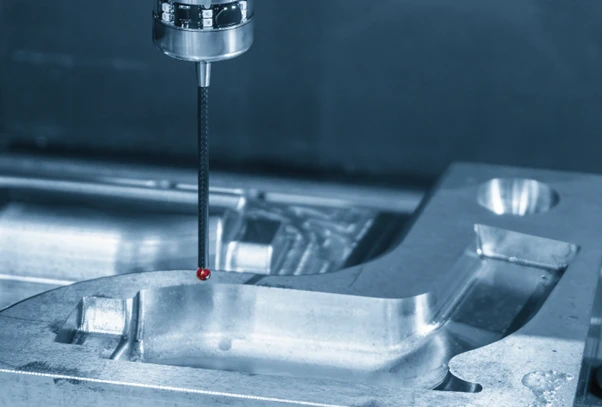
Machining is a subtractive manufacturing method that removes material from solid blocks to create parts with tight tolerances and superior surface finishes. It is best for functional components requiring high strength, wear resistance, and dimensional accuracy.
4.1 Machinable Metals: Strength and Durability
Machined metals are preferred for applications that demand exceptional strength, corrosion resistance, and heat tolerance.
Common Machinable Metals:
● Aluminum (6061, 7075) – Corrosion-resistant and lightweight, commonly used in aerospace, automotive, and structural applications.
● Stainless Steel (303, 304, 316, 17-4 PH, 440C) – Provides superior corrosion resistance and strength for medical, marine, and industrial applications.
● Carbon Steel (1018, 1045, 12L14) – Cost-effective and strong, frequently used in machinery and structural components.
4.2 Machinable Plastics: Lightweight and Chemical-Resistant Solutions
Plastics offer an alternative to metals when weight reduction, chemical resistance, or electrical insulation is required.
Key Machinable Plastics:
● Delrin (Acetal/POM) – A low-friction, high-wear material commonly used for gears and bearings.
● Nylon (PA6, PA66) – Impact-resistant and self-lubricating, suitable for bushings and structural parts.
● PTFE (Teflon®) – An extreme chemical-resistant material used for seals, gaskets, and medical devices.
● PEEK (Polyetheretherketone) – A high-performance plastic capable of withstanding high temperatures and harsh environments.
5. Conclusion: Selecting the Right Material for Your Application
Choosing the right material is essential to ensuring product performance, cost-efficiency, and manufacturability. Each manufacturing method—3D printing, thermoforming, and machining—has distinct material advantages suited to different applications.
● 3D printing enables rapid prototyping, complex geometries, and lightweight parts.
● Thermoforming offers cost-effective production of durable plastic components.
● Machining provides high-precision, wear-resistant metal and plastic parts.
With decades of expertise in advanced manufacturing, RapidMade helps businesses optimize material selection and production processes for better performance and efficiency.
To explore RapidMade’s 3D printing services or custom manufacturing solutions for your next project, visit rapidmade.com today.





























Sign in to leave a comment.