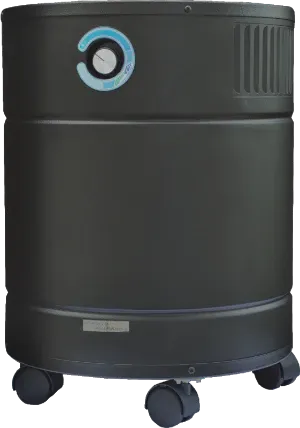

That Smell Isn't Just Annoying; It Could Be Hurting You!
You walk into a freshly painted room, and your head starts throbbing. A coworker's perfume makes your throat tighten. The new couch your family loves? You can barely sit near it. If any of this sounds familiar, you are not imagining things.
Millions of people deal with air quality problems every single day, and most of them are buying the wrong solution. They grab a plug-in freshener, maybe a basic purifier, and wonder why nothing changes. The truth is simple: most air purifiers for odors are built to catch dust. They are not built to remove smells, gases, or the invisible chemicals drifting through your home. That is a very different job, and it needs a very different machine.
This guide will show you exactly what separates a real odor-eliminating purifier from one that just moves air around.
Why Odors are More Than Just a Bad Smell?
When something smells, it means chemical molecules are floating in the air and landing in your nose. Some of those molecules are harmless. Many are not.
Volatile organic compounds are gases released by everyday items like furniture, cleaning sprays, dry-cleaned clothes, and even low-VOC paint while it dries. They are colorless, odorless at low levels, and linked to headaches, fatigue, and long-term respiratory issues.
For people who rely on air purifiers for chemical sensitivity as a daily need, specifically those living with Multiple Chemical Sensitivity (MCS), even a trace amount of these compounds can trigger serious reactions. Around 25 million people in North America deal with MCS-related distress, yet most air purifiers on the market completely ignore their needs.
Who Should Pay Attention to This Guide?
Not everyone buying an air purifier for odors has the same problem. Here is a quick breakdown:
- People with MCS or chemical injury: Reactions to perfume, paint, cleaning products, or synthetic fabrics are daily challenges. Standard purifiers make things worse by off-gassing from their own plastic parts.
- Allergy and asthma sufferers: Odors and chemical fumes irritate airways and worsen symptoms, even when no visible particles are present.
Pet owners, smokers' households, and urban renters: Lingering smells from pets, smoke, and city pollution are stubborn. Thin carbon filters barely touch them.
What Actually Removes Odors From the Air?
They see "HEPA filter" and assume the job is done. Standard HEPA filters remove 99.97% of particles at 0.3 microns, but they're completely ineffective against gases. Odors and VOCs pass straight through, which is why you need activated carbon to remove odors and chemical gases. Carbon works like a molecular sponge, trapping gases and odors inside millions of tiny pores. But here is the catch: the amount of carbon matters enormously. A thin, half-inch layer of carbon common in budget purifiers gets saturated fast and stops working within weeks.
Deep-bed carbon filters, like those found in serious air purifiers for odors, provide far more contact time between the air and the carbon. More contact time means more chemicals get trapped before the air reaches you.
Super HEPA vs. Standard HEPA: A Quick Comparison
| Feature | Standard HEPA | Super HEPA Filter |
| Particle removal efficiency | 99.97% at 0.3 microns | 99.99% at 0.1 microns |
| Uses chemical binders | Yes | No |
| Safe for sensitive users | Sometimes | Yes |
| Best use case | General households | MCS, chemical sensitivity |
A Super HEPA filter goes further than standard HEPA in two ways. First, it captures finer particles. Second, it contains no chemical glues or bonding agents, which means the filter itself does not release anything into your air.
That distinction is not a small thing for someone with chemical sensitivity. It is everything.
Choosing the Right Air Purifier for Your Specific Problem
| Your Situation | What You Need |
| MCS or chemical injury | MCS-rated unit, inert metal housing, carbon test kit |
| VOCs from new furniture or paint | Deep-bed activated carbon + Super HEPA filter |
| Pet odors and dander | Carbon + HEPA combination |
| Wildfire smoke or cigarette smell | Maximum carbon capacity unit |
| General cooking smells | Mid-range carbon filter |
One feature worth noting for MCS sufferers: some manufacturers provide a carbon test kit that lets you try different carbon blends at home before purchasing a full unit. This matters because even activated carbon can occasionally trigger sensitivity. Being able to test first removes a lot of the guesswork and the risk.
All-metal housing is another non-negotiable for sensitive users. Plastic casings off-gas continuously, especially when warm. A powder-coated metal body remains inert, keeping your air clean from the machine itself.
Quick Tips to Get Better Results
- Run your purifier around the clock on a low setting rather than blasting it for short bursts.
- Position it close to the odor source, not the center of the room.
- Replace carbon filters on schedule. A saturated filter stops absorbing and can release what it has already trapped.
Combine your purifier with good ventilation and low-VOC household products for the best results.
In Closing,
Bad air quality is not something you just learn to live with. If you have stubborn pet smells, new furniture emitting harmful chemicals, or are sensitive to certain substances, the right air purifier can really improve how you feel at home.
To find the right air filter, look for these key features: deep-bed activated carbon, a Super HEPA filter without chemical binders, and a unit made from safe materials that won’t cause new problems while fixing old ones. If you or someone in your home has Multiple Chemical Sensitivity (MCS) or a chemical injury, check out AllerAir’s range of air purifiers for odors. These purifiers are specifically designed for people who need clean air and cannot compromise on what they breathe.
FAQs
Can air purifiers fully eliminate odors?
Yes, but only if they have a deep-bed activated carbon filter. HEPA-only units cannot remove gases or smells.
Is a Super HEPA filter worth it for odor problems?
Absolutely. This option has a higher particle-capture rate and does not use chemical binders. This makes it a safer and more effective choice, especially for people who are sensitive to chemicals and manage air purifiers.
Are all air purifiers safe for people with MCS?
No. Many standard models use plastic housings, synthetic foams, and chemically treated filters that can worsen MCS symptoms. Look specifically for units designed and tested with MCS users in mind.
How often should I replace the carbon filter?
Every 12 to 18 months under normal use. In high-odor environments, heavy cooking, smoking, or VOC-heavy spaces, plan for replacement closer to the 12-month mark.






























Sign in to leave a comment.