Gutter systems rarely receive attention until something goes wrong. Most homeowners focus on roofing materials, siding upgrades, or interior renovations, while gutters quietly handle one of the most important jobs — directing water away from the home. When gutters fail, however, the impact can extend far beyond the roofline. Water overflow can damage siding, weaken foundations, and create long-term structural issues. This is why choosing the right type of gutter system matters more than many people realize.
Over the years, seamless gutters have become a preferred option for homeowners looking for reliability and long-term performance. While traditional sectional gutters are still used in many properties, seamless systems offer clear advantages in durability, efficiency, and overall maintenance. Understanding these differences helps homeowners make better decisions when upgrading or replacing their drainage systems.
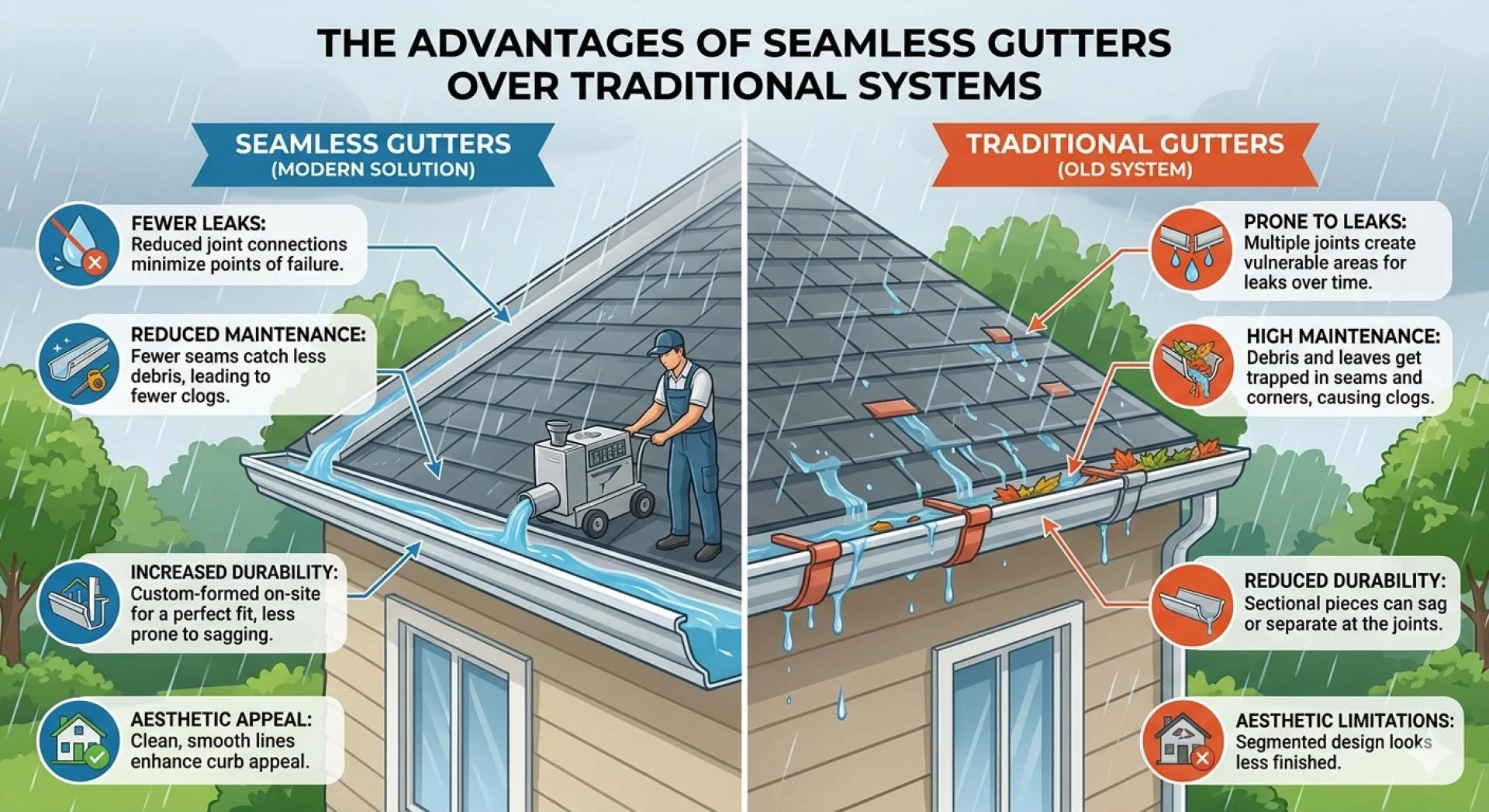
Traditional gutters are built from multiple sections joined together along the roofline. These joints are necessary because the materials are pre-cut in standard lengths before installation. While this approach has been widely used for decades, the seams between sections are also the weakest points in the system. Over time, these joints can loosen, separate, or develop small gaps. Even minor openings allow water to leak through, especially during heavy rainfall.
Seamless gutters, as the name suggests, are manufactured as continuous pieces that run along the length of the roof. Instead of multiple sections connected together, the system is custom-cut on-site to match the exact dimensions of the property. This eliminates most of the joints, leaving only a few connection points at corners and downspouts. By reducing the number of seams, the likelihood of leaks decreases significantly.
One of the most immediate benefits of seamless gutters is improved water flow. Without interruptions from joints, rainwater moves more smoothly through the system. This efficiency becomes especially important during storms, when large volumes of water need to be directed away quickly. In urban neighborhoods where properties are closely spaced, proper drainage protects not only the home itself but also surrounding structures.
Durability is another key advantage. Traditional sectional gutters rely heavily on connectors and sealants at each joint. Over time, exposure to weather causes these materials to wear down. Temperature changes lead to expansion and contraction, gradually weakening the connections. Seamless gutters reduce this stress because there are fewer points where movement can cause separation. The result is a system that maintains its structural integrity for a longer period.
Maintenance requirements also tend to be lower with seamless systems. Sectional gutters often collect debris at the joints, where small gaps or uneven surfaces can trap leaves and dirt. These blockages restrict water flow and increase the risk of overflow. Seamless gutters provide a smoother interior surface, allowing debris to move more freely toward downspouts. While regular cleaning is still necessary, the overall maintenance effort is reduced.
Another advantage that homeowners appreciate is the visual appearance. Traditional gutters with multiple joints can look segmented along the roofline. Seamless gutters, on the other hand, create a clean and uniform look that enhances curb appeal. Because they are custom-fitted, they align more precisely with the home’s design. This subtle improvement can make a noticeable difference, especially for properties where exterior aesthetics are a priority.
Material options further expand the appeal of seamless gutters. Homeowners can choose from aluminum, copper, or steel depending on their budget and design preferences. Aluminum remains one of the most popular choices due to its balance of affordability and resistance to rust. Copper offers a premium look and exceptional longevity, gradually developing a natural patina that complements many architectural styles. Regardless of the material selected, the seamless design enhances performance compared to sectional alternatives.
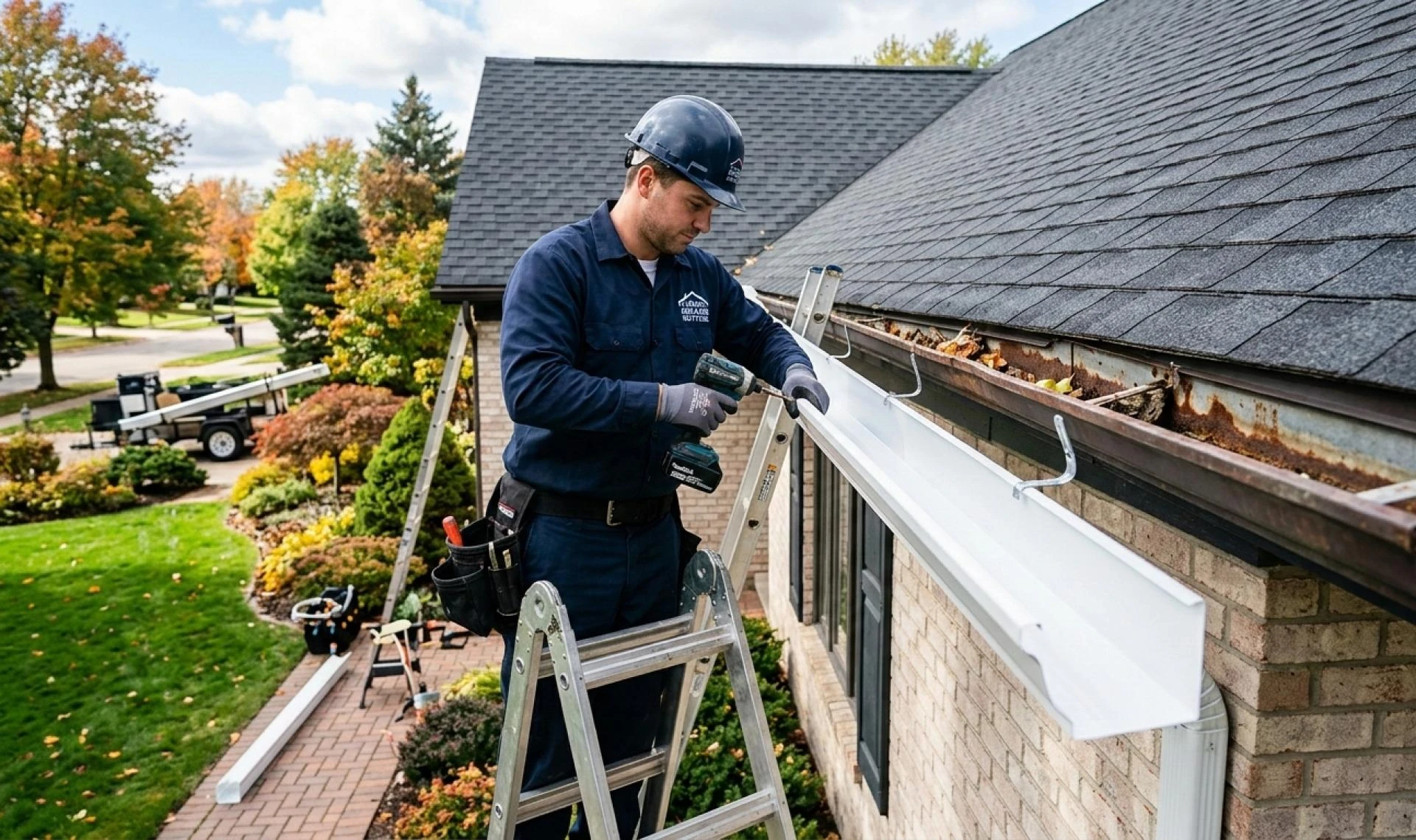
Proper installation plays a critical role in maximizing the benefits of seamless gutters. Because these systems are custom-fabricated on-site, they require specialized equipment and experienced professionals. Contractors measure the roofline carefully and create each section to exact specifications. This precision ensures that the gutters are properly pitched, allowing water to flow efficiently toward downspouts.
Installation also involves securing the gutters to fascia boards with durable hangers that support the system over time. In areas with heavy rainfall or seasonal weather changes, proper fastening prevents sagging and maintains alignment. Professional installers also evaluate drainage patterns to determine the best placement for downspouts, ensuring that water is directed safely away from the foundation.
The long-term financial benefits of seamless gutters often outweigh the initial investment. While they may cost more upfront than traditional sectional systems, their durability and reduced maintenance needs contribute to lower overall expenses. Homeowners spend less on repairs, sealant replacements, and leak fixes over time. In addition, a well-functioning gutter system helps prevent costly structural damage caused by water intrusion.
Foundation protection is one of the most important roles gutters play. When water is not properly directed away, it can accumulate around the base of the home. Over time, this moisture can weaken the foundation, cause soil erosion, and lead to basement leaks. Seamless gutters reduce the risk of these issues by maintaining consistent water flow and minimizing leaks along the roofline.
In climates with seasonal changes, seamless gutters also perform better under stress. Snowmelt and freeze-thaw cycles can place additional pressure on drainage systems. Sectional gutters with weakened joints are more likely to separate under these conditions. Seamless systems, with fewer connection points, are better equipped to handle these environmental factors without failure.
Another factor to consider is the impact on property value. Exterior upgrades that improve both function and appearance often contribute to higher resale appeal. Potential buyers tend to notice details that indicate proper maintenance, and a well-installed seamless gutter system reflects attention to quality. It suggests that the homeowner has invested in long-term solutions rather than temporary fixes.
Choosing between traditional and seamless gutters ultimately comes down to priorities. For homeowners seeking a basic solution at a lower initial cost, sectional gutters may seem adequate. However, for those who value durability, reduced maintenance, and improved performance, seamless systems provide a more reliable option.
Gutters may not be the most visible feature of a home, but they play a crucial role in protecting its structure. Investing in a system that minimizes leaks, improves drainage, and requires less upkeep can make a significant difference over time. For those considering an upgrade or replacement, exploring seamless gutter installation services in Williamsburg is a practical step toward improving both the functionality and longevity of your home’s exterior system.























Sign in to leave a comment.