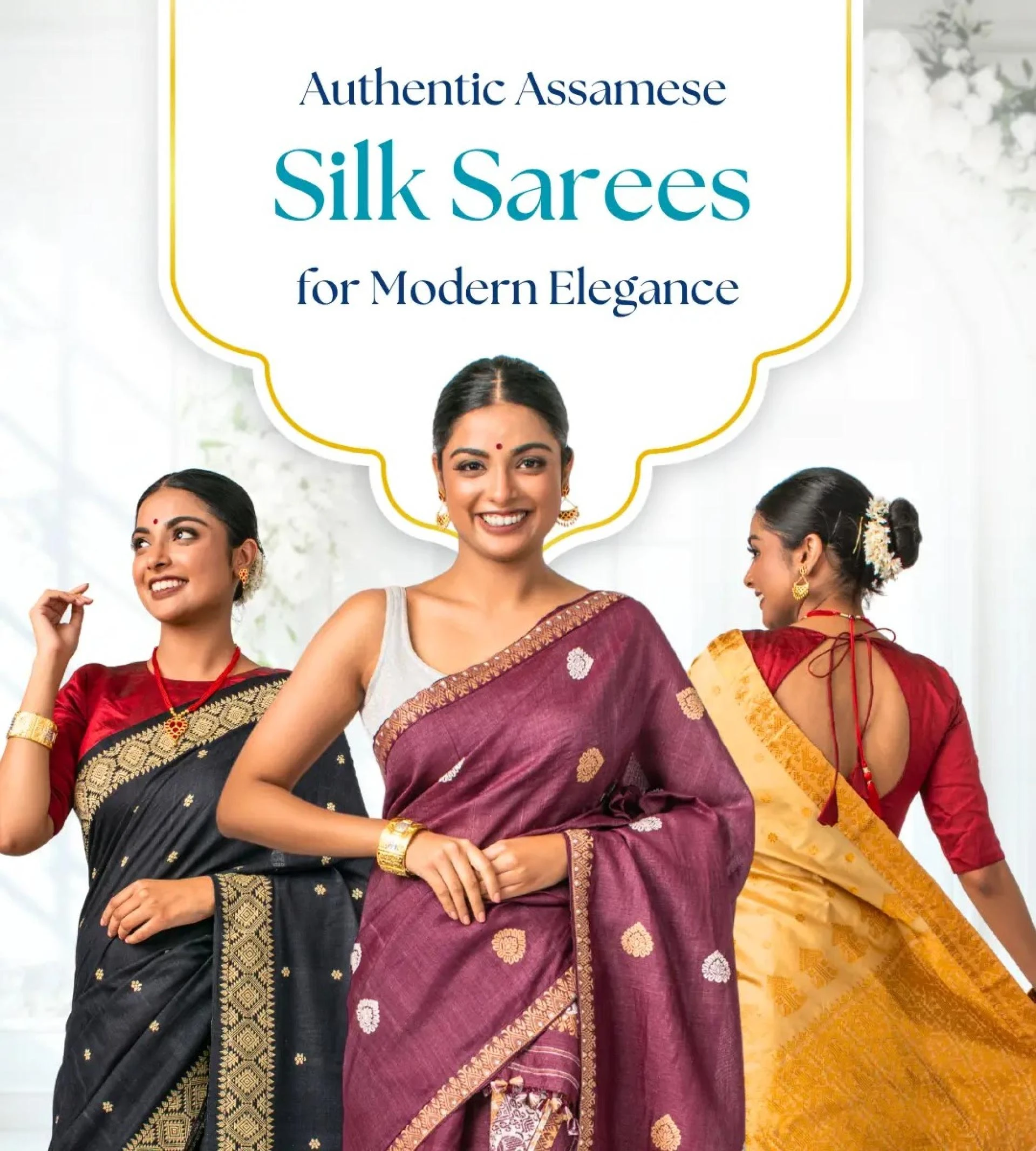

India’s heritage of handloom weaving is a living archive of artistry, culture, and ancestral knowledge. Among its finest contributions, the weaving of Muga silk in Assam stands out as a craft deeply rooted in tradition and community. Ethno Hues, a brand devoted to celebrating India’s ethnic textiles, plays a pivotal role in preserving this legacy while connecting it to contemporary audiences. This article explores the intricate art of Muga silk weaving and how it sustains generations of skilled artisans.
At the heart of Assam’s weaving tradition lies dedication, precision, and patience. Muga silk is derived from rare silkworms nurtured in specific climatic zones, but the true artistry begins once the yarn reaches the hands of the weavers. Unlike machine-made fabrics, every thread in a Muga silk saree is guided by human intuition and experience. The craft is labour-intensive, often requiring weeks of meticulous work for a single piece.
Traditional looms, mostly hand-operated, form the backbone of this weaving culture. These looms are not just tools—they are extensions of familial knowledge passed from elders to younger artisans. In many villages, weaving is a communal practice. Mothers teach daughters, and experienced weavers mentor apprentices, ensuring that every generation contributes to the preservation of this treasured craft. Ethno Hues supports this chain of heritage by sourcing sarees directly from such artisan clusters, ensuring the continuity of traditional weaving practices.
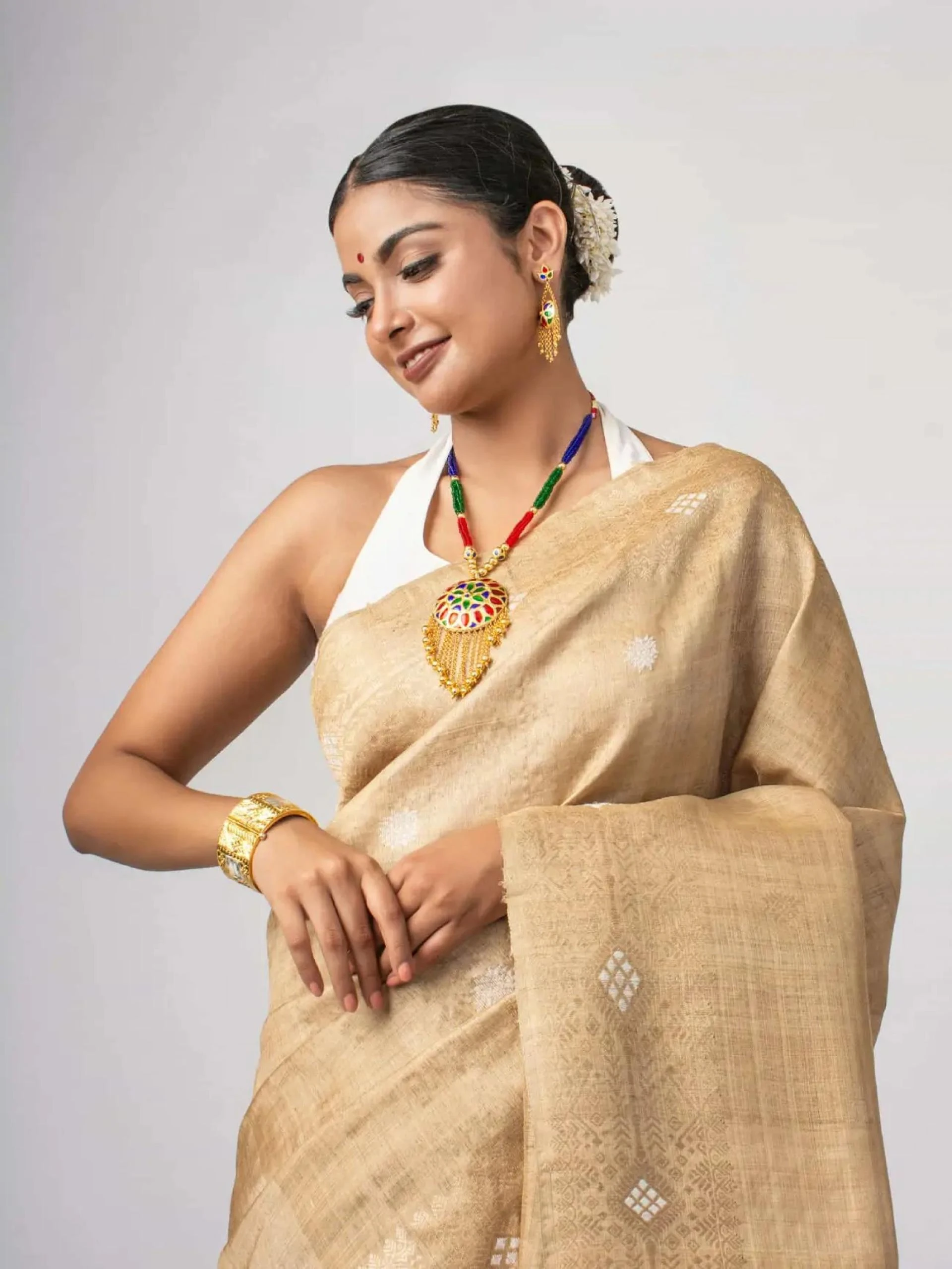
The weaving process itself is a harmonious blend of technique and artistic expression. The yarn is prepared, dyed (only when necessary), and carefully aligned on the loom. Patterns are formed using traditional motifs inspired by nature, folklore, and Assamese cultural symbols. These motifs carry meaning, transforming each saree into a canvas of identity. At the centre of this heritage lies the muga silk saree, a textile that holds both historical value and enduring beauty.
What makes Muga silk weaving especially remarkable is how it intertwines livelihoods with legacy. For many families, weaving is not merely a profession—it is a cultural identity. Generations depend on this artistry, and the survival of the craft directly impacts rural economies. Ethno Hues recognizes this delicate balance and ensures that artisans receive fair compensation, allowing these traditions to thrive in a competitive marketplace.
Why Generational Craftsmanship Matters
Generational craftsmanship is at risk in today’s fast-paced, machine-driven world. Yet preserving it is essential for cultural, economic, and historical reasons:
- It protects indigenous knowledge that cannot be replicated by mass production
- It sustains rural communities and supports local economies
- It maintains the authenticity and uniqueness of culturally significant textiles
- It ensures that traditional designs and motifs remain intact for future generations
Pointers on the Cultural Depth of Muga Silk Weaving
- Rooted in centuries-old Assamese weaving traditions
- Handwoven using techniques passed down through generations
- Involves intricate patterns inspired by nature and folklore
- Supports artisan communities and local economies
- Reflects cultural identity and heritage in every weave
Ethno Hues’ Commitment to Preserving Heritage
Ethno Hues actively works with artisan families to keep this traditional knowledge alive. By offering their handcrafted Muga silk sarees to a wider audience, the brand bridges the gap between heritage and modern fashion demand. Through conscious sourcing and cultural storytelling, Ethno Hues ensures that the legacy of Assam’s looms continues to flourish.
In a world increasingly dominated by mechanized production, the art of Muga silk weaving stands as a testament to the beauty of human craftsmanship. It is a legacy woven through time—one that deserves celebration, preservation, and recognition.


























Sign in to leave a comment.