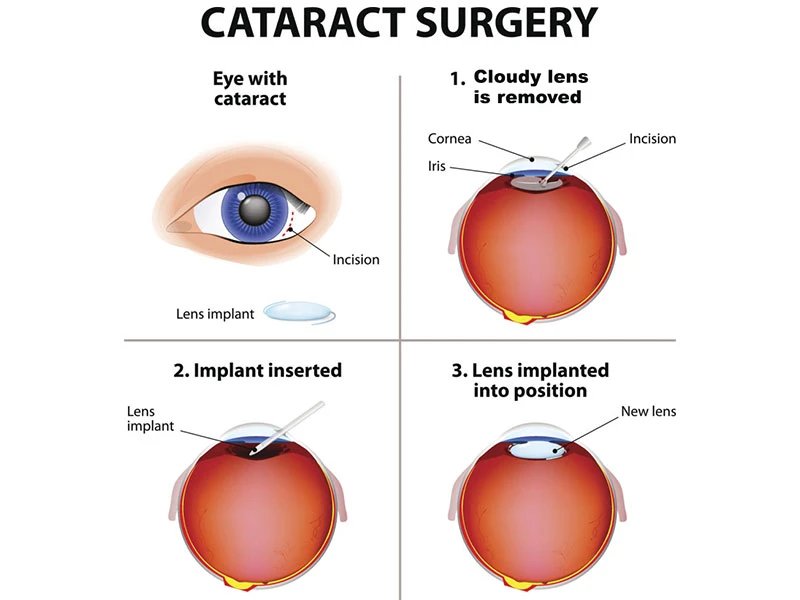

Cataract is the most common eye disease caused by age that affects millions of people each year. Cataract develops when the natural lens of the eye becomes cloudy, causing blurry vision, glare, and the inability to see things at night. Cataract progresses gradually with age, typically beginning with mild blur, and can lead to complete loss of sight if left untreated.
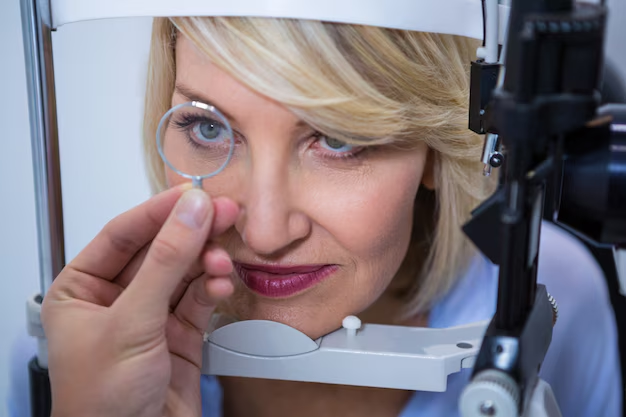
Why Cataract Surgery Is Essential
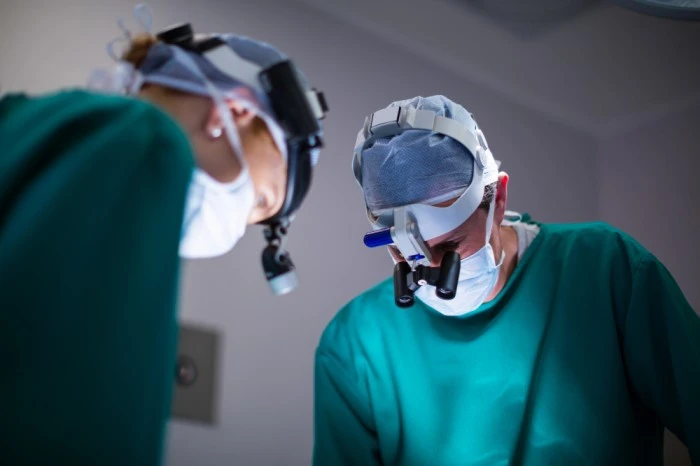
Cataract surgery is a very successful operation that takes out the cloudy natural lens and replaces it with an artificial intraocular lens (IOL). Not only does the operation restore sight, but it also improves the quality of life so people can return to everyday tasks like reading, driving, and recognizing people. With the help of meticulous surgical technique and advanced lens technology, cataract surgery options now achieve a success rate in excess of 98%, thus positioning it as one of the safest and most rewarding types of medical intervention.
Importance of Choosing the Right Intraocular Lens (IOL)
The choice of the correct intraocular lens is also a significant factor for patients undergoing cataract surgery. Although all lenses can bring about clearness, not all lenses respond similarly in different light environments—most importantly, low levels of light like nighttime driving. Some lenses offer enhanced color contrast, reduced glare, and better depth perception, and this could be a significant factor for night workers or night drivers.
How Cataract Lenses Work After Surgery
After implantation, the IOL focuses light upon the retina as a natural lens. Depending on the type of lens, it can enhance near, intermediate, or distance vision and even astigmatism under some conditions. Some newer lenses assist in contrast sensitivity improvement so that enhanced vision can happen under low illumination or at night.
The Importance of Night Vision in Cataract Surgery
Why Night Vision Is a Major Concern
Night vision capability is the ability of patients undergoing cataract surgery to see well during the day but find it difficult to drive at night due to glare or halos. The loss of night vision capability can render driving hazardous and erode driving confidence in the evening. The selection of an IOL with good night vision capability is therefore important.
The Role of Lens Design in Enhancing Night Vision
New lenses have aspheric optics, which imitate the natural curvature of the eye so that the light is more precisely focused onto the retina. Spherical aberrations, a primary cause of glare and night blindness, are eliminated by this.
Types of Cataract Lenses Available in India
Monofocal Lenses
These cataract lens options India give vision for one distance—usually far away. Although inexpensive, patients still might need glasses to read or perform near work. Improved aspheric monofocal lenses now offer improved nighttime vision, however.
Multifocal Lenses
Trifocals fix near vision and distance vision, making bifocals a thing of the past. Earlier models of trifocals caused halos and glare while driving at night. More sophisticated designs have solved this issue by ensuring accurate spreading of light.
Trifocal Lenses
Trifocal lenses, such as Alcon PanOptix, offer clear vision at near, intermediate, and far. Trifocal lenses spread light evenly, promoting contrast sensitivity even in low light conditions—perfect for patients worried about nighttime driving.
Extended Depth of Focus (EDOF) Lenses
EDOF lenses such as Tecnis Symfony and Zeiss AT LARA extend the focus further without extra halos or glare. They're highly recommended for active eyes and regular nighttime use.
Toric Lenses
Toric lenses position irregular curvatures of the cornea in astigmatism patients to establish maximum focus and reduce distortion. They now feature aspheric and blue-light filtering for better nighttime vision.
Aspheric Lenses
Aspheric lenses provide low spherical aberration, rendering high-contrast and sharp images under every lighting condition. They are some of the best cataract lenses for night vision in the elderly.
The Best Cataract Lenses for Night Vision
Selecting the best cataract lens for night vision 2025–26 involves a compromise between cutting-edge optical design, material quality, and patient needs. The lenses below are highly recommended by ophthalmologists as having excellent low-light vision, glare management, and contrast sensitivity.
1. PanOptix Trifocal Lens (Alcon)
PanOptix is a trifocal IOL that provides clear vision in the near, intermediate, and distance zones. For nighttime driving:
- Its optical design distributes light relatively evenly between foci, making halos dimmer than previous multifocals.
- Patients have better contrast sensitivity and more natural nighttime driving than with traditional multifocals.
- Helpful if the patient wants spectacle independence at all distances but still wants relatively good nighttime function.
2. Tecnis Synergy OptiBlue IOL (Johnson & Johnson Vision)
Tecnis Synergy iol EDOF lens produces a range of focus rather than focal points:
- Most likely to produce fewer halos and less glare than multifocals, making night driving easier.
- OptiBlue technology works to remove chromatic aberration and improve contrast — beneficial at night.
- Ideal for patients who prefer an uninterrupted field of view with fewer nighttime interruptions.
3. Clareon Vivity IOL (Alcon)
Clareon Vivity iol is a next-generation non-diffractive design that provides maximum intermediate and near vision without creating the usual diffractive halos:
- Non-diffractive optics preserve contrast sensitivity and reduce night-time visual artifacts.
- Optimized for the night driver who demands less glare/halo threat with the added advantage of functional near vision.
4. AcrySof IQ Aspheric Lens (Alcon)
AcrySof IQ lenses take advantage of the use of aspheric optics to reduce spherical aberration:
- Increased contrast sensitivity and acuity in dusk/dawn (mesopic) and night (scotopic) conditions.
- Typically used as a base best cataract lens for evening driving, where cost-effectiveness and nighttime vision are of primary importance.
5. Zeiss AT LARA EDoF Lens
Zeiss AT LARA uses EDOF technology with aspheric optics:
- The selling point is an unobstructed visual transition across distances with reduced photic effects.
- Popular for balancing day visual acuity with ongoing nighttime performance.
6. RxSight Light Adjustable Lens (LAL)
Light Adjustable Lens delivers postoperative lens power adjustment through the application of precise, controlled light treatments to the implanted lens:
- Since it can be fine-tuned following the process of recovery, refractive targets may be optimized by surgeons so that night vision defocus and aberrations are prevented.
- Most interesting is where there is doubt regarding preoperative measurement or where the best low-light focus is a priority.
Read More Information: Best Cataract Lens for Night Vision in 2025-26 | Cataractrx
How to Choose the Right Cataract Lens
The choice of IOL is a personal preference. Use the following step-by-step guide when deciding on how to choose a lens for cataracts best for you at night.
1. Assessing Lifestyle and Visual Needs
- Do you drive at night? Think about contrast sensitivity and low-glare lenses.
- Do you desire spectacle independence (reading spectacles-free)? Multifocal or trifocal designs are available, but balance this with potential halos.
- Work and play activities: pilots/drivers vs. an office worker might require a trade-off of another kind.
2. Consulting an Ophthalmologist
- Get a board-certified eye doctor with experience in high-end IOLs.
- Discuss particular concerns of night driving and computer monitor use.
- Ask for simulated visual demonstrations (most offices will have simulator equipment on site to pre-view halos and glare).
3. Evaluating Budget and Insurance Coverage
- Basic monofocal IOLs are usually covered; premium IOLs (multifocal, trifocal, EDOF, LAL) usually have an out-of-pocket premium.
- Remember the long-term value: fewer glasses, higher satisfaction, and safe driving.
4. Understanding Long-Term Visual Outcomes
- Long-term expectations are taken into account. The selection of cataract lens types and prices is an investment in the long term.
- Adjust for ocular disease conditions (dry eye, macular degeneration) that may affect outcomes.
5. Reading Patient Reviews and Testimonials
- Night driving in actual cases can approximate the performance of individual lenses, but read reviews cautiously — results are inconsistent.
- Request case histories or patient referrals for the lens in question from your surgeon.
Conclusion
The best cataract lens for night vision will be a function of lifestyle, tolerance to photic phenomena, and requirement for spectacle independence. Choose contrast sensitivity and low-glare designs if nighttime driving cannot be avoided. Night vision directly relates to safety and quality of life — especially in those who drive at night or are employed in low illumination. Choosing a nighttime performance-optimized lens can be of life-altering importance.
Cataract surgery in 2025–26 is not a fix-it — it's an opportunity to improve vision for living today. With proper lens choice, accurate surgical technique, and proper expectations, many have unimpeded daytime vision and can gain effortless nighttime vision for decades to come.
Need to undergo cataract surgery? Want to know which lens is best suited for your eyes?
Book a free cataract surgery consultation appointment at +91 9667770453



























Sign in to leave a comment.