
Building a product that works is only part of the battle. For investors and acquirers, the true marker of value in medtech isn’t just clinical traction—it’s commercial traction. That was the central theme of the LSI USA ‘25 panel, How to Build a Clear Path to Revenue that Attracts Investors and Acquirers, which focused on the frameworks and strategies required to build a scalable medtech commercial model.
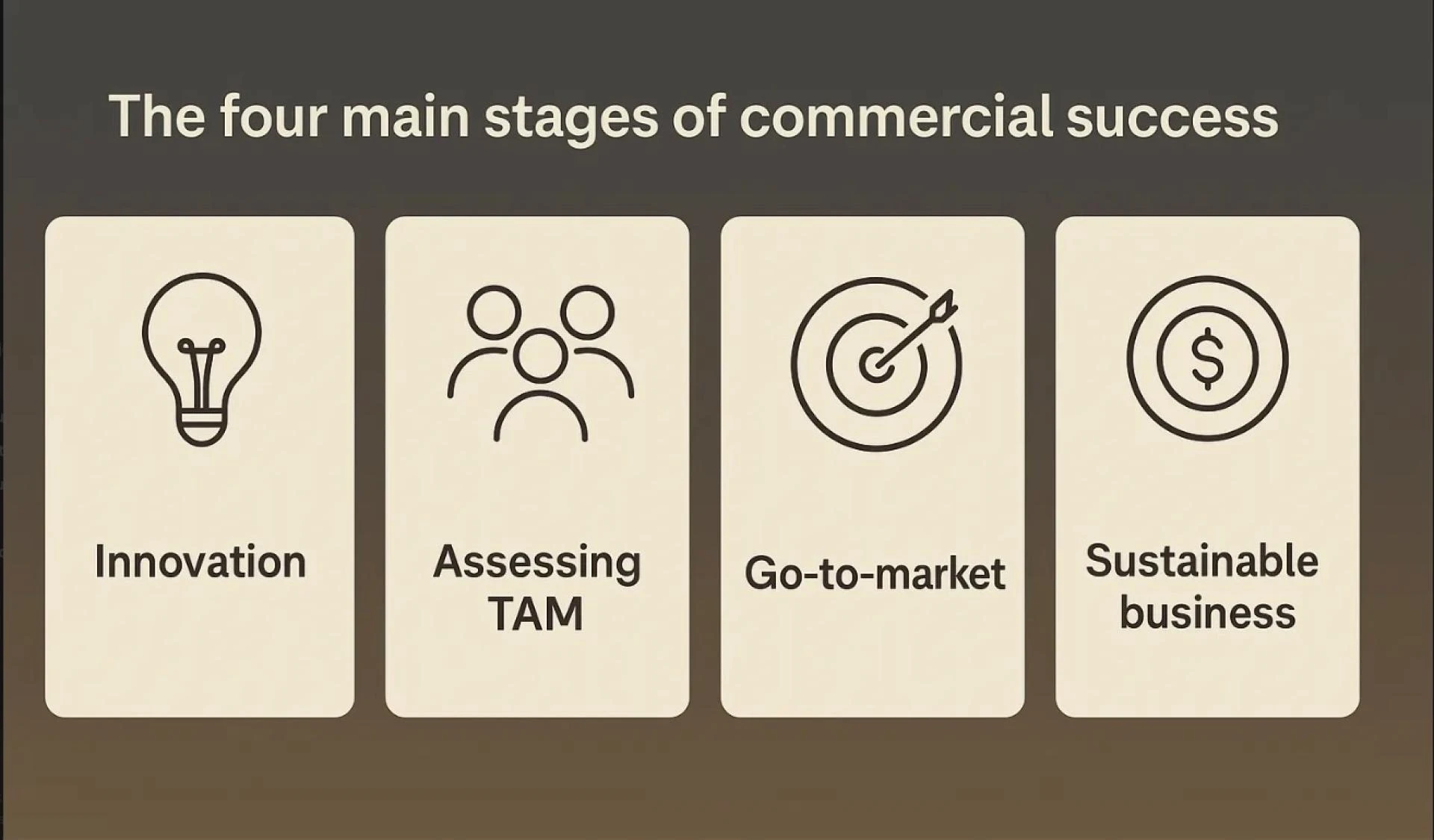
Featuring insights from leaders at MY01, Artelon, and AcuityMD, this session broke down what it actually takes to go from a great idea to a sustainable business. And while every company’s journey is different, the ingredients for commercial success follow a repeatable, if difficult, pattern.
Let’s walk through what it takes to build a medtech commercial strategy that scales—and why investors care more about this than anything else.
Begin with the End in Mind
One of the panel’s earliest takeaways was that medtech founders must think beyond product development. It’s easy to get swept up in solving clinical problems, but the harsh reality is that investors and acquirers are looking for predictable, recurring revenue.
Understanding how your innovation fits into the broader market—and how it will generate revenue—is critical from day one. What’s your go-to-market strategy? Who pays for your product? Can it be sold in a repeatable, scalable way? These aren’t questions to save for the Series B. They need to be baked into your early strategic planning.
Early-stage teams also need to take a hard look at the time, capital, and people required to bring a disruptive innovation to market. Some technologies can be brought to commercialization in a few years. Others take a decade or more. Founders need to be honest with themselves about the journey ahead and whether they have the runway to complete it.
Medtech Commercial Strategy Starts with Market Clarity
Before launching a product—or even finalizing a prototype—founders need to assess their total addressable market (TAM). However, not all TAMs are created equal. The panel emphasized the importance of moving beyond top-line TAM numbers to define more realistic, serviceable, and obtainable market segments.
That means identifying not just how many procedures are done annually but which surgeons are doing them, where they’re located, what their peer networks look like, and how likely they are to adopt a new technology. It also means knowing the procedural codes and reimbursement pathways that will drive utilization.
Too often, companies pitch inflated TAMs to investors. A better strategy is to show a clear plan for how your initial market is segmented, which sub-segments you’re targeting first, and how that maps to the commercial resources you have today. Doing so not only earns credibility—it sets the stage for sustainable growth.
Building the Right Early Adoption Engine
Great medtech companies don’t just drop into the market and scale; they build strong early adoption networks, leveraging key opinion leaders (KOLs) and strategic clinical medtech partnerships to validate their product and create pull from the field.
But early adopters should be chosen carefully. The panel stressed that not all KOLs are created equal—some have strong peer influence, others do not. Some may represent meaningful long-term partners, while others might dilute your message or align with too many competitors. Using data to identify the right early champions is crucial.
Equally important is making sure your early revenue isn’t over-indexed to a handful of consultants. Investors will discount commercial performance that isn’t broad-based. Clean revenue—meaning revenue from non-KOL adopters, same-store growth, and evidence of repeatable sales—is what signals product-market fit.
Operationalizing the Medtech Commercial Model
Once the initial sales are in, companies must pivot quickly to operationalize and scale. This means investing in systems, people, and processes that allow for repeatability. It also means tracking the right data—who your buyers are, what procedures they’re using the product for, and where new opportunities are emerging.
Clean, structured commercial data matters. It helps founders understand where the business is working, where it’s not, and what needs to change. More importantly, it allows companies to measure the impact of medical education, sales team performance, and territory coverage in real time.
The panelists emphasized that when it comes time to raise capital or explore a strategic medtech exit, this commercial infrastructure is critical. Companies with a clear line of sight into their commercial operations—through tools like AcuityMD or well-managed CRMs—can present a compelling, data-backed narrative to potential acquirers or investors.
Defining (and Redefining) a Sustainable Business
Medtech startups eventually face the question: what does a sustainable business look like for us? Is the goal to raise a Series C and continue building a commercial team? Or is the goal to exit to a strategic who can scale the business faster?
There’s no right answer—but founders must be clear about the end goal. Without clarity, it becomes impossible to align the commercial team around the right targets, messaging, and activities. Worse, it leads to wasted capital and misaligned incentives.
Sometimes, a pivot is necessary. If the early strategy isn’t working, teams must be willing to reset—whether that means repositioning the product, shifting from a sales-led to an education-led approach, or rethinking customer segmentation entirely. The ability to make these adjustments quickly and confidently comes from good data and a willingness to challenge assumptions.
Ultimately, a scalable medtech commercial model is built on three pillars: data-driven decision-making, a clear understanding of your customer, and a commercial team aligned around a shared strategic vision.
The Path to Revenue Is the Path to Value
For medtech innovators, it’s easy to get caught up in solving clinical problems. But for those looking to raise capital or exit to a strategic acquirer, building a scalable medtech commercial model is non-negotiable.
From TAM analysis to early adopter strategy, sales ops to clean revenue tracking, the companies that succeed are the ones that invest in commercialization early and build with the end in mind.
In the eyes of medtech investors and acquirers, innovation is only as valuable as its path to revenue. Build that path deliberately, and the value will follow.
Want more insights like this? Join us for our next medtech conference from June 10th-13th at the Ritz-Carlton, Millenia Singapore.


























Sign in to leave a comment.