
I'll be honest with you — the first time I shipped a car, I had absolutely no idea what I was doing.
It was a cross-country move from Chicago to Florida. I had just accepted a new job, my start date was three weeks out, and I owned a 2019 Honda Accord that I wasn't about to drive 1,300 miles solo. A friend suggested I just ship it. "Easy," she said. "Cheaper than you think," she said.
She wasn't wrong about the first part. But cheaper? That took me a little longer to figure out.
I got quotes ranging from $650 to over $1,400 for the exact same route. Same car. Same dates. Wildly different prices. I didn't understand why, and I nearly made some expensive mistakes before I figured out how auto transport pricing actually works — and more importantly, how to game it in your favor.
So if you're looking for a cheap way to ship a car, here's everything I wish someone had told me before I started making calls.
Why Car Shipping Prices Vary So Much
The first thing that tripped me up was assuming car shipping had a fixed rate, the way airlines price seats or UPS prices packages. It doesn't work like that.
Auto transport is a broker-and-carrier marketplace. A broker (like Haulin.ai) connects you with a licensed carrier who physically moves your vehicle on a multi-car hauler. The price you're quoted reflects a combination of distance, your vehicle's size, current carrier availability on your specific route, time of year, and the transport type you choose.
According to the Federal Motor Carrier Safety Administration (FMCSA), understanding how the auto transport industry is structured is the first step to avoiding scams and getting competitive rates. Most consumers skip this step entirely and end up either overpaying or getting burned by a lowball quote that never materializes into an actual pickup.
I learned this the hard way when my first "great deal" at $620 sat unbooked for two weeks because the rate was too low to attract any carriers on my route. I had to increase my offer to finally get someone assigned. The total ended up being $890 — more than if I'd just booked a fair rate upfront.
The Single Biggest Factor: Open vs. Enclosed Transport
If you want the cheap way to ship a car, the answer is almost always open transport.
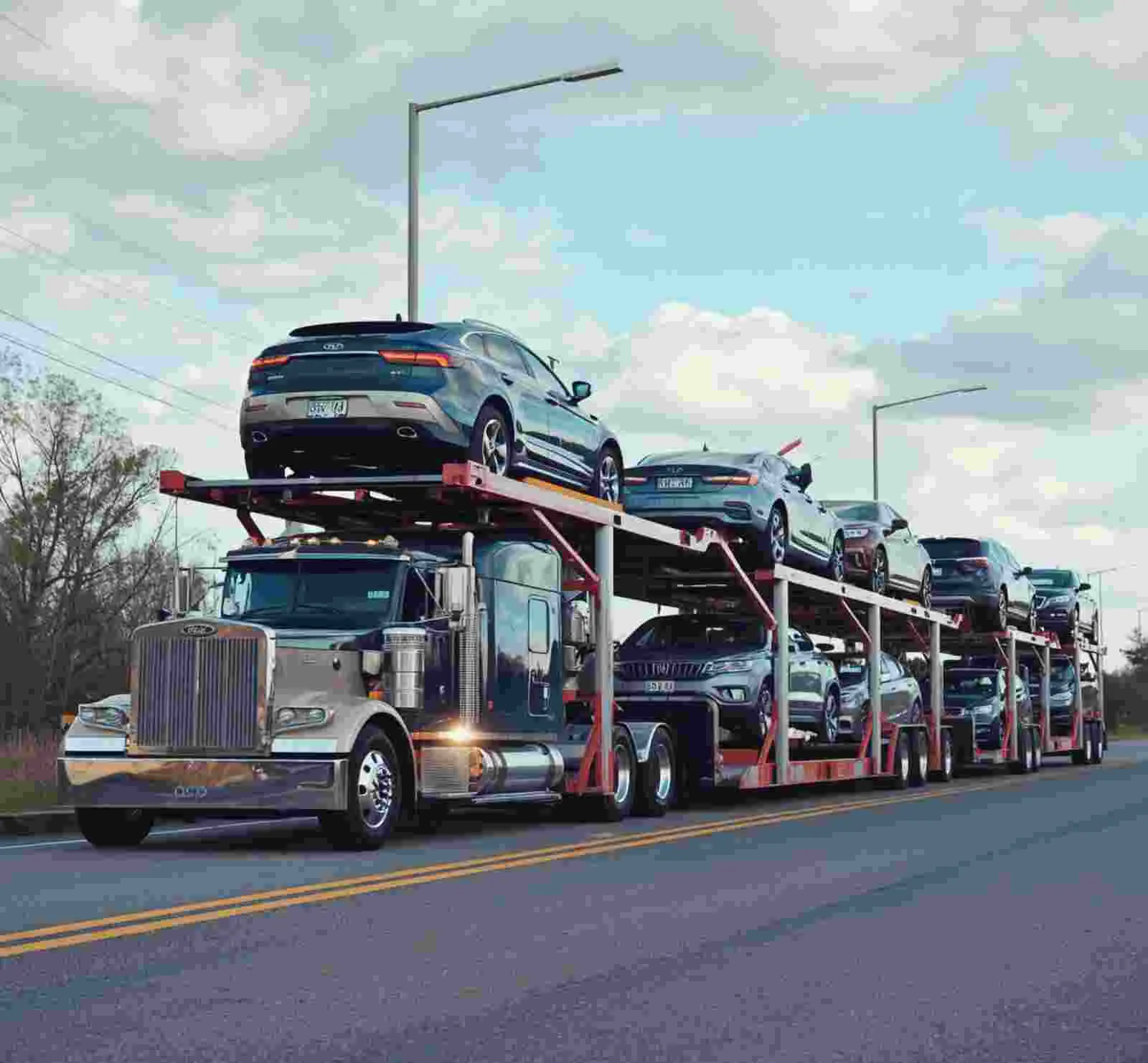
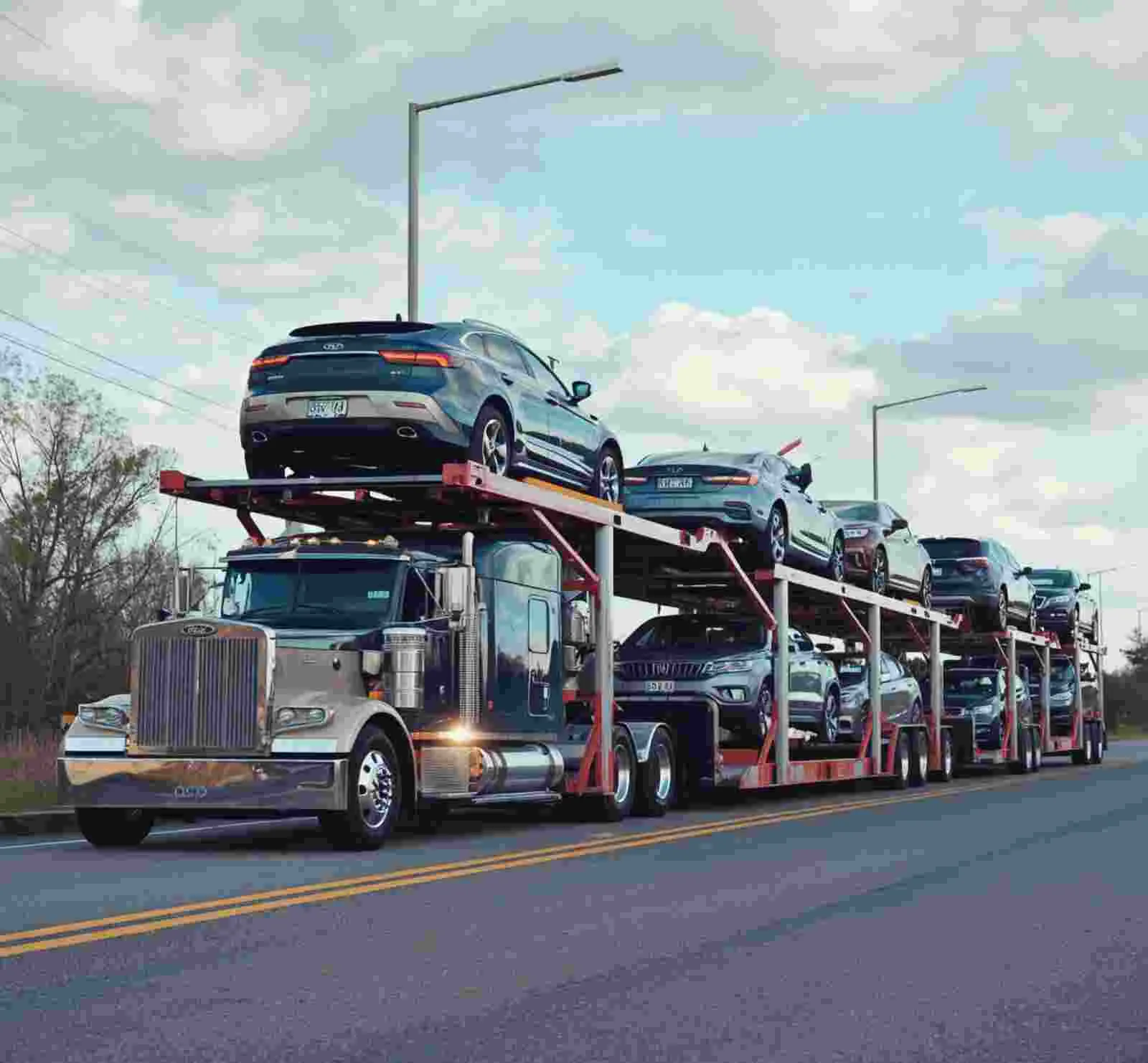
Open carriers are those multi-level car haulers you see on the highway stacked with 8 to 10 vehicles. They're the industry standard, they run every major route constantly, and they're significantly less expensive than enclosed transport — typically 30 to 60 percent cheaper.
Enclosed transport, where your car rides inside a covered trailer, is reserved for luxury vehicles, exotics, or classic cars where weather and road debris protection genuinely matter. If you're shipping a daily driver, an enclosed trailer is an unnecessary expense.
When I finally booked my Accord on an open carrier from Chicago to Orlando through Haulin.ai's Florida car shipping service, I paid $795 — fair, competitive, and it was picked up within 48 hours of booking. No games, no bait-and-switch.
Timing Is Everything
Here's a variable most people never consider: when you ship matters as much as how you ship.
The auto transport industry has real seasonal demand swings. The snowbird migration — when retirees head to Florida and Arizona for winter — drives up prices on southern routes between October and February. Summer is peak season for cross-country moves. If you can ship in the shoulder seasons (late fall or early spring), you'll consistently find better rates.
Day of the week matters too. Carriers trying to fill their last few spots at the end of the week may be more flexible on price. Booking midweek, with flexible pickup windows, puts you in a stronger position than demanding an exact date.
I've also found that being flexible on the pickup and delivery window — even just a 3 to 5 day spread rather than a specific date — makes your order easier and cheaper to fill. Carriers build their routes around geography, not your calendar. The more you can accommodate their routing, the better the deal you'll get.
Terminal vs. Door-to-Door: The Trade-off Nobody Explains
You'll see two delivery options when getting quotes: door-to-door and terminal-to-terminal.
Door-to-door is exactly what it sounds like — the carrier picks up from your address and delivers to your destination address. It's more convenient and, counterintuitively, often not that much more expensive because it reduces the carrier's coordination headaches.
Terminal-to-terminal means you drop your car off at a depot and pick it up from another depot near your destination. In theory, this sounds like the budget option. In practice, the terminals may be inconvenient, storage fees can accumulate if you don't pick up quickly, and the "savings" often evaporate. Unless you genuinely can't be home for pickup or delivery, door-to-door is usually the smarter value.
How Quotes Are Actually Generated (And Why the Lowest Isn't Always the Best)
One of the most useful things I did was spend time on Haulin.ai's page on how car shipping quotes are generated. Understanding the mechanics changed the way I evaluated every quote I received.
Quotes are driven by real-time data: current carrier capacity on your specific lane, fuel prices, your vehicle's weight and dimensions, and historical demand patterns for your dates and route. A legitimately AI-powered broker can process all of these variables instantly and give you a market-accurate number — not a lowball designed to hook you that later "adjusts."
This is where outdated brokers fall short. Many still rely on manual quote processes that can't respond to market shifts in real time. I got one quote that was clearly based on stale data from months prior — it looked great on paper but had zero carrier interest because the actual market had moved.
The practical takeaway: a quote that's significantly below every other quote you've received is almost certainly a red flag, not a bargain. Look for brokers who are transparent about how the price was built, not just what the number is.
Prepare Your Car Properly — It Can Affect Your Cost
This surprised me: how you prepare your car can affect both your experience and, in some cases, your final price.
Personal items left in the vehicle are generally not covered by carrier insurance and technically shouldn't exceed 100 pounds. Some carriers will charge extra if your car is loaded down. Beyond cost, leaving valuables in your car during transport is simply risky — it's an open trailer, not a storage unit.
Make sure your gas tank is no more than a quarter full. Excess fuel adds weight and is a fire hazard on multi-car haulers. Carriers may refuse your vehicle or charge extra if the tank is full.
Document the condition of your car thoroughly before pickup — photos from every angle, noting any existing scratches or dents. According to Consumer Reports, pre-shipment documentation is the most important thing you can do to protect yourself if a damage dispute arises later. Don't skip this step.
Disable any toll tags (like E-ZPass or SunPass) so you don't get charged for routes you didn't choose. Some carriers have had customers hit with unexpected toll bills because of active transponders left in the vehicle.
The Routes That Are Almost Always Cheap
Not all shipping lanes are priced equally. Some routes are so heavily trafficked by carriers that prices are naturally competitive. The highest-volume corridors in the U.S. include:
The New York to Florida corridor is one of the busiest in the country — carriers run it constantly in both directions, which keeps rates reasonable year-round. If you're on this route, you're in luck. Haulin.ai's New York car shipping breaks down what to expect for this specific lane, which is particularly useful if you're planning a snowbird move or a summer relocation.
California to Texas and Midwest to Southeast routes are similarly active and tend to offer competitive pricing. Where you'll pay more is on rural routes, shipments to or from remote locations, or any route where carrier traffic is sparse in one direction.
If your pickup or delivery address is in a rural area, consider meeting the carrier at a nearby major highway interchange or truck stop. Carriers appreciate not having to navigate tight residential streets, and that goodwill can occasionally translate into a better rate or faster assignment.
The Bottom Line
Here's what I know now that I didn't know then: the cheapest way to ship a car isn't about finding the lowest quote. It's about understanding what drives pricing, timing your shipment strategically, choosing open transport, being flexible on dates, and working with a broker who gives you real numbers instead of bait-and-switch tactics.
My total for that Chicago-to-Florida move ended up at $795 — reasonable for the distance, no drama, car arrived in perfect condition four days after pickup. The "cheap" $620 quote I almost booked would have cost me more in time, stress, and eventual price increases than the fair market rate I ultimately paid.
Do your research, get multiple quotes, read the fine print, and don't let a suspiciously low number cloud your judgment. The market is competitive enough that you don't need to gamble — you just need to know how to play it.
Ready to get a transparent, AI-powered quote for your shipment? Visit Haulin.ai to get started.

























Sign in to leave a comment.