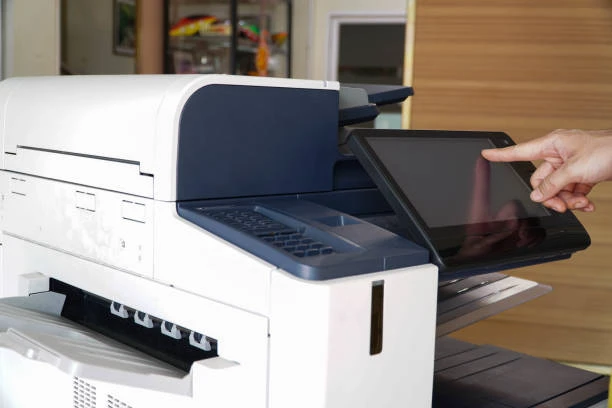

For decades, office photocopiers were simple machines designed to duplicate paper documents. Today, they are evolving into intelligent, connected hubs that support digital workflows, data security, and business efficiency. As organisations embrace digital transformation, the role of the office photocopier is changing rapidly—moving far beyond copying to become a critical part of modern information management. The future of office photocopiers lies in automation, connectivity, security, and sustainability.
From Standalone Machines to Smart Business Hubs
Traditional photocopiers operated in isolation, producing physical copies with minimal integration into broader business systems. Modern office photocopiers, however, are networked devices with powerful software capabilities.
Today’s machines can:
- Scan directly to cloud platforms and document management systems
- Integrate with enterprise software such as ERP and CRM systems
- Automate document workflows from capture to archiving
As digital transformation accelerates, photocopiers are no longer peripheral tools—they are becoming central to how information flows through an organisation.
Digital Transformation and the Rise of Paperless Workflows
One of the most significant trends shaping the future of photocopiers is the shift toward paperless operations. While printing will never fully disappear, businesses are increasingly focused on reducing paper dependency.
Modern photocopiers support this transition through:
- High-speed scanning with optical character recognition (OCR)
- Automated indexing and file naming
- Scan-to-email, scan-to-cloud, and scan-to-workflow features
By converting paper documents into searchable digital files, photocopiers help organisations streamline processes, reduce storage costs, and improve collaboration across teams.
Cloud Integration and Remote Work Enablement
The growth of hybrid and remote work has accelerated the demand for cloud-connected office technology. Future-ready photocopiers are designed to work seamlessly with cloud platforms.
Key cloud-driven capabilities include:
- Direct integration with services such as Microsoft OneDrive, SharePoint, and Google Drive
- Secure remote access to documents
- Consistent workflows across multiple office locations
These features allow employees to access, share, and manage documents regardless of where they are working, making the photocopier an enabler of flexible work environments.
Artificial Intelligence and Automation
Artificial intelligence (AI) is playing an increasingly important role in the evolution of office photocopiers. AI-driven features enhance efficiency, accuracy, and usability.
Emerging AI capabilities include:
- Intelligent document recognition and classification
- Automatic form detection and data extraction
- Predictive maintenance alerts
- Usage pattern analysis for optimisation
As AI continues to develop, photocopiers will become more intuitive, reducing manual intervention and supporting smarter decision-making.
Enhanced Security in a Digital-First World
As photocopiers become more connected, security has become a top priority. Modern photocopiers handle sensitive information and must be protected like any other networked device.
Future-focused security features include:
- User authentication through PINs, cards, or biometric systems
- Encrypted data transmission and storage
- Secure print release to prevent unauthorised access
- Automated data deletion and overwrite functions
These measures help organisations protect confidential data, meet compliance requirements, and reduce the risk of data breaches.
Sustainability and Energy Efficiency
Environmental responsibility is a key driver of innovation in office technology. The future of photocopiers is closely tied to sustainability goals.
Advancements in sustainable photocopiers include:
- Reduced energy consumption and faster low-power recovery
- Lower toner usage through advanced imaging technology
- Longer-lasting consumables and components
- Support for digital workflows that reduce paper waste
Manufacturers are increasingly designing photocopiers that align with corporate sustainability strategies and environmental regulations.
Managed Print Services and Predictive Management
The future of photocopiers is also shaped by the rise of managed print services (MPS). Instead of reacting to issues as they occur, businesses are adopting proactive, data-driven management models.
Benefits of future-ready MPS solutions include:
- Real-time monitoring of device performance
- Automated toner replenishment
- Predictive maintenance to prevent downtime
- Detailed usage analytics for cost control
This shift allows IT teams to focus on strategic initiatives rather than day-to-day device management.
Customisation and User-Centric Design
Future photocopiers are becoming more user-centric, offering personalised experiences based on user roles and preferences.
Innovations in user experience include:
- Customisable touchscreen interfaces
- Role-based access to functions
- Simplified workflows for common tasks
- Mobile printing and scanning support
These features improve productivity by reducing complexity and ensuring employees can complete tasks quickly and efficiently.
Integration with Broader Digital Ecosystems
Office photocopiers are increasingly integrated into broader digital ecosystems rather than operating as standalone devices.
Future integration trends include:
- Seamless connectivity with document management platforms
- Integration with workflow automation tools
- Support for industry-specific applications
This integration ensures that photocopiers support business processes end-to-end, from document creation to compliance and archiving.
The Role of Photocopiers Beyond Printing
While printing volumes may decline, photocopiers are not becoming obsolete. Instead, their role is evolving.
Future photocopiers will act as:
- Document capture gateways
- Workflow automation tools
- Secure information management systems
- Analytics-driven productivity assets
Their value will be measured not by how many pages they print, but by how effectively they support digital transformation.
Preparing Your Business for the Future
To stay competitive, businesses should evaluate whether their current photocopier infrastructure supports modern digital needs.
Key considerations include:
- Cloud compatibility and software integration
- Security features and compliance readiness
- Scalability for future growth
- Sustainability and cost efficiency
Investing in future-ready photocopiers ensures long-term value and alignment with digital transformation strategies.
Final Thoughts
The future of office photocopiers is defined by digital transformation, connectivity, intelligence, and sustainability. Far from becoming obsolete, photocopiers are evolving into smart, secure, and strategic business tools that support modern workflows and remote work environments.
As technology continues to advance, organisations that embrace next-generation photocopiers will gain greater efficiency, improved security, and stronger control over their information. The office photocopier of the future is no longer just about copying—it’s about enabling smarter, faster, and more connected ways of working.




















Sign in to leave a comment.