

Introduction
Every leader eventually faces challenges such as declining performance, missed deadlines, low employee engagement, or customer dissatisfaction. When these issues arise, many organizations immediately search for someone to blame.
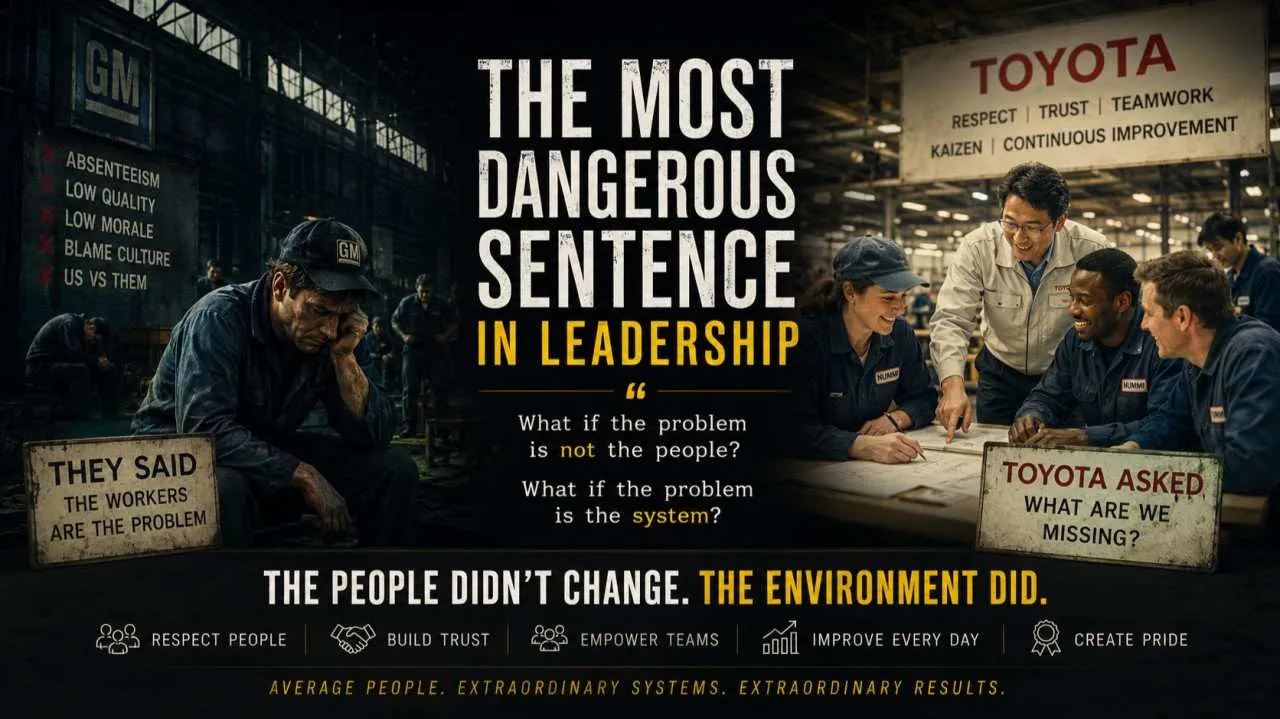
This reaction often begins with what many experts call The Most Dangerous Sentence in Leadership:
"We have a people problem."
At first glance, the statement seems reasonable. After all, people make decisions, complete tasks, and interact with customers. However, great leaders understand that jumping to this conclusion can prevent organizations from discovering the real cause of poor performance.
The concept behind The Most Dangerous Sentence in Leadership is simple yet powerful: before blaming people, leaders must examine the systems, processes, and environments in which those people operate.
Understanding The Most Dangerous Sentence in Leadership
Why is "We have a people problem" considered The Most Dangerous Sentence in Leadership?
Because it encourages leaders to focus on symptoms instead of root causes.
When leaders assume employees are the problem, they may overlook critical issues such as:
- Unclear expectations
- Poor communication
- Inefficient processes
- Lack of training
- Weak leadership practices
- Outdated systems
As a result, organizations often implement the wrong solutions while the real problem continues to exist.
Why Systems Matter More Than Individuals
One of the key lessons behind The Most Dangerous Sentence in Leadership is that performance is heavily influenced by systems.
Consider a sales team that consistently misses targets. An average leader may assume team members lack motivation or talent. A great leader asks deeper questions:
- Are goals realistic?
- Do employees have the right tools?
- Is communication effective?
- Are processes creating unnecessary obstacles?
By examining the system first, leaders can identify factors that directly impact performance.
The Difference Between Average and Exceptional Leaders
Average leaders focus on finding fault.
Exceptional leaders focus on finding causes.
When faced with a problem, average leaders ask:
- Who made the mistake?
- Who is responsible?
- Who should be replaced?
Great leaders influenced by the lessons of The Most Dangerous Sentence in Leadership ask:
- Why did this happen?
- What conditions contributed to this outcome?
- What system improvements are needed?
This shift in thinking transforms organizational culture and encourages continuous improvement.
How Workplace Culture Shapes Results
People do not work in isolation. They respond to their environment.
A workplace built on fear can discourage innovation.
Poor communication can create confusion.
Micromanagement can reduce accountability.
Lack of recognition can lower motivation.
Many behaviors that leaders interpret as employee failures are actually predictable responses to flawed workplace systems.
This is another reason why The Most Dangerous Sentence in Leadership can be so harmful. It distracts leaders from examining the environment that influences employee behavior.
The Hidden Cost of Wrong Assumptions
Assumptions can be expensive.
When leaders believe employees are the primary problem, they often invest in solutions that fail to address the root cause.
For example:
- Hiring new employees instead of improving processes
- Increasing supervision instead of improving communication
- Creating training programs when expectations are unclear
The lesson behind The Most Dangerous Sentence in Leadership is that assumptions should always be tested before action is taken.
Building Better Leadership Habits
Organizations that avoid The Most Dangerous Sentence in Leadership encourage leaders to ask better questions.
Instead of asking:
"Who failed?"
Ask:
"What contributed to this outcome?"
Instead of asking:
"Who should be blamed?"
Ask:
"What barriers are preventing success?"
Instead of asking:
"Why aren't employees performing?"
Ask:
"What conditions would help them perform better?"
These questions create a culture of learning, accountability, and improvement.
Conclusion
The easiest leadership response is to blame people.
The most effective leadership response is to understand the system.
The core lesson behind The Most Dangerous Sentence in Leadership is that lasting improvement rarely comes from replacing individuals. It comes from improving the processes, environments, and systems that enable people to succeed.
Before concluding that your organization has a people problem, take a closer look at the system itself.
You may discover that the real solution has been there all along.



























Sign in to leave a comment.