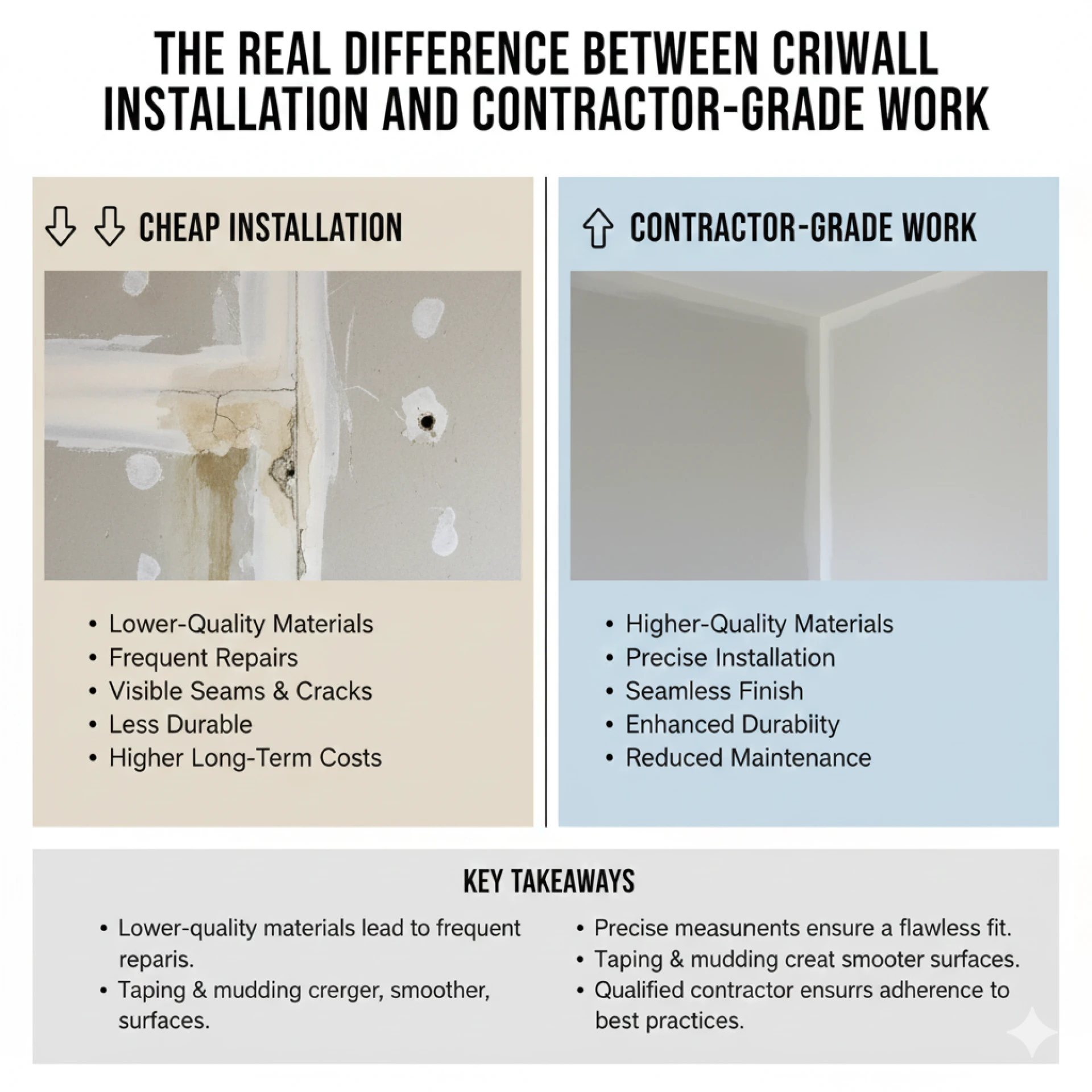

The real difference between cheap drywall installation and contractor-grade work lies in material quality and installation methods. Cheap drywall often uses inferior materials, leading to problems down the line.
In contrast, contractor-grade work features higher-quality drywall, precise installation and attention to detail. This guarantees durability, a better finish and fewer repairs. While cheap options might save money initially, they often lead to higher long-term costs.
Key Takeaways
- Cheap drywall often uses lower-quality materials, leading to frequent repairs and higher long-term costs compared to contractor-grade options.
- Contractor-grade drywall installation employs precise measurements, ensuring a flawless fit and minimizing gaps, enhancing overall durability and aesthetics.
- Taping and mudding techniques in contractor-grade work create stronger bonds and smoother surfaces, whereas cheap methods may result in visible seams and cracks.
- Higher-grade drywall provides better moisture and impact resistance, making it suitable for high-traffic and wet areas, unlike cheaper alternatives.
- Selecting a qualified contractor ensures adherence to best practices, resulting in a polished finish and reduced maintenance needs over time.
Understanding Drywall Quality - Materials Matter
When it comes to drywall, the quality of materials used can greatly impact the overall outcome of a project. Different drywall grades exist, each designed for specific applications, which can lead to significant material differences.
For instance, standard drywall is suitable for most interior spaces, while moisture-resistant types are essential in bathrooms or kitchens. Higher-grade drywall can offer better durability and soundproofing, making it ideal for commercial settings.
Understanding these variations helps homeowners and contractors select the right product for their needs. Ultimately, investing in better quality materials can lead to a more successful and long-lasting drywall installation.
Installation Techniques - Precision vs. Shortcuts
Drywall installation requires careful attention to detail, as the techniques used can greatly influence the final result. Professionals rely on precision measurements to guarantee each panel fits perfectly, minimizing gaps and guaranteeing a smooth surface.
In contrast, some may opt for shortcut techniques, such as rushing through measurements or using fewer fasteners. While these methods may save time, they often lead to uneven walls and costly repairs later.
Ultimately, investing in precise installation techniques not only enhances the appearance of the space but also assures durability, providing a long-lasting solution that cheap shortcuts simply cannot match.
Finishing Touches - The Importance of Taping and Mudding
In drywall installation, finishing touches like taping and mudding play an important role in achieving a polished look. Proper technique is essential, as it guarantees that seams are well-covered and the surface remains smooth. Moreover, the quality of materials used can greatly impact the final outcome, making it important to choose wisely for the best results.
Proper Technique Matters
Mastering the techniques of taping and mudding is essential for achieving a professional finish in drywall installation. Proper alignment and joint spacing are vital to prevent cracks and guarantee a seamless appearance.
- Taping creates a strong bond between drywall sheets.
- Mudding fills in gaps and smooths surfaces.
- Proper technique minimizes sanding and reduces dust.
- Consistent joint spacing helps avoid visible seams.
- A well-finished surface enhances overall room aesthetics.
When executed correctly, these techniques elevate the quality of the installation, transforming a basic job into a polished, contractor-grade finish that homeowners can be proud of.
Quality Materials Impact Finish
Choosing the right materials for drywall installation greatly affects the final appearance of a project. Quality materials guarantee material durability, which leads to a longer-lasting finish.
For instance, using high-grade joint compound can result in smoother surfaces, enhancing finish aesthetics. In contrast, cheaper alternatives may crack or show imperfections over time, detracting from the overall look.
Furthermore, proper taping and mudding techniques employed with quality products create seamless joints, which elevate the visual appeal. Ultimately, selecting superior materials not only improves durability but also guarantees a polished finish that can greatly enhance the value of a space.
Time Investment - Speed vs. Detail
When considering drywall installation, the balance between speed and detail is essential. The choice between quick installation and meticulous craftsmanship can greatly affect the outcome.
- Speed advantages allow for faster project completion.
- Detail emphasis results in a polished, professional finish.
- Rushed work may lead to visible flaws.
- Skilled contractors prioritize both efficiency and thoroughness.
- Quality craftsmanship often requires more time.
Ultimately, understanding the trade-offs between these two approaches helps homeowners make informed decisions. Choosing speed might save time initially, but detail guarantees a lasting and visually appealing result that can enhance overall satisfaction.
Long-Term Effects - Durability and Maintenance Cost
When comparing cheap and contractor-grade drywall, material quality plays an essential role in determining long-term durability. Higher quality drywall typically requires fewer repairs over time, leading to lower maintenance costs. Understanding these factors can help homeowners make informed decisions about their installation choices.
Material Quality Comparison
The quality of drywall materials greatly impacts their long-term durability and maintenance costs. Choosing the right material types can save homeowners money in the long run, despite potentially higher installation costs initially.
- High-quality drywall resists moisture and mold.
- Thicker materials offer better impact resistance.
- Specialized boards can enhance soundproofing.
- Premium options usually have a longer lifespan.
- Better materials reduce the need for frequent repairs.
Investing in contractor-grade drywall guarantees not only a more robust structure but also minimizes ongoing maintenance, making it a wise choice for both new builds and renovations.
Repair Frequency Analysis
Regularly evaluating the repair frequency of drywall can considerably affect long-term durability and maintenance costs. Cheap drywall installations may require more frequent repairs due to inferior materials, leading to higher overall costs.
A cost analysis reveals that contractor-grade drywall, while initially more expensive, often results in fewer repairs over time. This reduced repair frequency lowers maintenance expenses, making it a more economical choice in the long run.
Homeowners should consider these factors when choosing between cheap and contractor-grade options. Investing in quality can lead to significant savings and less hassle, ensuring a durable and lasting drywall finish.
Long-Term Cost Implications
While many homeowners may focus solely on the upfront costs of drywall installation, understanding the long-term cost implications is crucial for making a wise investment.
Cheap drywall may save money initially, but it can lead to higher lifecycle costs due to frequent repairs and replacements. Contractor-grade work typically offers durability, resulting in better investment returns over time.
Homeowners should consider:
- Reduced maintenance frequency
- Enhanced moisture resistance
- Improved insulation properties
- Longer-lasting finishes
- Better resale value
Investing in quality drywall installation not only leads to immediate satisfaction but also guarantees savings and value in the long run.
Choosing the Right Contractor - What to Look For
Choosing the right contractor for drywall installation can be a crucial step in ensuring a successful project. Homeowners should begin by checking contractor credentials, including licenses and insurance, to confirm qualifications.
It's also essential to seek out client testimonials, which provide insight into the contractor’s reliability and quality of work. Positive feedback from previous clients can indicate satisfaction and expertise.
Moreover, potential clients should request examples of past projects to better understand the contractor's style and capabilities. By carefully evaluating these factors, homeowners can select a contractor who will deliver high-quality drywall installation, ensuring long-term satisfaction.































Sign in to leave a comment.