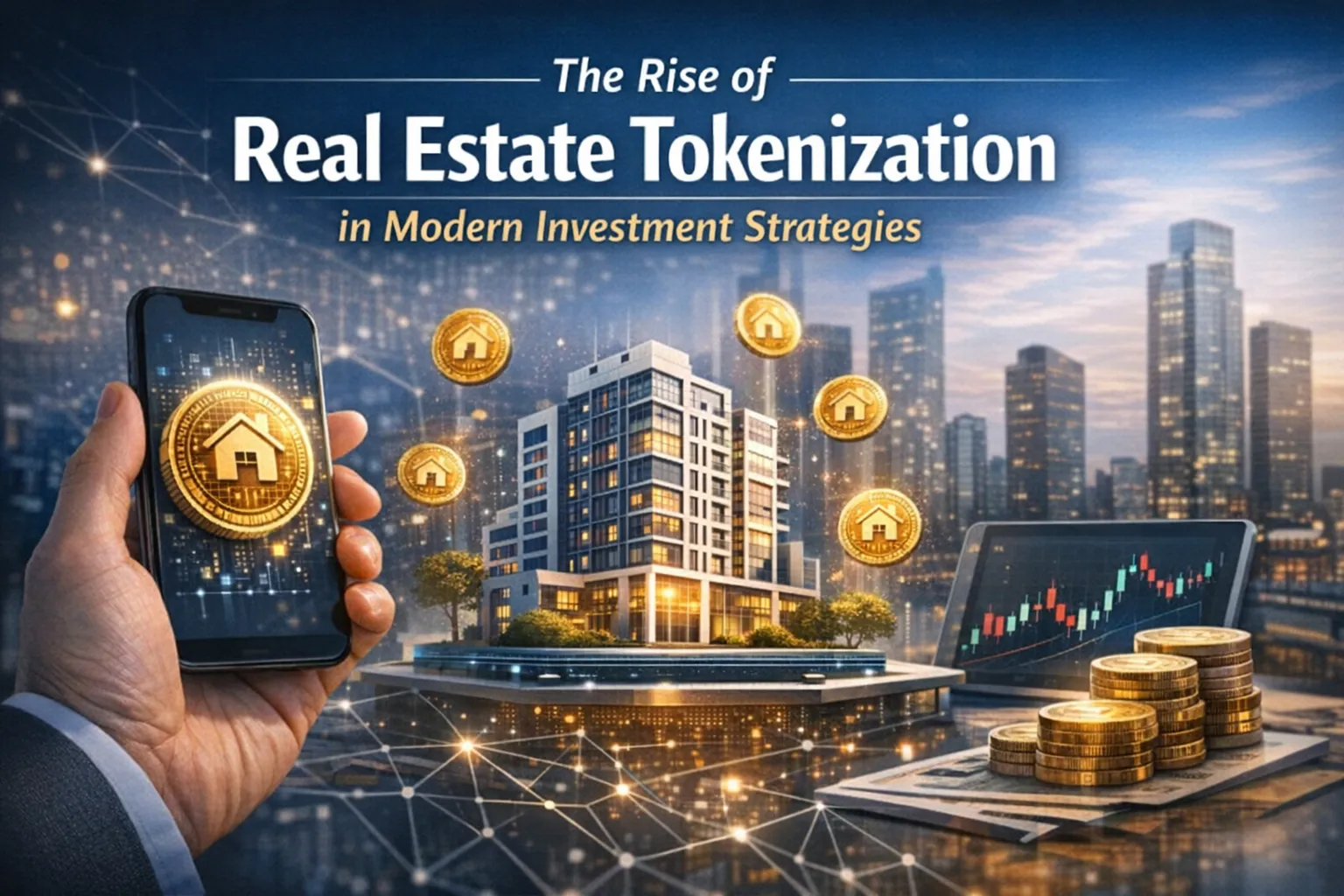

Real estate tokenization is rapidly transforming the structural foundations of property investment by integrating blockchain-based asset representation into traditional financial ecosystems. This paradigm shift enables fractional ownership, enhanced liquidity, and programmable asset management, making real estate more accessible and efficient for a broader spectrum of investors. As institutional and retail participants increasingly explore decentralized finance (DeFi) frameworks, tokenized real estate is emerging as a hybrid asset class that bridges physical infrastructure with digital financial instruments.
Understanding the Core Architecture of Real Estate Tokenization
At its core, real estate tokenization involves converting ownership rights of a physical property into digital tokens stored on a blockchain. These tokens represent fractional shares of the underlying asset and are typically issued through smart contracts that govern ownership distribution, revenue allocation, and compliance protocols.
Unlike traditional property investments, which are often constrained by high capital requirements and illiquidity, tokenization decomposes assets into divisible units. This fractionalization mechanism lowers entry barriers and allows investors to diversify portfolios across multiple geographies and property types without substantial capital lock-in.
From a technical standpoint, tokenization leverages distributed ledger technology (DLT) to ensure immutability, transparency, and traceability of transactions. Each token is cryptographically secured and can be traded on secondary markets, subject to regulatory frameworks. This introduces a level of operational efficiency and auditability that is difficult to achieve in conventional real estate systems.
Key Benefits Driving Adoption
The increasing adoption of tokenized real estate can be attributed to several structural and economic advantages:
- Enhanced Liquidity: Traditional real estate markets are inherently illiquid, with transactions often taking weeks or months. Tokenized assets can be traded in near real-time on digital exchanges, significantly improving liquidity.
- Fractional Ownership: Investors can purchase small portions of high-value properties, enabling participation without the need for substantial upfront capital.
- Transparency and Security: Blockchain ensures that all transactions are recorded on an immutable ledger, reducing the risk of fraud and enhancing trust among stakeholders.
- Global Accessibility: Tokenization removes geographical barriers, allowing international investors to access markets that were previously difficult to enter.
- Automated Compliance: Smart contracts can embed regulatory requirements, ensuring that transactions adhere to jurisdictional laws without manual intervention.
These advantages collectively position tokenization as a disruptive force in the evolution of real estate investment strategies.
Regulatory and Operational Complexities
Despite its potential, real estate tokenization is not without challenges. Regulatory uncertainty remains one of the most significant barriers to widespread adoption. Different jurisdictions classify tokenized assets differently—some as securities, others as digital assets—leading to fragmented compliance requirements.
Additionally, the integration of off-chain legal frameworks with on-chain digital representations introduces complexities in ownership enforcement. For instance, while a token may represent ownership on the blockchain, legal recognition of that ownership must be established through traditional property laws.
Operationally, issues such as platform interoperability, cybersecurity risks, and valuation standardization must be addressed to ensure long-term viability. The role of a Real Estate Tokenization Development Company becomes critical in designing robust infrastructure that aligns technological innovation with legal and financial compliance.
Strategic Implications for Investors
The emergence of tokenized real estate is reshaping investment strategies by introducing new dimensions of flexibility and risk management:
- Portfolio Diversification: Investors can allocate capital across multiple tokenized assets, reducing exposure to single-property risks.
- Dynamic Asset Allocation: Real-time trading capabilities allow for more agile portfolio adjustments in response to market conditions.
- Yield Optimization: Tokenized platforms often provide access to income-generating properties, enabling consistent cash flow through rental yields.
- Data-Driven Decision Making: Blockchain-based systems offer granular transaction data, facilitating more informed investment decisions.
These strategic benefits are particularly relevant in a macroeconomic environment characterized by volatility and shifting asset correlations.
Technological Infrastructure and Market Evolution
The scalability of real estate tokenization depends heavily on advancements in blockchain infrastructure, including layer-2 solutions, interoperability protocols, and decentralized identity systems. As these technologies mature, they will enable more seamless integration between traditional financial institutions and decentralized platforms.
Moreover, the emergence of token standards such as ERC-20 and ERC-1400 has facilitated the development of compliant security tokens, further legitimizing tokenized real estate within regulated markets. Institutional participation is also increasing, with asset managers and real estate firms exploring tokenization as a means to unlock liquidity and optimize capital efficiency.
In parallel, secondary marketplaces for tokenized assets are evolving, providing investors with avenues for exit and price discovery. These platforms are expected to play a crucial role in establishing market depth and stability.
Future Outlook and Investment Paradigm Shift
The trajectory of real estate tokenization suggests a gradual but definitive shift toward digitized asset ownership. As regulatory frameworks become more harmonized and technological barriers are mitigated, tokenization is likely to become a standard component of modern investment portfolios.
Institutional adoption, coupled with retail participation, will drive market maturation and innovation. The convergence of blockchain, real estate, and financial engineering is not merely a trend but a structural transformation that redefines how value is created, distributed, and exchanged in the property sector.
In conclusion, real estate tokenization represents a significant evolution in investment strategy, offering a more inclusive, efficient, and transparent framework for asset ownership. As the ecosystem continues to զարգate, stakeholders who understand and adapt to this paradigm will be better positioned to capitalize on its long-term potential.










Sign in to leave a comment.