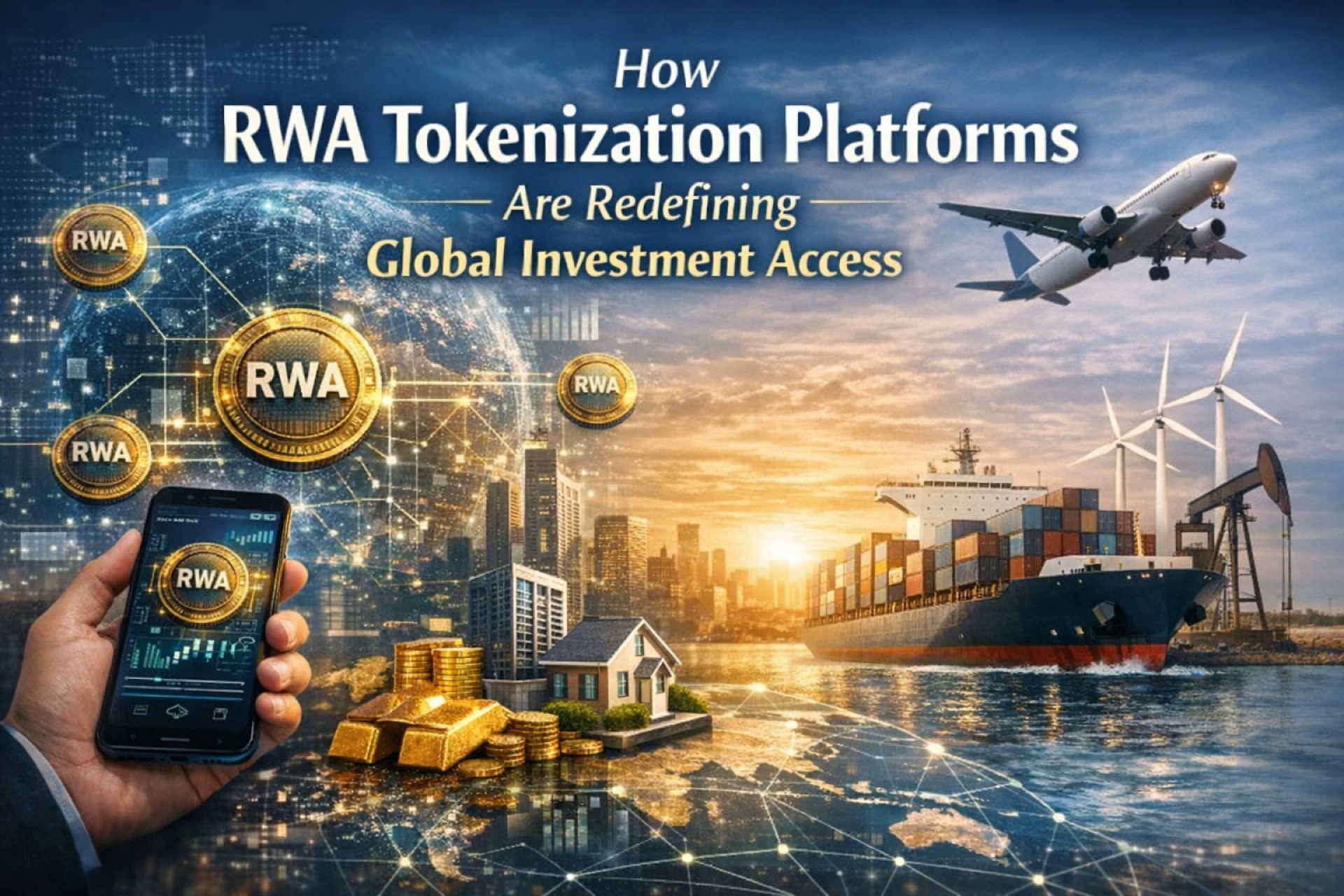

RWA tokenization platforms are fundamentally re-architecting how ownership is defined, transferred, and monetized across global financial systems. By converting tangible and intangible assets—such as real estate, private credit, and commodities—into blockchain-native representations, these platforms introduce a programmable ownership layer that bypasses legacy custodial and settlement bottlenecks.
Unlike traditional financial rails, where ownership records are fragmented across registries and intermediaries, tokenized assets exist as unified digital primitives. This transformation enables deterministic settlement, cryptographic verification, and immutable audit trails. As a result, investors no longer rely on jurisdiction-specific intermediaries to validate transactions, reducing both counterparty risk and operational latency.
From a systems perspective, this evolution is less about digitization and more about composability—where assets can seamlessly integrate into decentralized financial ecosystems, unlocking new liquidity vectors and capital efficiency mechanisms.
Democratizing Access Through Fractionalization
One of the most profound impacts of RWA tokenization platforms is the democratization of investment access. Historically, high-value asset classes were restricted to institutional capital due to high entry thresholds and illiquid structures. Tokenization dismantles these barriers through fractional ownership models.
This paradigm shift introduces a granular participation framework, enabling retail and global investors to access diversified asset pools with minimal capital exposure. Key mechanisms include:
- Fractional issuance models: Assets are divided into tokenized units, lowering minimum investment requirements and enabling micro-allocation strategies.
- Borderless participation: Blockchain infrastructure allows investors to engage in cross-border markets without traditional banking constraints.
- Portfolio diversification: Investors can allocate capital across heterogeneous asset classes previously inaccessible due to liquidity constraints.
In this context, the emergence of asset tokenization development services is not merely technical enablement but a foundational layer for inclusive capital markets, where participation is decoupled from geography and wealth concentration.
Liquidity Engineering and Market Efficiency
RWA tokenization platforms introduce a new paradigm of liquidity engineering by transforming inherently illiquid assets into tradable digital instruments. Traditional markets often suffer from extended settlement cycles, limited secondary markets, and opaque pricing mechanisms. Tokenization addresses these inefficiencies through on-chain liquidity frameworks.
Blockchain-based tokenized assets can be traded continuously, enabling 24/7 market access and improved price discovery. This shift enhances capital velocity, allowing investors to rebalance portfolios dynamically rather than being locked into long holding periods. Additionally, smart contracts automate settlement processes, reducing transaction costs and eliminating reconciliation delays.
However, liquidity in tokenized ecosystems is not purely technological—it is contingent on market depth, regulatory clarity, and institutional participation. While tokenization enhances transferability, true liquidity emerges only when compliant trading venues and credible valuation frameworks align with investor demand.
Interoperability, Compliance, and Institutional Adoption
The scalability of RWA tokenization platforms is increasingly tied to interoperability and regulatory harmonization. As multiple blockchain networks host tokenized assets, cross-chain compatibility becomes essential for ensuring seamless asset mobility and liquidity aggregation.
Standardization protocols and interoperable infrastructures enable assets to move across ecosystems without fragmentation, fostering a unified global market layer. Simultaneously, compliance frameworks—such as KYC/AML integration and jurisdictional adherence—are being embedded directly into token logic through programmable compliance.
Institutional adoption is accelerating as these platforms mature. Financial entities are leveraging tokenization to streamline issuance, reduce operational overhead, and access global liquidity pools. This convergence of traditional finance and decentralized infrastructure is reshaping capital formation models, enabling faster and more efficient fundraising mechanisms.
The Emergence of a Borderless Investment Economy
RWA tokenization platforms are not simply enhancing existing systems—they are redefining the topology of global investment itself. By eliminating geographical constraints, reducing entry barriers, and enabling real-time settlement, these platforms are fostering a borderless investment economy.
Investors can now access fractional ownership in assets across continents, participate in decentralized lending markets, and leverage tokenized collateral within composable financial ecosystems. This convergence of accessibility, liquidity, and programmability is transforming how capital flows across global markets.
As adoption scales, the distinction between traditional and digital assets will increasingly blur, giving rise to a unified financial architecture where value is tokenized, interoperable, and universally accessible.

























Sign in to leave a comment.