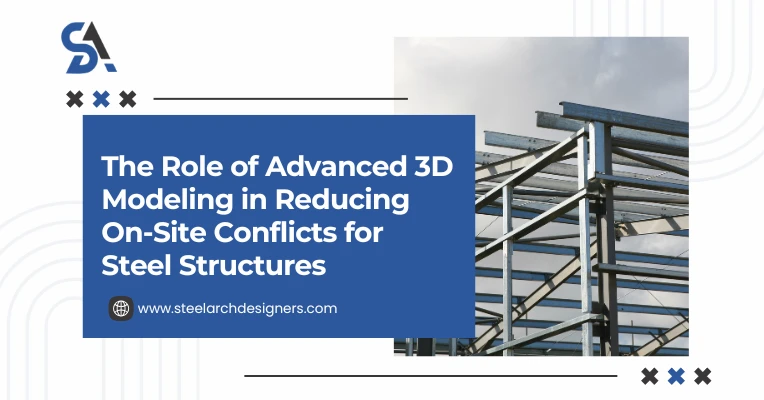

In modern construction projects, speed, accuracy, and coordination are more important than ever. Steel structures, in particular, demand precise planning because even a small mistake can lead to costly delays, material wastage, and serious on-site conflicts. One of the most effective solutions to these challenges is advanced 3D modeling.
At Steelarch Designers, we have seen how 3D modeling in construction has transformed the way steel structures are planned, fabricated, and installed. By visualizing the entire project
before it reaches the site, teams can prevent clashes, minimize construction errors, and achieve improved site accuracy.
In this blog, we’ll explain the role of advanced 3D modeling, how it helps with on-site conflict prevention, and why it has become essential for efficient steel fabrication workflows.
Understanding 3D Modeling in Steel Construction
3D modeling is the process of creating a digital three-dimensional representation of a structure using specialized software. In steel construction, this model includes beams, columns, connections, plates, bolts, and even surrounding elements like walls, floors, and mechanical systems.
Unlike traditional 2D drawings, 3D models provide a clear, realistic view of how every component fits together. This clarity helps all stakeholders—engineers, fabricators, contractors, and site teams—understand the design in the same way.
What Makes Advanced 3D Modeling Different?
Advanced 3D modeling goes beyond simple visualization. It integrates detailed data such as:
- Exact dimensions and tolerances
- Material specifications
- Connection details
- Fabrication and erection sequences
This level of detail allows teams to detect potential problems early, long before steel reaches the construction site.
Why On-Site Conflicts Are Common in Steel Structures
On-site conflicts occur when elements clash, don’t fit as expected, or interfere with other systems during installation. These conflicts can happen due to:
- Inaccurate or incomplete drawings
- Poor coordination between disciplines
- Design changes not updated properly
- Miscommunication between fabrication and site teams
For steel structures, these issues can cause rework, delays, and safety risks. Advanced 3D modeling helps address these problems at the planning stage.
How Advanced 3D Modeling Helps Prevent On-Site Conflicts
1. Early Clash Detection
One of the biggest advantages of 3D modeling in construction is clash detection. The model can identify conflicts between:
- Steel beams and columns
- Structural steel and MEP systems
- Steel connections and architectural elements
By detecting these clashes early, teams can resolve them digitally instead of dealing with costly fixes on-site. This plays a major role in on-site conflict prevention.
2. Improved Site Accuracy
When steel components are modeled accurately, what gets fabricated matches exactly what is needed on-site. This leads to:
- Perfect fit during erection
- Fewer alignment issues
- Reduced on-site adjustments
Improved site accuracy ensures smoother installation and faster project progress.
3. Better Coordination Between Teams
Advanced 3D modeling creates a single source of truth. Everyone—from designers to fabricators to site engineers—works from the same model.
At Steelarch Designers, we ensure that our 3D models are shared and coordinated with all stakeholders. This reduces misunderstandings and keeps everyone aligned throughout the project lifecycle.
4. Clear Visualization for Decision-Making
3D models help clients and project managers clearly visualize the final structure. This makes it easier to:
- Approve designs faster
- Suggest changes early
- Avoid late-stage modifications
When decisions are made early, the risk of conflicts during construction is greatly reduced.
Minimizing Construction Errors with 3D Modeling
Accurate Steel Detailing
Advanced 3D modeling enables precise steel detailing, including:
- Connection design
- Bolt sizes and locations
- Weld details
This level of detail significantly helps in minimizing construction errors, as fabricators receive clear and accurate information.
Reduced Rework and Material Wastage
Construction errors often lead to steel rework or scrapping materials. With accurate 3D models:
- Fabrication errors are minimized
- Steel is cut and assembled correctly the first time
- Material wastage is reduced
This not only saves cost but also improves project sustainability.
Smooth Erection Sequencing
Advanced 3D models can simulate erection sequences. This allows teams to plan:
- Lifting points
- Crane movements
- Installation order
As a result, on-site activities become safer and more organized.
Role of 3D Modeling in Steel Fabrication Workflows
Streamlining Fabrication Processes
Steel fabrication workflows rely heavily on accurate information. Advanced 3D modeling provides:
- Precise fabrication drawings
- CNC-ready data
- Bill of materials
This streamlines the fabrication process and reduces the chances of misinterpretation.
Faster Fabrication Turnaround
When fabricators receive clear, error-free data, production moves faster. There are fewer clarifications, revisions, and stoppages, leading to:
- Shorter fabrication timelines
- Faster delivery to site
- Better project scheduling
Integration with Modern Technologies
Advanced 3D modeling can integrate with technologies like BIM, CNC machines, and project management software. This digital integration ensures seamless data flow from design to fabrication to installation.
Real-World Impact of Advanced 3D Modeling
Reduced Project Delays
By resolving conflicts before construction begins, projects experience fewer delays. This helps contractors meet deadlines and avoid penalties.
Cost Savings
Preventing on-site conflicts saves money by reducing:
- Rework costs
- Labor overruns
- Equipment downtime
Improved Safety on Site
When steel fits correctly and erection is well planned, on-site risks decrease. Workers face fewer unexpected situations, improving overall site safety.
Why Steelarch Designers Uses Advanced 3D Modeling
At Steelarch Designers, we believe that quality planning leads to successful construction. Our approach to advanced 3D modeling focuses on:
- High-detail modeling for steel structures
- Strong coordination with all disciplines
- Accuracy in fabrication-ready models
- Practical solutions for real site conditions
Our goal is not just to create models but to help our clients achieve smooth execution with minimal conflicts.
The Future of 3D Modeling in Steel Construction
As construction projects become more complex, the role of advanced 3D modeling will continue to grow. Future developments may include:
- AI-driven clash detection
- Real-time model updates from site data
- Greater integration with digital twins
Companies that adopt these technologies early will have a clear competitive advantage.
Conclusion
On-site conflicts are one of the biggest challenges in steel construction, but they are not unavoidable. Advanced 3D modeling plays a crucial role in on-site conflict prevention, minimizing construction errors, and achieving improved site accuracy.
By using 3D modeling in construction, project teams can visualize, coordinate, and optimize steel structures before they reach the site. This leads to smoother installations, efficient steel fabrication workflows, reduced costs, and safer job sites.
At Steelarch Designers, we are committed to delivering accurate, practical, and advanced 3D modeling solutions that help our clients build with confidence.
If you’re looking to reduce conflicts, improve efficiency, and ensure success in your steel structure projects, advanced 3D modeling is not just an option—it’s a necessity.






















Sign in to leave a comment.