
Femoral neck fractures are a common and serious injury among the elderly, often resulting from low-energy falls. These fractures carry a high risk of immobility-related complications and require timely, effective intervention. Among the available surgical options, the fixed bipolar prosthesis has emerged as a practical and reliable solution for this vulnerable population.
Understanding the Fixed Bipolar Prosthesis
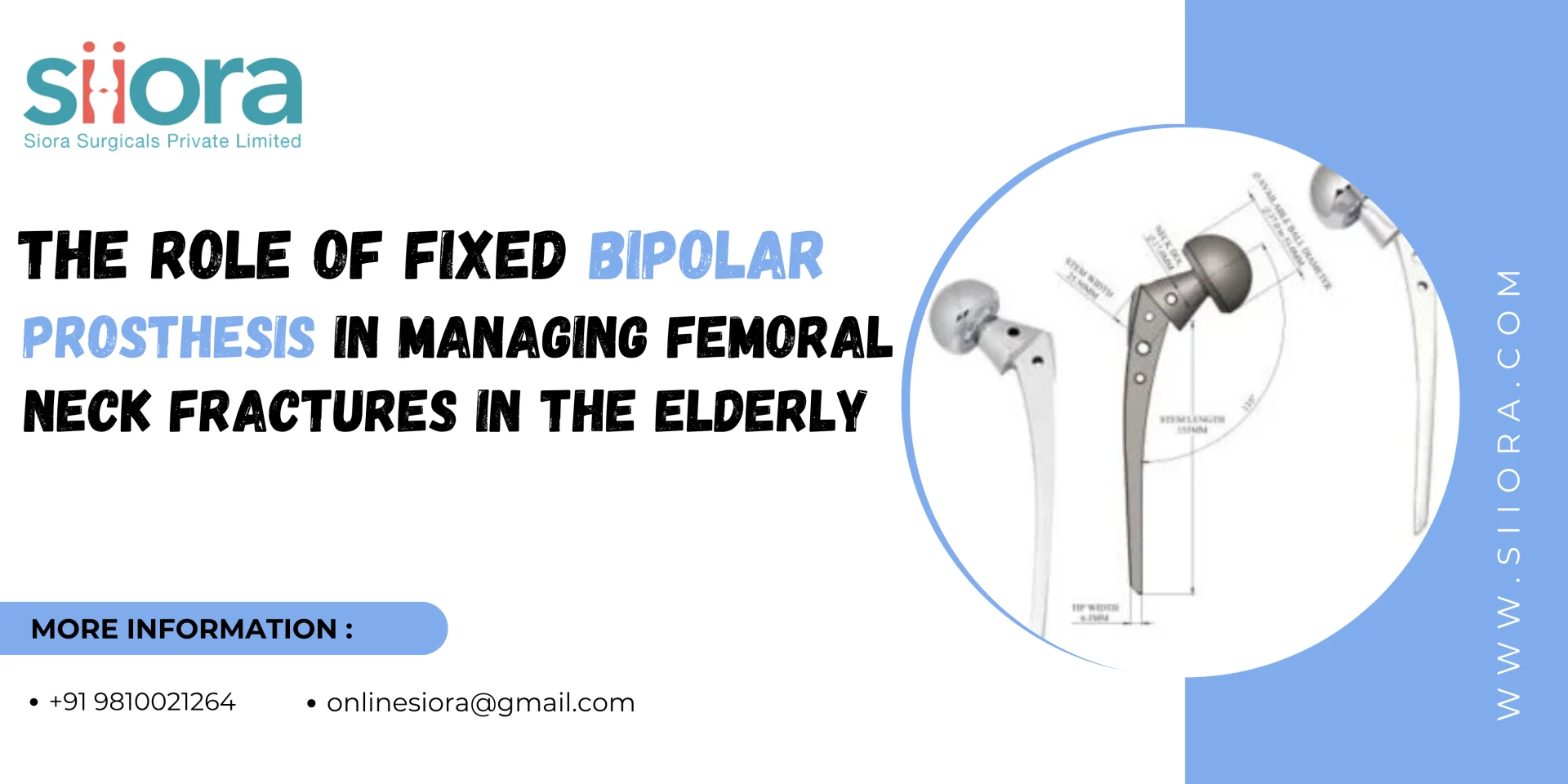
A fixed bipolar prosthesis is a form of partial hip replacement. It features a metal femoral head that moves within a polyethylene liner, which is encased in a larger metal shell. This configuration allows for dual articulation, though in the fixed variant, most of the movement happens at the outer shell against the natural hip socket.
This prosthesis is designed to offer a balance between stability and motion while simplifying the surgical procedure compared to total hip replacement.
Why It’s a Good Fit for the Elderly?
Early Mobilization
One of the biggest advantages of the fixed bipolar prosthesis is that it allows for immediate post-operative weight-bearing. Unlike internal fixation, which depends on the bone healing correctly, a process often slowed by osteoporosis or poor circulation, this implant provides instant mechanical stability.
That means patients can begin moving with support within 24 to 48 hours. Early mobility is critical for preventing complications such as pneumonia, blood clots, and muscle wasting.
Reduced Risk of Dislocation
Stability is key in elderly patients, especially those with weakened muscles or neurological conditions. The design of the fixed bipolar prosthesis offers better resistance to dislocation compared to unipolar prostheses or conventional total hip replacements. This is particularly important in patients with cognitive decline who may not follow movement restrictions well after surgery.
Fewer Revision Surgeries
Elderly patients generally have lower activity levels, which results in less wear on the prosthesis. As a result, the fixed bipolar implant often lasts for the remainder of the patient’s life, avoiding the need for revision surgery. This makes it both a low-risk and cost-effective option.
Clinical Considerations and Limitations
While the fixed bipolar prosthesis offers many advantages, it’s not without drawbacks. It does not replace the acetabulum, so if a patient has pre-existing arthritis in the socket, pain may persist postoperatively. There’s also the potential for acetabular erosion over time if the outer articulation becomes less mobile.
Still, when used in the right context, typically elderly, low-demand patients with displaced femoral neck fractures, these risks are outweighed by the benefits.
What Are the Alternatives to a Fixed Bipolar Prosthesis?
Other surgical options include:
- Internal fixation: Best for younger patients with good bone quality, but high failure rates in the elderly.
- Unipolar hemiarthroplasty: Simpler but less stable and more prone to dislocation.
- Total hip replacement: Offers better long-term outcomes in healthier, active seniors, but comes with longer surgery time and higher complication risk.
For frail elderly patients, the fixed bipolar prosthesis often represents a sweet spot: quick surgery, solid stability, and good functional outcomes.
Conclusion
The fixed bipolar prosthesis plays a crucial role in the treatment of femoral neck fractures in elderly patients. Its benefits: early mobilization, reduced complication rates, and long-term reliability, make it a preferred option in many clinical scenarios. As life expectancy increases and the elderly population grows, surgical strategies like this will be essential for maintaining both mobility and dignity in later life.
Siora Surgicals Pvt. Ltd. is a leader in the orthopedic implants manufacturing and supplying industry. Based in India, the company is also looking for an Orthopedic Distributor in Ukraine to expand its international market reach.





























Sign in to leave a comment.