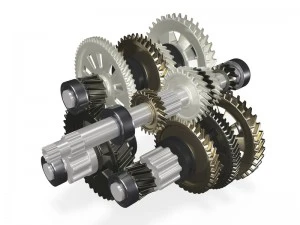

In the world of power transmission and industrial automation, gearboxes play a critical role in ensuring smooth, efficient, and reliable mechanical performance. Whether it’s in manufacturing, processing, or heavy-duty applications, gearboxes help control torque and speed to match the operational needs of machines. Among the most vital aspects that define a gearbox’s performance is the gear ratio—a fundamental parameter that determines the balance between torque output and rotational speed.
As the largest distributor and stockist of Power Transmission Products in Gujarat, Santram Engineers has been at the forefront of providing precision-engineered gearboxes and motors for diverse industrial needs. With authorized partnerships with Premium Transmission Limited, Bharat Bijlee Limited, CG Global Limited, and Emco Dynatorq Limited, the company offers a wide portfolio of trusted solutions, including helical gearboxes, worm gearboxes, geared motors, extruder gearboxes, electric motors, brake motors, and electromagnetic brakes.
Understanding the Gear Ratio
At its core, the gear ratio in a gearbox represents the relationship between the number of teeth on two meshing gears—or the ratio of the input speed to the output speed. It is typically expressed as:
Gear Ratio = Number of Teeth on Output Gear ÷ Number of Teeth on Input Gear
A higher gear ratio means the output shaft rotates slower but delivers greater torque, making it ideal for heavy-load applications. Conversely, a lower gear ratio provides higher speed but lower torque, suitable for lighter and faster operations.
Understanding and selecting the correct gear ratio is vital for optimizing efficiency, minimizing energy losses, and ensuring that equipment performs safely under various load conditions.
Why Gear Ratios Matter in Industrial Applications
In industrial settings, machinery is often subjected to varying loads, speeds, and torque demands. Selecting the correct gear ratio ensures that each component operates within its designed limits. The importance of gear ratio selection can be seen in several key areas:
1. Torque Optimization
Gear ratios directly influence the amount of torque transmitted through a gearbox. A high gear ratio amplifies torque output—critical for applications such as extruders, conveyors, and mixers that require powerful torque to move or process materials efficiently.
2. Energy Efficiency
Properly matched gear ratios minimize power wastage. An optimized gearbox ensures that the electric motor operates at its most efficient speed, reducing energy consumption and improving overall system performance.
3. Equipment Longevity
Incorrect gear ratios can cause undue stress on components, leading to premature wear and tear. When properly configured, gearboxes reduce operational strain on motors and mechanical parts, extending the life of the entire system.
4. Speed Control and Precision
Gear ratios determine output speed and play a key role in applications requiring precise control—such as packaging, robotics, or material handling. Fine-tuning the ratio allows for smooth operation and greater process consistency.
5. Load Adaptability
Different industries—cement, steel, plastic, or textile—require varying load capacities. Gear ratios help adjust machinery performance to suit these loads, ensuring flexibility and reliability across production lines.
Key Types of Industrial Gearboxes and Their Gear Ratios
Industrial gearboxes come in several configurations, each designed for specific applications and torque-speed requirements. Below are some of the most common types supplied by Santram Engineers and their typical gear ratio characteristics:
1. Helical Gearboxes
Helical gearboxes are known for their efficiency, low noise, and durability. Their inclined teeth enable smooth power transmission, making them ideal for high-speed applications. Helical gearboxes generally offer gear ratios ranging from 3:1 to 100:1, depending on the number of stages.
2. Worm Gearboxes
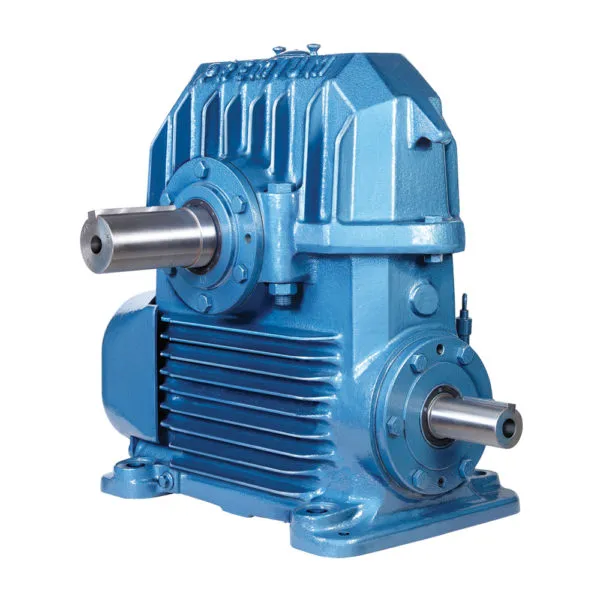
Worm gearboxes provide a high reduction ratio in a compact design. With gear ratios up to 300:1 or more, they deliver exceptional torque multiplication and are often used in conveyors, lifts, and heavy machinery. Their self-locking feature is a valuable advantage in applications that require load holding.
3. Bevel Gearboxes
Bevel gearboxes change the direction of torque and motion, typically by 90 degrees. Depending on configuration, they can achieve ratios between 1:1 and 5:1, balancing speed and torque for specific directional applications.
4. Extruder Gearboxes
Extruder gearboxes are built for high torque and continuous operation under extreme pressure, especially in plastic and rubber processing. Their ratios are designed to provide consistent torque output while maintaining process stability, often ranging between 10:1 and 25:1.
5. Planetary Gearboxes
Compact yet powerful, planetary gearboxes offer high torque density with gear ratios ranging from 3:1 to 200:1. They are popular in servo and automation systems where space and precision are critical.
Features and Specifications to Consider
When selecting a gearbox, understanding the gear ratio is only one aspect. Several other specifications must be evaluated to ensure performance reliability and compatibility with your system. These include:
- Torque Capacity: The maximum torque a gearbox can handle without failure.
- Gear Material: Options like hardened steel or bronze affect strength and wear resistance.
- Efficiency Rating: Higher efficiency means lower energy loss during transmission.
- Mounting Options: Foot-mounted, flange-mounted, or shaft-mounted designs depending on application needs.
- Lubrication System: Proper lubrication reduces friction, ensuring smooth gear engagement.
- Thermal Rating: Indicates the gearbox’s ability to dissipate heat during operation.
By analyzing these parameters alongside gear ratio, industries can achieve peak performance and long-term reliability from their equipment.
Santram Engineers: Your Trusted Partner in Power Transmission
Santram Engineers stands as a trusted name in the power transmission industry, supplying a comprehensive range of mechanical drives and motion control products across India. With headquarters on SG Road in Ahmedabad and fully equipped warehouses and service centers in GIDC Vatva Phase 3 and Phase 4, the company ensures prompt delivery and technical support for every client.
Their network extends across Gujarat, Maharashtra, and Karnataka, with offices in Ahmedabad, Mumbai, Bengaluru, Rajkot, Morbi, and Kolhapur, and dedicated sales representatives in Surat, Ankleshwar, Bharuch, Aurangabad, Jalna, and Nashik.
Whether you require a high-torque extruder gearbox, a precision helical gearbox, or energy-efficient geared motors, Santram Engineers delivers solutions that align with your performance expectations and operational challenges.
Conclusion
The gear ratio is the heart of any gearbox—it defines how power, torque, and speed are transmitted and transformed. Selecting the right ratio and gearbox type ensures optimal performance, energy efficiency, and longevity of machinery. By understanding these fundamentals and partnering with a trusted expert like Santram Engineers, industries can maintain a competitive edge with robust and reliable power transmission systems.
For expert assistance in choosing the right gearbox or transmission product for your application, contact Santram Engineers today—your partner in powering industrial excellence.



























Sign in to leave a comment.