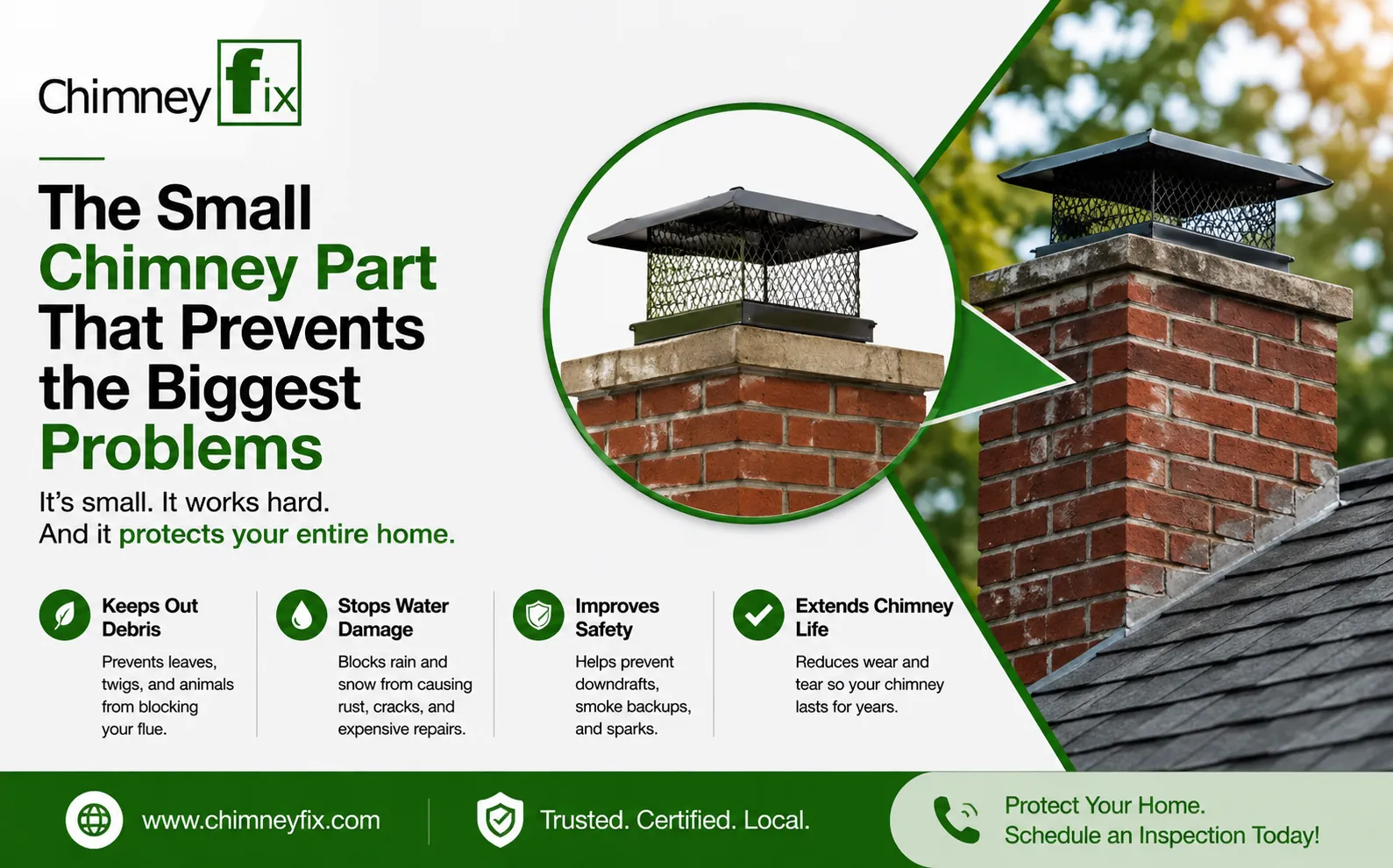

Of all the components on a chimney, the cap is easy to overlook. It sits at the very top, it's rarely visible from the ground, and it doesn't do anything dramatic when it's working properly. But when it fails — cracked, rusted through, or missing entirely — it's often the single point of failure behind water damage, animal intrusion, and even house fires that started from stray embers.
Homeowners in Lakeland tend to notice a cap problem indirectly: a raccoon in the attic, a sudden musty smell, or water stains that show up after a storm. By the time any of those symptoms appear, the cap has usually been compromised for a while.
What a Chimney Cap Actually Does
A chimney cap looks simple, but it handles three separate jobs at once:
- Keeps rain out of the flue, which otherwise funnels water directly down into the firebox and chimney structure
- Blocks animals and debris — birds, squirrels, and raccoons all see an uncapped flue as a ready-made nesting spot
- Contains sparks and embers, reducing the risk of them landing on the roof or nearby vegetation
Losing any one of these functions creates a downstream problem that's often more expensive to fix than the cap itself would have cost.
Signs a Cap Needs Attention
Rust and Corrosion
Metal caps, especially older or lower-grade ones, corrode over time — accelerated in Florida by humidity and salt air closer to the coast. Rust holes are easy to miss from ground level but let water and animals in just as easily as if the cap weren't there at all.
Cracked or Loose Mesh Screening
The mesh sides of a cap keep animals and larger debris out while still allowing smoke to vent. Once that mesh tears or the cap shifts out of alignment, it stops doing its job even if the cap itself still looks intact from a distance.
Missing Cap Entirely
Sometimes a cap blows off during a severe storm, or it was never installed to begin with on an older chimney. An uncapped flue is essentially an open invitation for water and wildlife, and it's one of the more common findings during a routine chimney inspection in this area.
Repair or Full Replacement?
Not every cap issue requires full chimney cap replacement. A few situations where repair is often sufficient:
- Minor mesh damage on an otherwise sound cap can sometimes be patched or re-secured
- A loose but intact cap may just need to be reseated and resealed
- Surface rust without structural compromise can occasionally be treated and coated
Replacement becomes the more sensible option when:
- The cap is rusted through in multiple spots
- It's been missing for an extended period, allowing ongoing water or animal damage
- The chimney has multiple flues that were never properly capped
- A homeowner is upgrading to a stainless steel cap for longevity, since stainless resists Florida's humidity far better than galvanized steel
What Quality Replacement Actually Involves
A properly done chimney cap replacement isn't just screwing on a new piece of metal. It typically includes:
Measuring for an Exact Fit
Flues come in different shapes and sizes, and a poorly fitted cap can shift or fail to seal properly. Getting an accurate measurement before ordering or fabricating a replacement avoids a repeat repair down the line.
Choosing the Right Material
Stainless steel holds up significantly better than galvanized steel in humid, coastal-adjacent climates. It costs more upfront but avoids the rust cycle that leads to repeat replacements every few years.
Proper Sealing and Attachment
A cap that isn't properly secured can loosen or blow off during severe weather, which is common enough in Central Florida storm season that attachment quality matters as much as the cap itself.
A Real Example From the Field
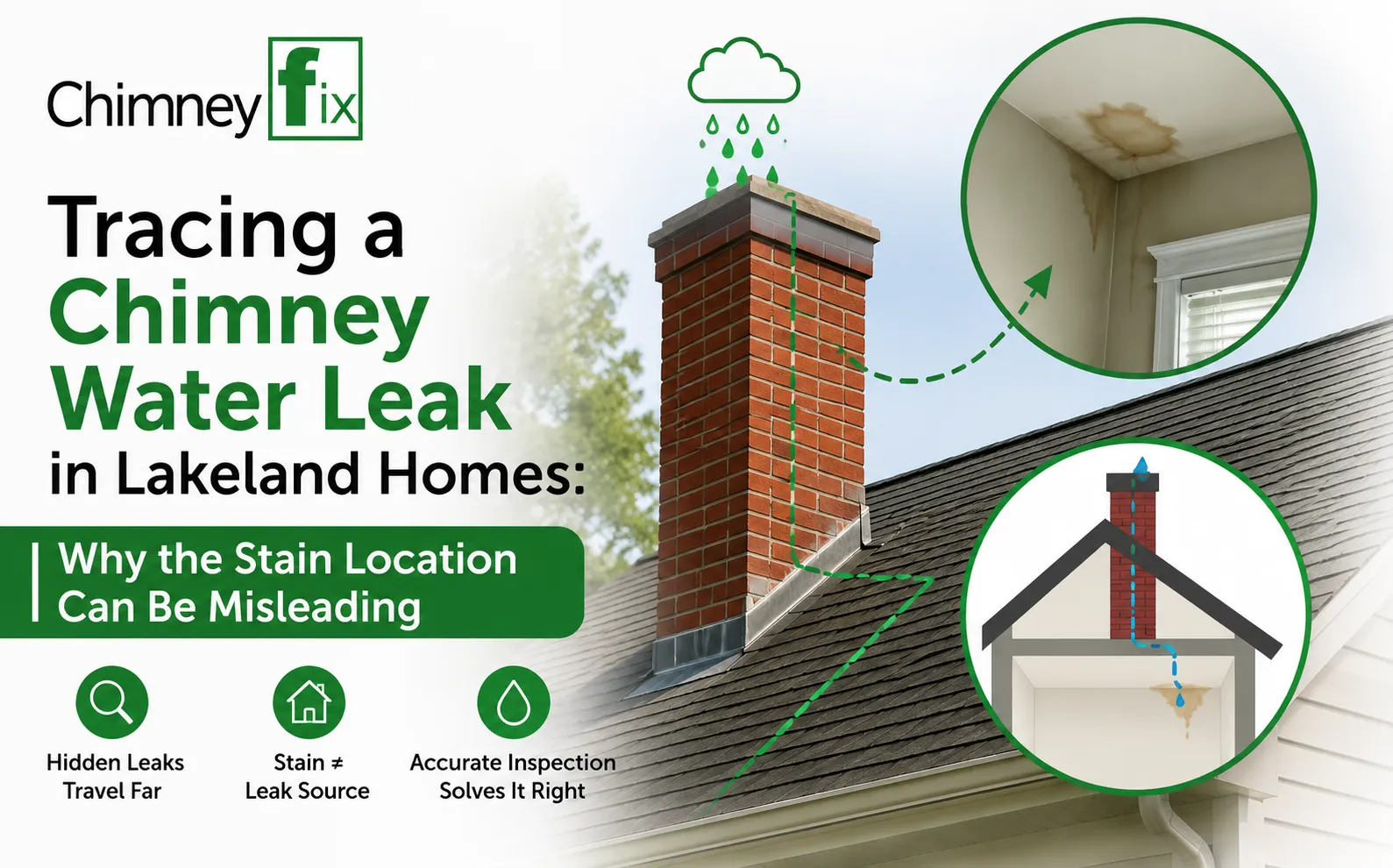
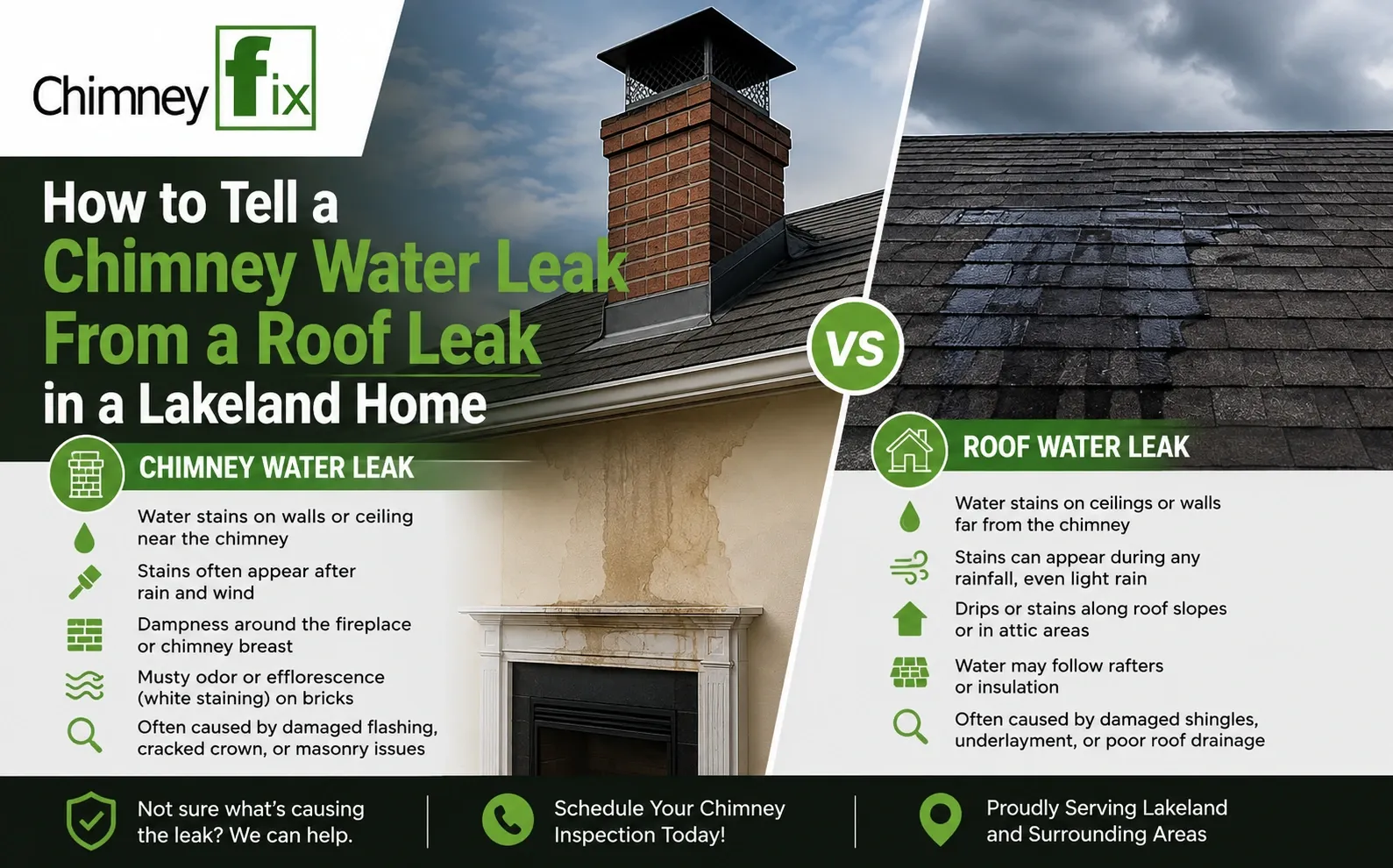
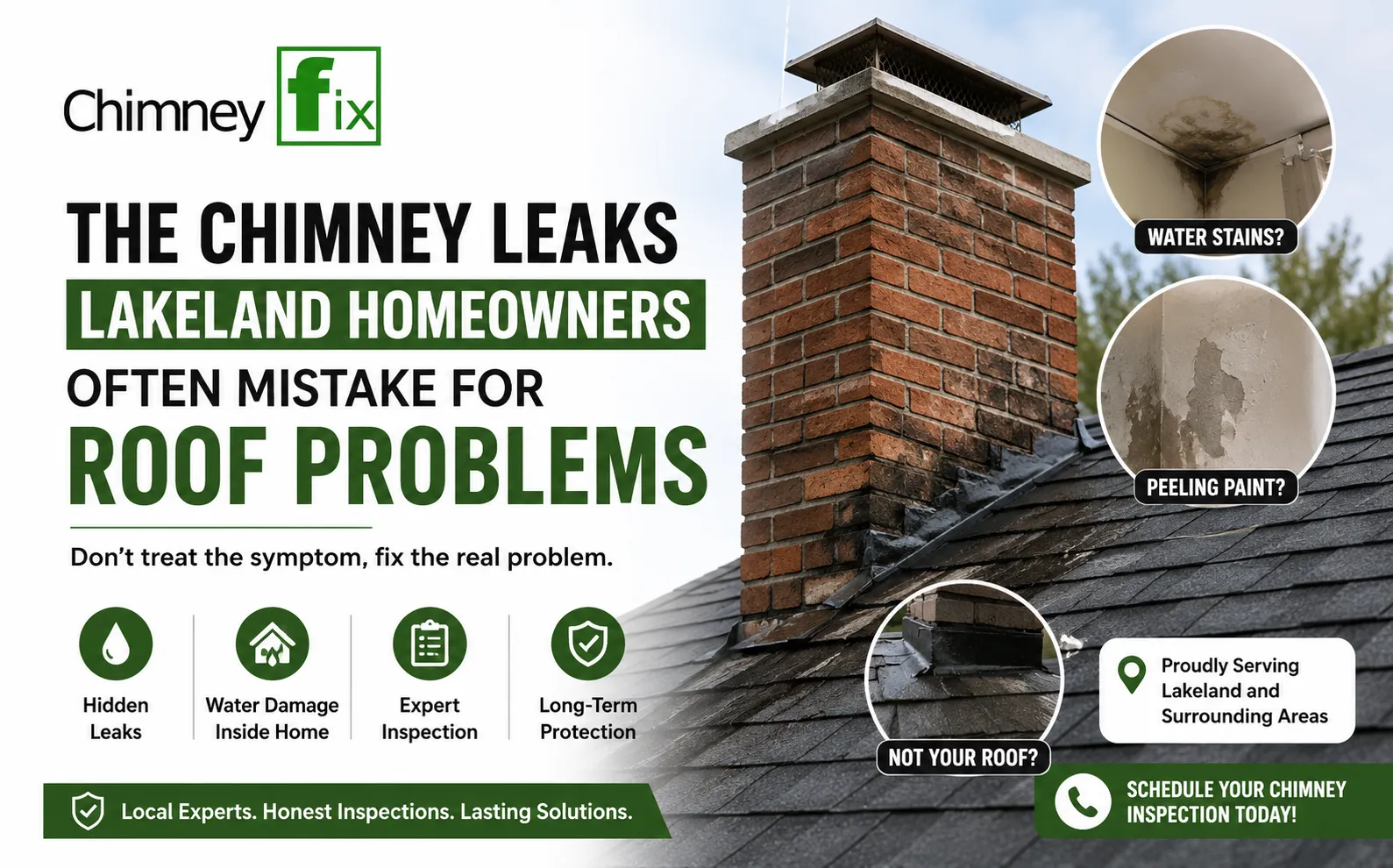
One recurring pattern worth mentioning: a homeowner assumes a small leak is a roofing issue, has a roofer patch shingles near the chimney, and the stain returns within a season anyway. In several of these cases, the actual source turned out to be a corroded cap letting water straight down the flue — something a roofing patch was never going to solve. It's a reminder that water problems near a chimney don't always start with the roof itself.
Making the Right Call for Your Home
For homeowners weighing repair versus replacement, the safest approach is getting an actual look at the cap's condition rather than guessing based on age or a partial view from the ground. A professional assessment for chimney cap replacement Lakeland homeowners request usually settles the question quickly, since a technician can determine whether the existing cap is salvageable or whether ongoing corrosion has already compromised it beyond a simple patch.
Given how much damage a failed cap can cause relative to its size and cost, it's one of the more cost-effective repairs a homeowner can make. Compared to the water damage, animal removal, or masonry repair that a failed cap eventually leads to, replacing it early is almost always the cheaper path. If there's any uncertainty about a cap's condition, having it checked before the next storm season is a reasonable and low-cost precaution.
About the Author
ChimneyFix is a CSIA-affiliated chimney sweep, repair, and masonry contracting company serving Lakeland, FL and the greater Tampa Bay area. The team follows NFPA 211 inspection standards and specializes in chimney cap repair and replacement, sweeping, fireplace repair, dryer vent cleaning, and masonry restoration for residential homeowners across Polk County. Learn more or schedule an assessment at chimneyfix.com/chimney-cap.






















Sign in to leave a comment.