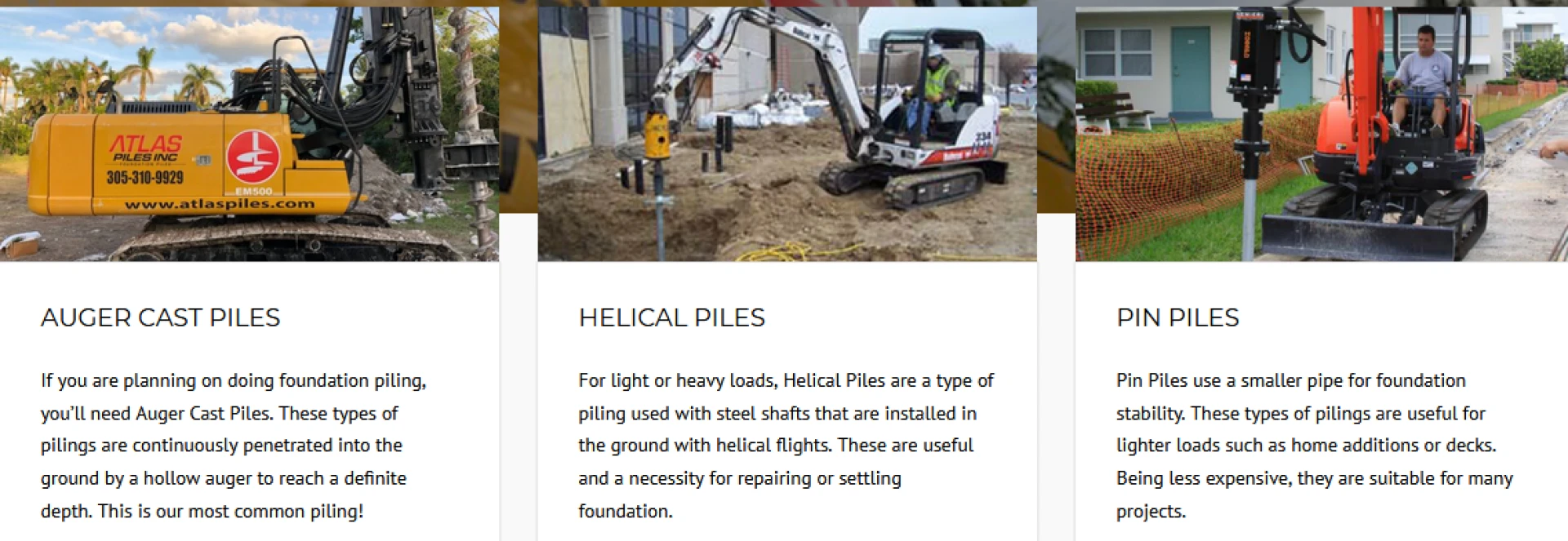

When building in Islamorada, the foundation is everything. The unique coastal environment demands robust solutions, and Islamorada piling systems are among the most reliable options. Pilings ensure stability, protect structures from shifting sands, and combat the challenges of water exposure.
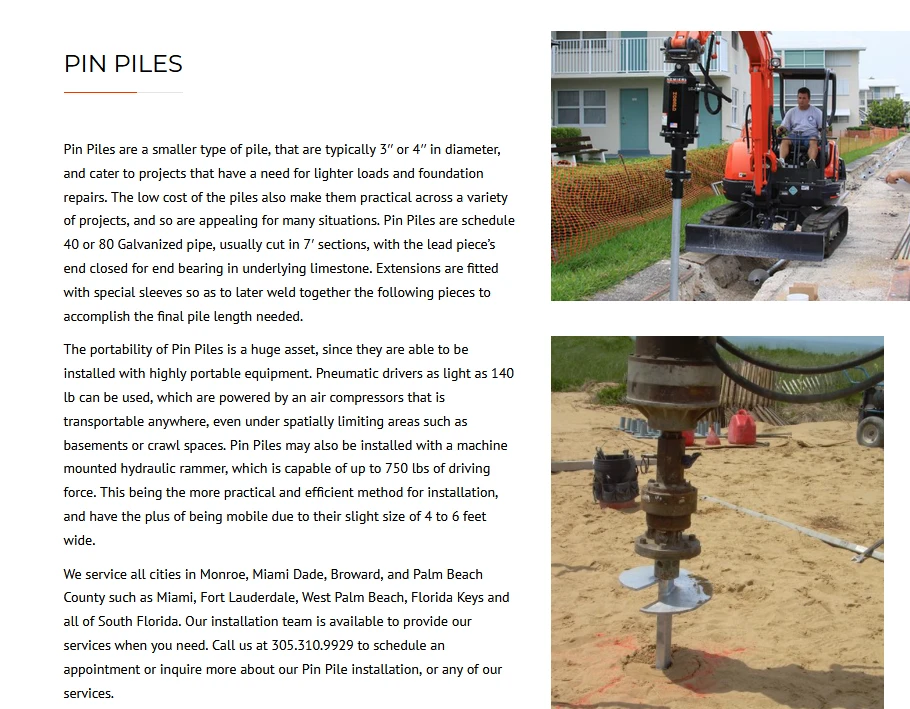
1. Timber Pilings
Timber pilings are a traditional choice, known for their natural durability and cost-effectiveness. Builders often use these for docks, smaller homes, and light structures.
- Benefits:
- Affordable and widely available.
- Naturally resistant to some water damage when treated.
- Flexible under stress, making them suitable for smaller loads.
While timber pilings are great for residential use, they require regular maintenance to prevent rotting and insect damage. Treated wood can extend its lifespan but is unsuitable for larger or high-load structures.
2. Concrete Pilings
Concrete pilings are a sturdy and long-lasting option, perfect for larger buildings. These pilings are often reinforced with steel to enhance their strength.
- Advantages:
- Excellent resistance to water and corrosion.
- Can handle heavy loads, making them great for multi-story buildings.
- Minimal maintenance compared to other materials.
Concrete pilings are a top choice for Islamorada’s waterfront properties, as they can withstand the challenges of saltwater exposure. However, installation can be more costly and time-intensive.
3. Steel Pilings
Steel pilings are often used in Islamorada construction when exceptional strength is needed. Their high load capacity makes them popular for commercial and industrial projects.
- Features:
- Extremely strong and durable.
- It can be driven deep into the ground for maximum stability.
- It is ideal for areas with deep or unstable soil.
Despite their advantages, steel pilings are vulnerable to corrosion in salty environments. Protective coatings and galvanization can mitigate this issue, but ongoing maintenance is required to ensure longevity.
4. Composite Pilings
Composite pilings are gaining popularity for their advanced design and eco-friendly benefits. Made from materials like fiberglass or recycled plastics, they offer a modern alternative to traditional options.
- Key Benefits:
- Highly resistant to corrosion and rot.
- Lightweight, making them easier to transport and install.
- Environmentally sustainable.
These pilings are especially useful in marine environments, as they resist the harsh effects of saltwater. Though slightly more expensive up front, their durability and low maintenance make them a smart long-term investment.
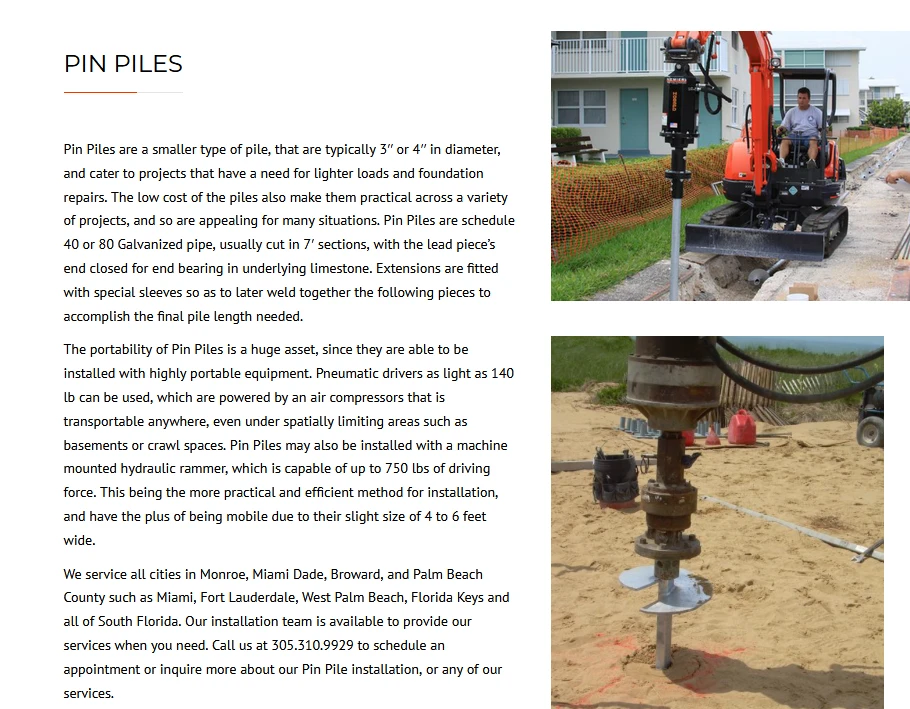
5. Helical Pilings
Helical pilings, or screw piles, are perfect for areas with loose or sandy soil. They’re installed by screwing into the ground, which provides excellent stability.
- Why Choose Helical Pilings:
- Quick and easy to install, even in hard-to-reach areas.
- Minimal soil disturbance during installation.
- Ideal for smaller projects or temporary structures.
Helical pilings are an excellent option in Islamorada, where the soil can shift. Their adaptability makes them popular for residential decks, docks, and smaller foundations.
6. Precast Concrete Pilings
Precast concrete pilings are pre-made in factories and transported to the construction site, ready to be driven into the ground. This makes them a highly efficient choice for many projects.
- Advantages:
- Uniform quality control during production.
- Quick installation on-site.
- Excellent resistance to environmental wear and tear.
Precast pilings are particularly useful in large-scale projects like bridges and piers. They combine the durability of concrete with the convenience of off-site manufacturing.
Choosing the Right Piling for Your Project
Selecting the right piling for your construction in Islamorada depends on several factors:
- Soil Type: Test the ground to understand its stability and composition.
- Load Requirements: Heavier structures need stronger materials like steel or concrete.
- Environmental Conditions: Consider the effects of saltwater, humidity, and wind.
- Budget: Balance upfront costs with long-term maintenance needs.
- Project Type: Match the piling to your specific structure, whether a home, dock, or commercial building.
Final Thoughts
Islamorada piling systems are essential for safe, durable construction in the area’s coastal conditions. From traditional timber to innovative composite options, every need has a piling. You can choose the best solution for your next project by understanding these top six types.
Proper planning and professional installation will ensure that your structure will withstand the test of time, even in Islamorada's challenging environment.

























Sign in to leave a comment.