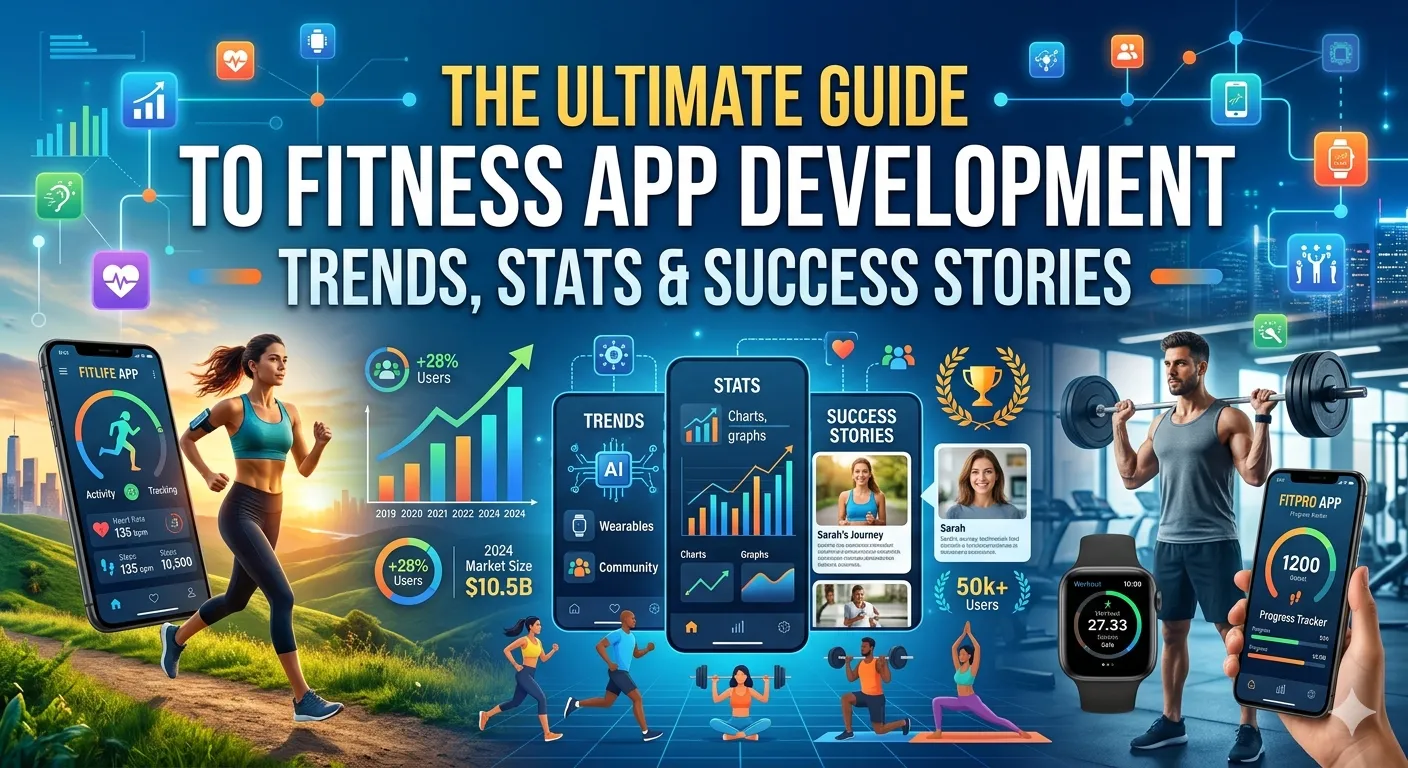

The global fitness app market is booming. According to recent industry reports, the market was valued at over $14 billion in 2023 and is projected to surpass $120 billion by 2030, growing at a compound annual growth rate (CAGR) of around 17.6%. Behind every successful fitness app — from calorie counters to AI-powered personal trainers — is a capable development team with the right technical expertise and vision. Whether you are an entrepreneur with a fresh idea or a gym chain going digital, understanding the landscape of fitness app development is the first step toward building a product that users love and return to daily.
Why the Fitness App Market Is Exploding
Several powerful forces are converging to drive demand for fitness technology. The COVID-19 pandemic fundamentally shifted how people approach health. Gyms closed, home workouts surged, and wearable devices like Apple Watch, Fitbit, and Garmin became mainstream. Even as gyms reopened, millions of users chose to keep working out at home or blend in-person sessions with digital tools.
At the same time, awareness around mental health, chronic disease prevention, and preventive wellness has grown enormously. People are no longer just tracking steps — they want guided workouts, nutrition coaching, sleep analytics, stress management tools, and real-time biometric feedback. This demand has created an enormous opportunity for anyone looking to build a fitness app that genuinely solves a problem for its users.
Types of Fitness Apps Being Built Today
Before you decide to build, it helps to understand the main categories:
1. Workout and Training Apps — Apps like Nike Training Club or Peloton guide users through exercise routines, whether at the gym, at home, or outdoors. These apps typically include video demonstrations, progress tracking, and personalized plans.
2. Nutrition and Diet Apps — Tools like MyFitnessPal or Cronometer help users log meals, count macros, track calorie intake, and receive dietary recommendations.
3. Activity Tracking Apps — Often companion apps to wearables, these platforms analyze steps, heart rate, calories burned, sleep quality, and other biometric data.
4. Mental Wellness and Recovery Apps — Mindfulness, breathing exercises, meditation, and stress tracking tools like Calm or Headspace sit at the crossroads of fitness and mental health.
5. Community and Coaching Platforms — Apps that connect trainers with clients virtually, enabling live sessions, messaging, goal-setting, and accountability tracking.
Each of these categories requires specific features, integrations, and user experiences, which is why partnering with the right Fitness App Development Company is critical for building a product that is technically sound and market-ready.
Key Features That Make Fitness Apps Successful
Not all fitness apps are created equal. The most successful ones share a common set of features:
- Personalization through AI and Machine Learning — Users expect plans tailored to their goals, fitness level, and progress. AI-driven personalization is no longer a luxury; it is an expectation.
- Wearable Integration — Syncing with Apple HealthKit, Google Fit, Fitbit, and other devices creates a seamless data ecosystem.
- Gamification — Badges, streaks, leaderboards, and challenges keep users engaged and coming back.
- Push Notifications and Reminders — Smart nudges at the right time significantly improve retention rates.
- In-App Purchases and Subscription Models — Freemium structures with premium tiers remain the dominant monetization strategy.
- Social Sharing — Allowing users to share achievements, compete with friends, and join communities builds loyalty and organic growth.
- Offline Functionality — A good fitness app works even without internet access, which is critical for users at the gym or on a trail.
Development Process: What to Expect
Building a fitness app is a multi-stage process. A skilled on demand app development company will typically walk you through these phases:
Discovery and Strategy — Understanding your target users, competitors, and business model. This includes defining the minimum viable product (MVP) and prioritizing features.
UI/UX Design — Creating wireframes, prototypes, and the full visual design. Fitness apps must be intuitive and motivating. Poor design is one of the leading causes of high app churn.
Development — Building the front-end (what users see) and back-endThe global fitness app market is booming. According to recent industry reports, the market was valued at over $14 billion in 2023 and is projected to surpass $120 billion by 2030, growing at a compound annual growth rate (CAGR) of around 17.6%. Behind every successful fitness app — from calorie counters to AI-powered personal trainers — is a capable development team with the right technical expertise and vision. Whether you are an entrepreneur with a fresh idea or a gym chain going digital, understanding the landscape of fitness app development is the first step toward building a product that users love and return to daily.
Why the Fitness App Market Is Exploding
Several powerful forces are converging to drive demand for fitness technology. The COVID-19 pandemic fundamentally shifted how people approach health. Gyms closed, home workouts surged, and wearable devices like Apple Watch, Fitbit, and Garmin became mainstream. Even as gyms reopened, millions of users chose to keep working out at home or blend in-person sessions with digital tools.
At the same time, awareness around mental health, chronic disease prevention, and preventive wellness has grown enormously. People are no longer just tracking steps — they want guided workouts, nutrition coaching, sleep analytics, stress management tools, and real-time biometric feedback. This demand has created an enormous opportunity for anyone looking to build a fitness app that genuinely solves a problem for its users.
Types of Fitness Apps Being Built Today
Before you decide to build, it helps to understand the main categories:
1. Workout and Training Apps — Apps like Nike Training Club or Peloton guide users through exercise routines, whether at the gym, at home, or outdoors. These apps typically include video demonstrations, progress tracking, and personalized plans.
2. Nutrition and Diet Apps — Tools like MyFitnessPal or Cronometer help users log meals, count macros, track calorie intake, and receive dietary recommendations.
3. Activity Tracking Apps — Often companion apps to wearables, these platforms analyze steps, heart rate, calories burned, sleep quality, and other biometric data.
4. Mental Wellness and Recovery Apps — Mindfulness, breathing exercises, meditation, and stress tracking tools like Calm or Headspace sit at the crossroads of fitness and mental health.
5. Community and Coaching Platforms — Apps that connect trainers with clients virtually, enabling live sessions, messaging, goal-setting, and accountability tracking.
Each of these categories requires specific features, integrations, and user experiences, which is why partnering with the right Fitness App Development Company is critical for building a product that is technically sound and market-ready.
(servers, databases, APIs). This phase also includes integrations with third-party services like payment gateways, wearable SDKs, and video streaming platforms.
Testing and QA — Ensuring the app works across devices, screen sizes, and operating systems. Performance, security, and usability testing are all critical.
Launch and Post-Launch Support — Submitting to the App Store and Google Play, monitoring for bugs, collecting user feedback, and rolling out iterative improvements.
The timeline for a robust fitness app typically ranges from four to nine months depending on scope and complexity. Budget ranges vary widely — a basic MVP might start around $5,000–$10,000, while a full-featured platform with AI personalization and wearable integration could exceed $15,000.
Success Stories Worth Learning From
Peloton transformed home fitness by pairing hardware with a subscription software platform. The app's strength lies in its community features and live classes that create accountability and social connection.
Strava built a loyal user base of runners and cyclists by making activity tracking deeply social. Features like segment leaderboards and club feeds turned individual workouts into shared experiences.
Noom disrupted the weight loss space by combining behavioral psychology with data-driven coaching — a product that required deep domain expertise alongside strong technical execution.
Each of these companies succeeded not just because they had a great idea, but because they executed with precision and iterated constantly based on user data.
Choosing the Right Development Partner
The difference between a fitness app that thrives and one that gets deleted after a week often comes down to execution. Partnering with an experienced Fitness App Development Company brings industry-specific expertise in health data compliance (HIPAA, GDPR), wearable integrations, and the performance standards users expect in health apps.
Similarly, working with a proven on demand app development company gives you access to flexible, scalable development teams that can move quickly from concept to launch — a critical advantage in a competitive market where timing matters.
Final Thoughts
The fitness app industry offers enormous opportunity, but it also demands thoughtful planning, strong design, and reliable technology. Users are sophisticated. They have tried dozens of apps and know the difference between one built with care and one churned out without strategy. The brands that win in this space invest in user research, build trust through data privacy, and commit to continuous improvement.
If you are ready to build your fitness app, start with a clear problem you want to solve, validate that problem with real users, and then find the right development partner to bring your vision to life. The market is growing — and the best time to build is now.
































Sign in to leave a comment.