
Ask any engineer who's spent time around right-angle drives and they'll tell you the same thing: when you need smooth, quiet, powerful motion between two intersecting shafts, few components rival a spiral bevel gear. These curved-tooth workhorses sit at the heart of everything from automotive differentials to heavy industrial machinery. In this guide we'll walk through what makes bevel gears tick, how to install them properly, and why the right manufacturing kit, including a vertical borer, matters more than most people realise.
What Is a Spiral Bevel Gear?
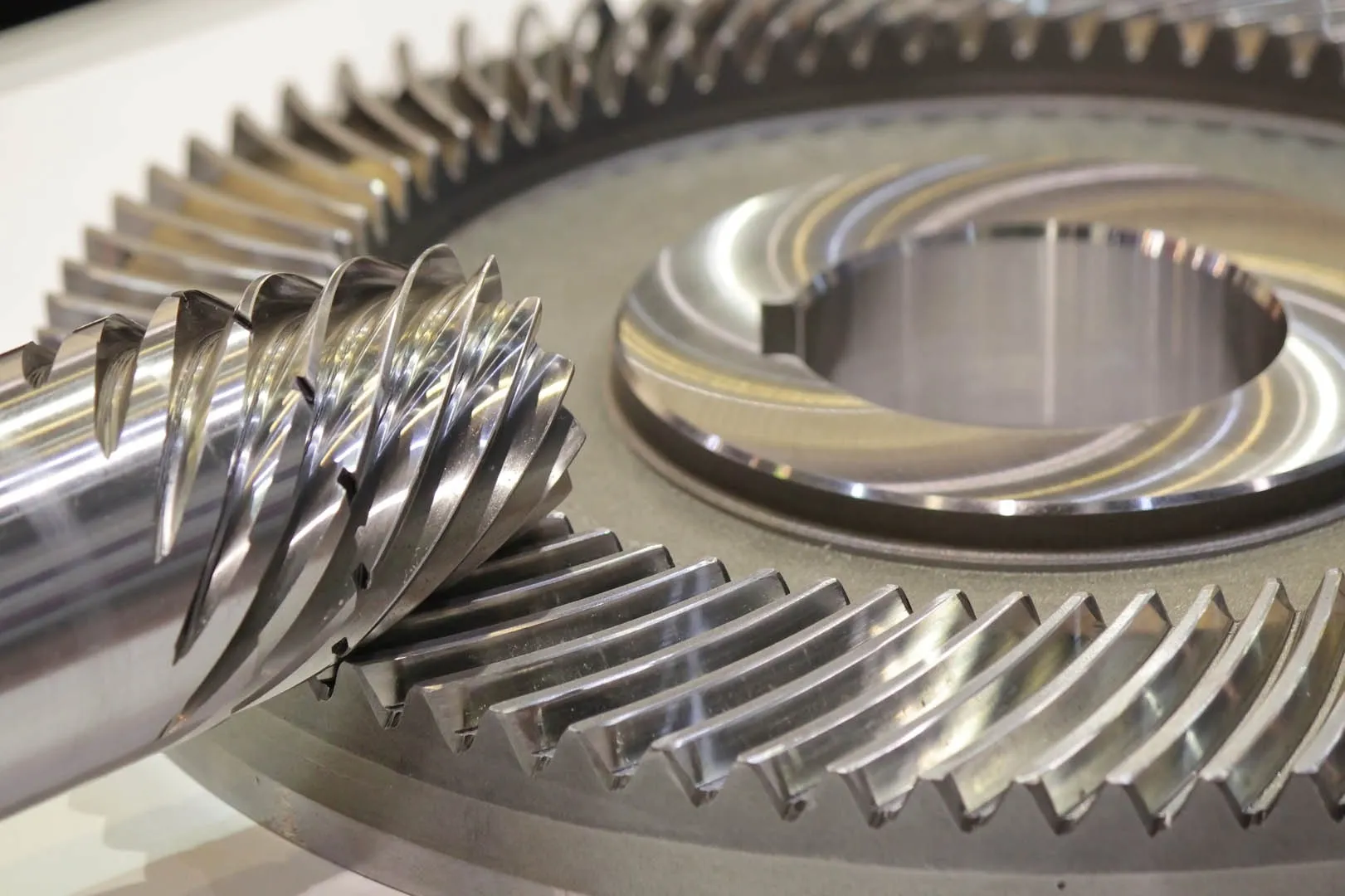
A spiral bevel gear is a conical gear fitted with curved, oblique teeth, designed to transmit motion and power between two intersecting shafts, usually at a neat 90-degree angle. Think of it as a helical gear and a bevel gear rolled into one clever package.
What sets these gears apart is the way the teeth engage. Contact begins at one end of the tooth and rolls smoothly across its full length, rather than slamming together all at once like straight-cut teeth do. That gradual meshing gives you a higher contact ratio, which translates into smoother, quieter running and a serious boost in load-carrying capacity.
The typical spiral angle sits around 35 degrees, with a 20-degree pressure angle. Because they handle heat, friction and backlash so well, spiral bevel gears are the go-to choice for high-speed, high-precision applications, often running at pitch line speeds anywhere from 5 to 40 m/s.
Different Types of Bevel Gears and Their Applications
Not all bevel gears are created equal. Choosing the right one comes down to speed, load and how much noise you can live with.
- Straight bevel gears, The simplest form, with teeth cut straight along the cone. They're perfectly fine where speeds and loads stay moderate, and they're cheaper to produce. But they can be noisy under strain.
- Spiral bevel gears, The premium option. Their curved teeth distribute loads evenly and carry more without surface fatigue. You'll find them in automotive differentials, rotorcraft drives, marine propulsion and heavy industrial equipment.
- Zerol bevel gears, A neat middle ground. They have curved teeth but a near-zero spiral angle, giving smoother action than straight bevel gears while keeping thrust loads manageable.
In short, if you need robust force transmission at speed, spiral bevel gears usually win. They're increasingly superseding straight-bevel designs across countless applications.
Essential Tools for Spiral Bevel Gear Installation
Spiral bevel gears are unforgiving about sloppy setup, so having the right tools on the bench isn't optional, it's the difference between a drive that hums quietly for years and one that whines and fails early.
Here's what we'd never start a job without:
- Precision measuring instruments, dial indicators and gauges for checking alignment and backlash.
- Calibrated torque tools, to tighten fasteners to exact specification, never by feel.
- Bearing setting and shimming kits, for dialling in the correct preload.
- Clean lubrication tools and handling equipment, because contamination is the enemy.
Every reputable source stresses the same point: these gears are sensitive to setup quality. Get the alignment and assembly right, and the gear rewards you with performance.
Step-by-Step Spiral Bevel Gear Installation Process
Fitting a spiral bevel gear correctly is a methodical job. Rush it and you'll pay for it in noise, heat and premature wear. Here's the sequence we follow:
- Inspect everything. Check gears, bearings, housing and mating parts for damage, burrs or defects before anything goes together.
- Clean thoroughly. Every surface should be spotless, grit and old lubricant cause trouble later.
- Mount the gears and set bearing preload. Snug, not crushing.
- Set backlash and tooth contact pattern. This is the heart of the job. Use marking compound to confirm the contact pattern sits where it should across the tooth.
- Tighten to specification and verify the assembly rotates smoothly by hand.
- Apply the correct lubricant, then recheck alignment during the first hours of operation.
Backlash can often be fine-tuned with a shim or retaining ring, and some modern drives use a dedicated locknut for faster, more precise adjustment.
How a Vertical Borer Supports Precision Gear Manufacturing
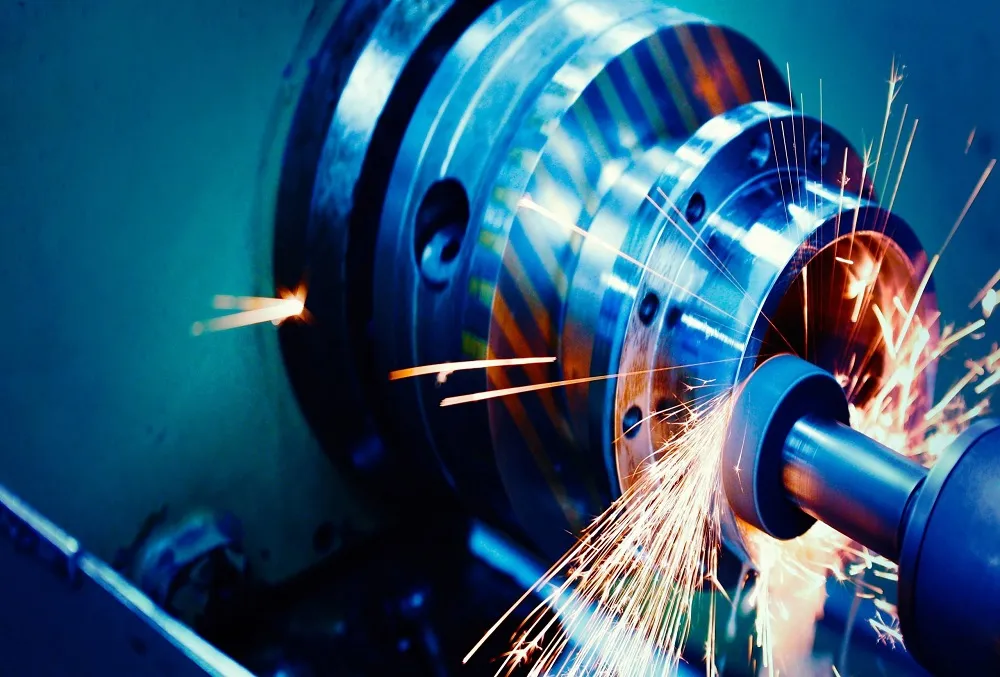
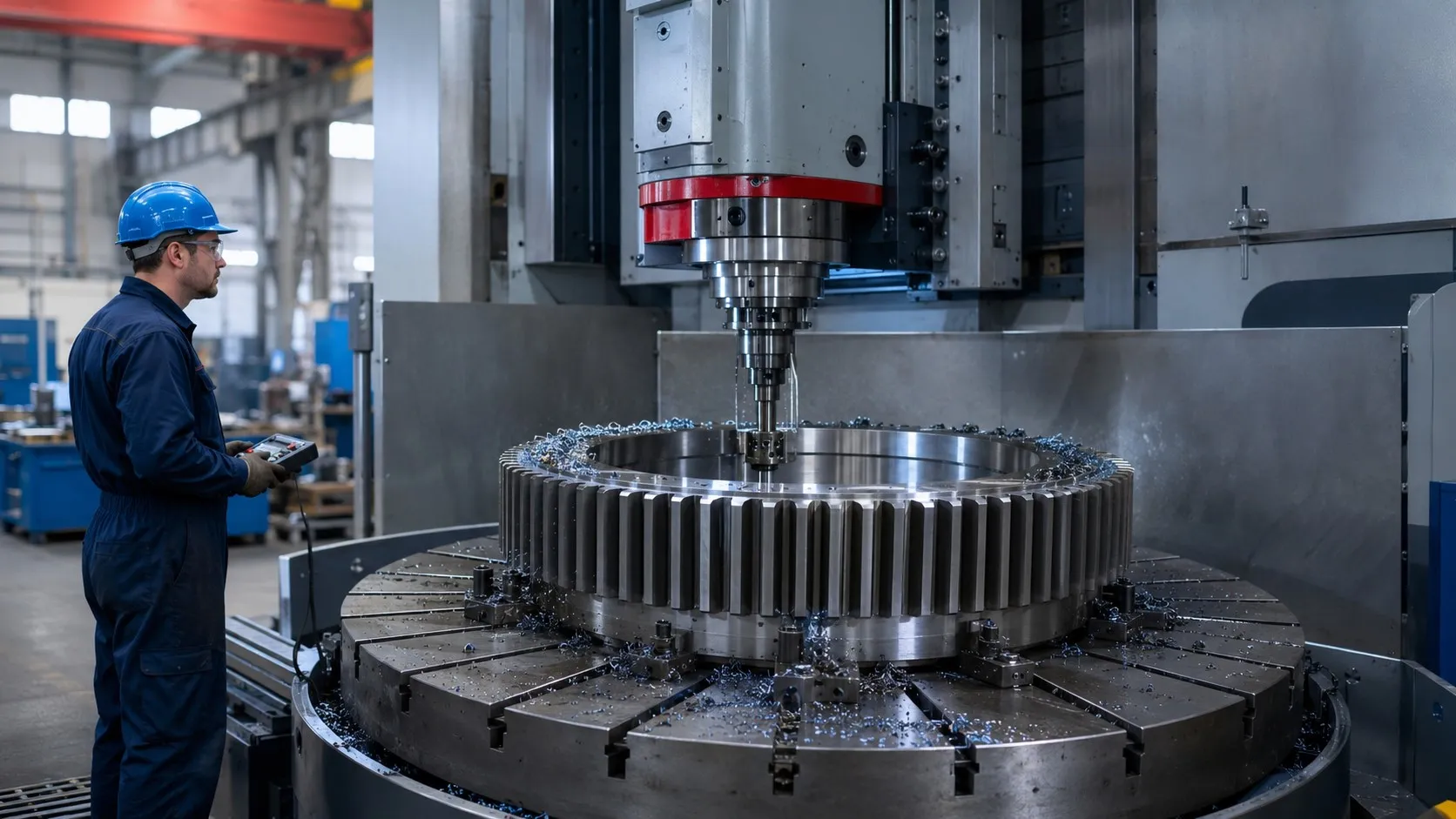
Before a gear ever reaches installation, it has to be machined to fine tolerances, and this is where a vertical borer earns its keep. When you're dealing with large, heavy gear blanks and housings, a vertical boring machine offers the rigidity and stability that horizontal setups struggle to match.
The vertical orientation lets gravity work in your favour, holding weighty workpieces flat and stable on the rotating table. That stability supports tight concentricity, accurate face machining and controlled finishing, all critical when the finished component has to mesh perfectly with its partner.
For spiral bevel gears in particular, where the smallest deviation in the blank can throw off the contact pattern, a well-set-up vertical borer lays the groundwork for precision. Machine the blank right, and everything downstream gets easier.
Common Installation Mistakes and How to Avoid Them
We've seen the same handful of errors trip people up again and again. The good news? They're all avoidable.
- Incorrect alignment, Don't guess. Use precise measurement and contact-pattern checks to confirm the teeth are meshing across the correct area.
- Wrong backlash, Always verify against the manufacturer's specification before the gear goes into service. Too little and it binds: too much and it clatters.
- Poor lubrication, Use the correct, clean lubricant and keep on top of it.
- Contamination, Spiral bevel gears are particularly sensitive to dirty oil. Keep parts and lubricant scrupulously clean.
- Improper pair matching, These gears are cut and run as matched pairs. Never mix components from different sets.
Most failures trace back to one of these. A little patience at assembly saves a lot of grief later.
Maintenance Tips for Long-Lasting Gear Performance
One of the quiet joys of a quality spiral bevel gear is how little it asks of you. Many are built with hardened steel gears, sealed bearings and permanent lubrication for near-hands-off running. Still, a bit of routine care keeps them performing at their best.
- Keep lubrication correct and clean. Watch oil condition as closely as oil level.
- Inspect regularly. Check tooth contact, backlash and bearing condition on a schedule, not just when something sounds off.
- Listen and feel. Unusual noise, vibration, heat or visible wear are early warning signs worth investigating.
- Recheck alignment after installation and periodically through service life.
- Replace worn parts as sets. Matched components should be swapped together, never piecemeal.
Stay on top of these and a spiral bevel gear drive will outlast plenty of other gear types.
Final Thoughts
When the job calls for right-angle power transmission with high load capacity and quiet operation, spiral bevel gears are hard to beat. But their performance lives or dies on precision, in the machining, the installation and the ongoing care. Get those right, from the vertical borer to the final backlash check, and you'll enjoy smooth, reliable drive for years to come.
Frequently Asked Questions About Spiral Bevel Gears
What is a spiral bevel gear and how does it differ from straight bevel gears?
A spiral bevel gear is a conical gear with curved, oblique teeth designed to transmit power between intersecting shafts at 90 degrees. Unlike straight bevel gears, the spiral teeth engage gradually across their full length, delivering smoother, quieter operation, higher load capacity, and better efficiency in high-speed applications.
What are the main applications for spiral bevel gears in industry?
Spiral bevel gears are widely used in automotive differentials, rotorcraft drives, marine propulsion systems, and heavy industrial machinery. Their smooth, quiet operation and superior load-carrying capacity make them ideal for high-speed, high-precision applications requiring robust power transmission between right-angle shafts.
Why is proper alignment and backlash adjustment critical when installing spiral bevel gears?
Spiral bevel gears are sensitive to setup quality. Incorrect alignment or backlash causes premature wear, noise, and early failure. Using precision measuring tools to verify tooth contact patterns and setting backlash to manufacturer specifications ensures smooth, reliable operation and maximises the gear's performance lifespan.
How does a vertical borer contribute to manufacturing precision in spiral bevel gear production?
A vertical borer's rigid, upright design provides excellent stability for machining large, heavy gear blanks. Gravity holds workpieces flat, enabling tight concentricity, accurate face finishing, and controlled tolerances—critical foundations for gears that must mesh perfectly and perform reliably in demanding applications.
What maintenance practices help extend the life of a spiral bevel gear drive?
Keep lubrication clean and at the correct level, inspect tooth contact and backlash regularly, monitor for unusual noise or vibration, recheck alignment periodically, and replace worn matched components as complete sets. Proper care minimises downtime and maximises long-term performance and reliability.
Can spiral bevel gears reduce backlash and noise compared to other gear types?
Yes. Spiral bevel gears naturally minimise backlash through their gradual, rolling tooth contact and can be further tuned with shims or dedicated locknuts for faster, more precise adjustment. Their design delivers significantly lower noise and vibration than straight-tooth gears, making them ideal for noise-sensitive environments.


























Sign in to leave a comment.