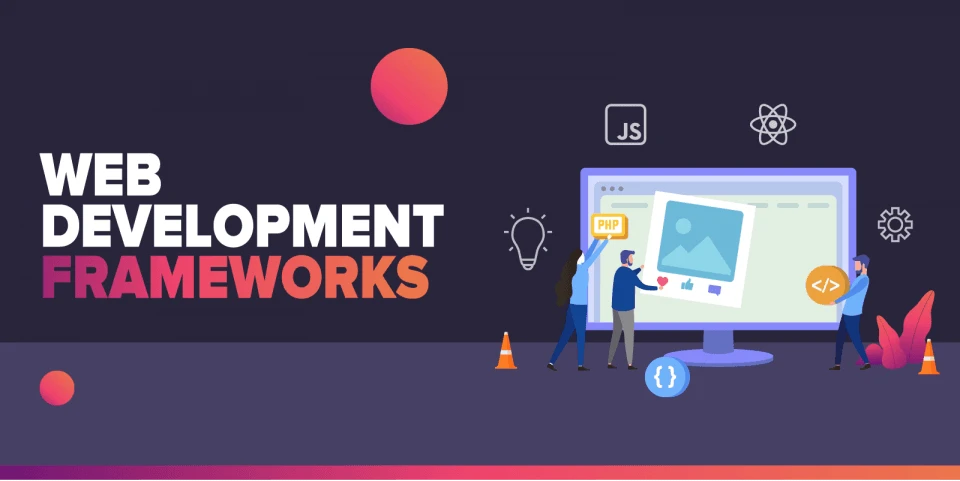

A Web Framework Is
Web frameworks are software tools for creating web apps. A web framework also allows you to publish websites online.
So software developers don't have to spend hours debugging website coding.
Web frameworks come in two flavours: client-side and server-side.
Client-side frameworks can improve user interface. They handle the front-end user experience.
Server-side frameworks enforce the website's rules from the backend. Create landing pages and forms. This essay will focus on server-side frameworks.
Top 5 web frameworks and their key benefits
Laravel
Laravel is a PHP framework that makes website development faster and easier. It is an open-source framework that has been in the works since 2011.
Laravel makes it to the top web framework position because it quickens the go-to-market time. The framework is based on an MVC (model-view-controller) architecture. This ensures that the website is scalable and has increased security.
A unique function of the Laravel framework is the ability to implement an authentication system. You can apply a registration, login, and password reset form to the website. You only need is a single command for this.
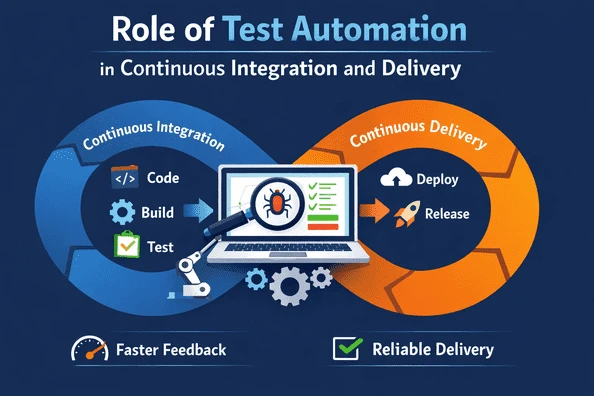
It is crucial to test a web application before you deploy it. Laravel makes the testing process a breeze with automation testing support. Laravel will automatically set the configuration environment to testing. But you can also manually set the testing environment configuration values as necessary.
Django
This is a Python web framework for quick website creation. Django is a great framework for website security.
Django is MVT (model-view-template). The template layer divides the frontend and the backend.
This is one of Django's design goals. This makes it a reliable framework for web development on a tight schedule.
This is a battery-free model. This means the framework already includes a library of ready-to-use functionality. Users only need to import required packages. This methodology helps construct websites faster.
Building a website takes time. Even after the application is deployed, administrators must maintain it. Django comes with a professional and flexible admin interface.
Express
Express is a NodeJS framework. It provides mobile and web development features. Express.js provides routing and middleware. It manages the webpage's routes and requests.
Express' key benefit is that it removes long codes and complex programming. Instead, you can do it with a few lines of code, saving time.
This web framework has a function that helps discover flaws. This reduces the time needed for application testing.
Express has the ability to establish REST APIs. (Representational State Transfer) REST is an architecture that prioritises scalability. It gives developers flexibility and freedom.
REST APIs are utilized to improve the app's user experience.
Spring
This is a Java-based framework. You can build secure and responsive web applications using this framework. Spring helps make programming quicker and more secure. It uses MVC architecture, which is ideal for developing large web applications.
Spring is a powerful yet lightweight framework. Being lightweight means the programmer can incorporate the framework into an application with ease. The framework uses POJO’s (Plain Old Java Scripts). The advantage here is that you don’t need an enterprise container nor conventional Enterprise Java Beans (EJB).
The framework is open-source, meaning it is constantly developed by programmers all over the world. Spring has flexible libraries for developers to use. It supports the use of XML configuration and Java-based annotations for configuring Spring Beans.
Ruby On Rails
Ruby On Rails is written in Ruby, a popular language for developing web applications. Rails framework is open-source software that is completely free to use. Rails has many plugins for the developers to use, which can save them time and effort.
The framework uses an MVC architecture. This architecture centralizes the business logic of the application. This makes the maintenance and testing of an application more simple. Since it is a stable framework, long-term projects can be easily updated using Ruby on Rails
It is very easy to make changes and manipulate code on Rails. This makes it possible to build customized web applications with unique features.
Comparison
The biggest distinction between the top 5 web frameworks is their programming languages. Because Python and Ruby are naturally user-friendly languages, Django and Ruby on Rails are obvious candidates for website construction.
Spring is the framework to use if you need a lightweight framework to integrate into an existing application.
The frameworks' architectures also differ. Laravel, Spring, and Ruby on Rails are MVC (Express).
The framework used depends on the developer's comfort and the web application's requirements.























Sign in to leave a comment.