
The future of commercial spaces has arrived
The design of commercial buildings these days is not solely about how they look; of course, performance, sustainability, technology, and users' experience matter too. Companies that choose to invest in buildings with a modern design in 2026 will create not just spaces but also gain a considerable edge over competitors.
In fact, smart offices powered by AI, materials that are environment-friendly, and the other things coming with the new era of commercial design are changing the ways of doing business, attracting employees, and engaging customers.
1. Smart Buildings Powered by AI & IoT
The integration of Artificial Intelligence (AI) and Internet of Things (IoT) is redefining commercial spaces.
Key Features :
- Automated lighting and HVAC systems
- Occupancy-based energy optimisation
- Predictive maintenance systems
- Smart security & access control
Why It Matters :
Smart buildings reduce operational costs and improve efficiency, making them a long-term ROI-driven investment.
2. Sustainable & Net-Zero Energy Design
Sustainability is no longer optional it’s a necessity.
Trending Sustainable Elements:
- Solar panel integration
- Green roofs and vertical gardens
- Rainwater harvesting systems
- Energy-efficient glass facades
2026 Focus :
Net-zero buildings that produce as much energy as they consume are becoming the gold standard.
Business Impact :
- Lower energy costs
- Stronger brand reputation
- Compliance with environmental regulations
3. Flexible & Adaptive Workspace
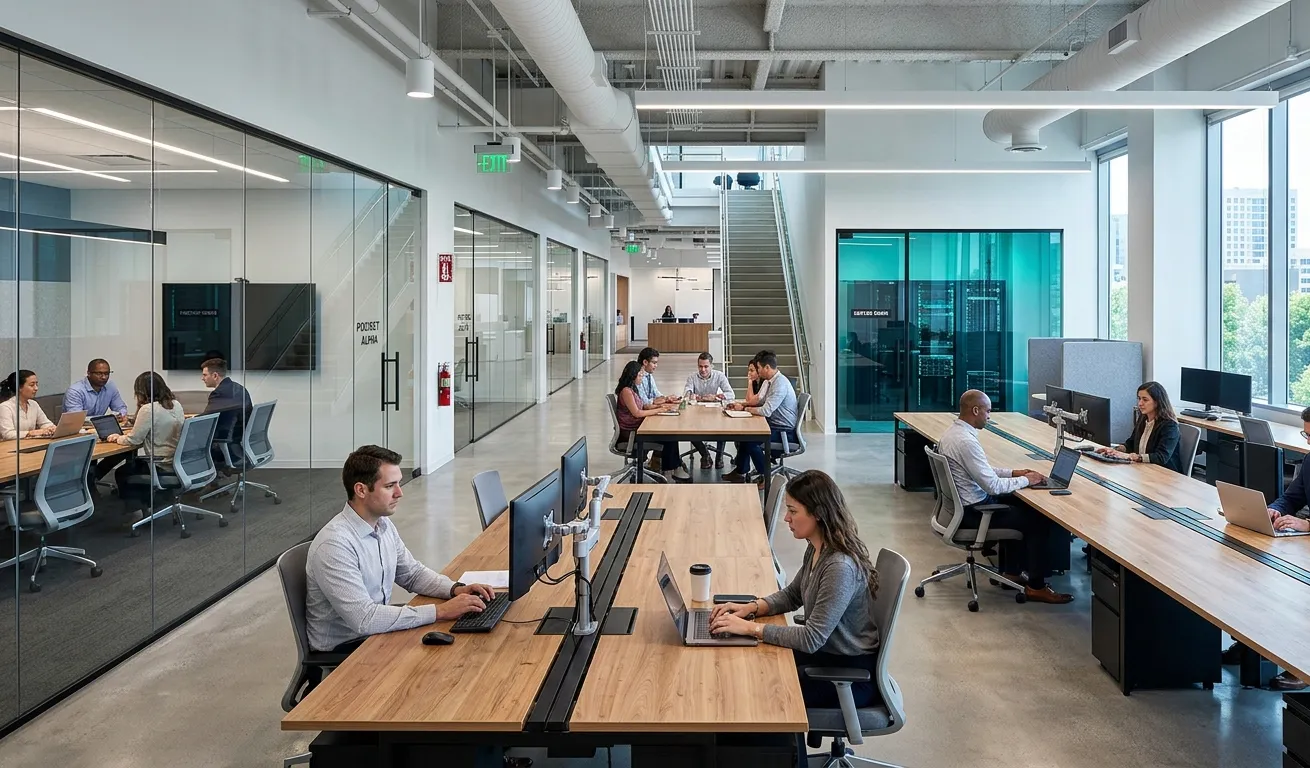
The rise of hybrid work has changed how offices are designed.
Design Innovations :
- Modular office layouts
- Multi-purpose rooms
- Movable walls and partitions
- Hot-decking environments
Why Businesses Love It :
Flexibility allows companies to scale efficiently without expensive redesigns.
4. Bibliophile Design Bringing Nature Indoors
Bibliophile design continues to dominate commercial architecture trends.
Elements to Include :
- Indoor plants and green walls
- Natural lighting and ventilation
- Water features
- Organic materials like wood and stone
Proven Benefits :
- Increased employee productivity
- Reduced stress levels
- Enhanced customer experience
5. Wellness Centric Design
Health-focused architecture is becoming a top priority in 2026.
Features :
- Improved air filtration systems
- Circadian lighting systems
- Noise reduction design
- Fitness and relaxation zones
Why It Works :
A healthier workspace leads to higher employee retention and performance.
6. Technology-Integrated Infrastructure
Commercial buildings are becoming tech hubs.
Must-Have Tech :
- 5G-ready infrastructure
- Smart meeting rooms
- Digital way finding systems
- Touch less technology
Future Outlook :
Buildings that are not tech-ready will quickly become obsolete.
7. Mixed-Use Developments
Combining retail, office, residential, and entertainment spaces is a major trend.
Advantages:
- Maximised land use
- Increased foot traffic
- Higher ROI for developers
Example Use Cases:
- Office + Retail + Co-living spaces
- Business hubs with entertainment zones
8. Sustainable Materials & Circular Design
Material selection is evolving rapidly.
Trending Materials:
- Recycled steel and concrete
- Low-carbon cement
- Bamboo and engineered wood
- Locally sourced materials
Circular Design Approach:
Buildings are now designed for reuse, recycling, and minimal waste.
9. Iconic & Brand-Centric Architecture
Businesses are using architecture as a branding tool.
Design Focus:
- Unique facades
- Signature interiors
- Experiential spaces
Result:
Your building becomes a marketing asset, not just a workspace.
10. Climate Responsive Architecture
With climate change concerns rising, buildings must adapt to local conditions.
Strategies:
- Passive cooling systems
- Flood-resistant structures
- Heat-reflective materials
Why It’s Critical :
Climate-resilient buildings ensure long-term sustainability and safety.
Conclusion Build for the Future, Not Just Today
The commercial building landscape in 2026 is driven by innovation, sustainability, and adaptability. Businesses that embrace these trends will not only reduce costs but also enhance productivity, brand value, and long-term growth.
Investing in modern commercial design is no longer a luxury it’s a strategic necessity.




















Sign in to leave a comment.