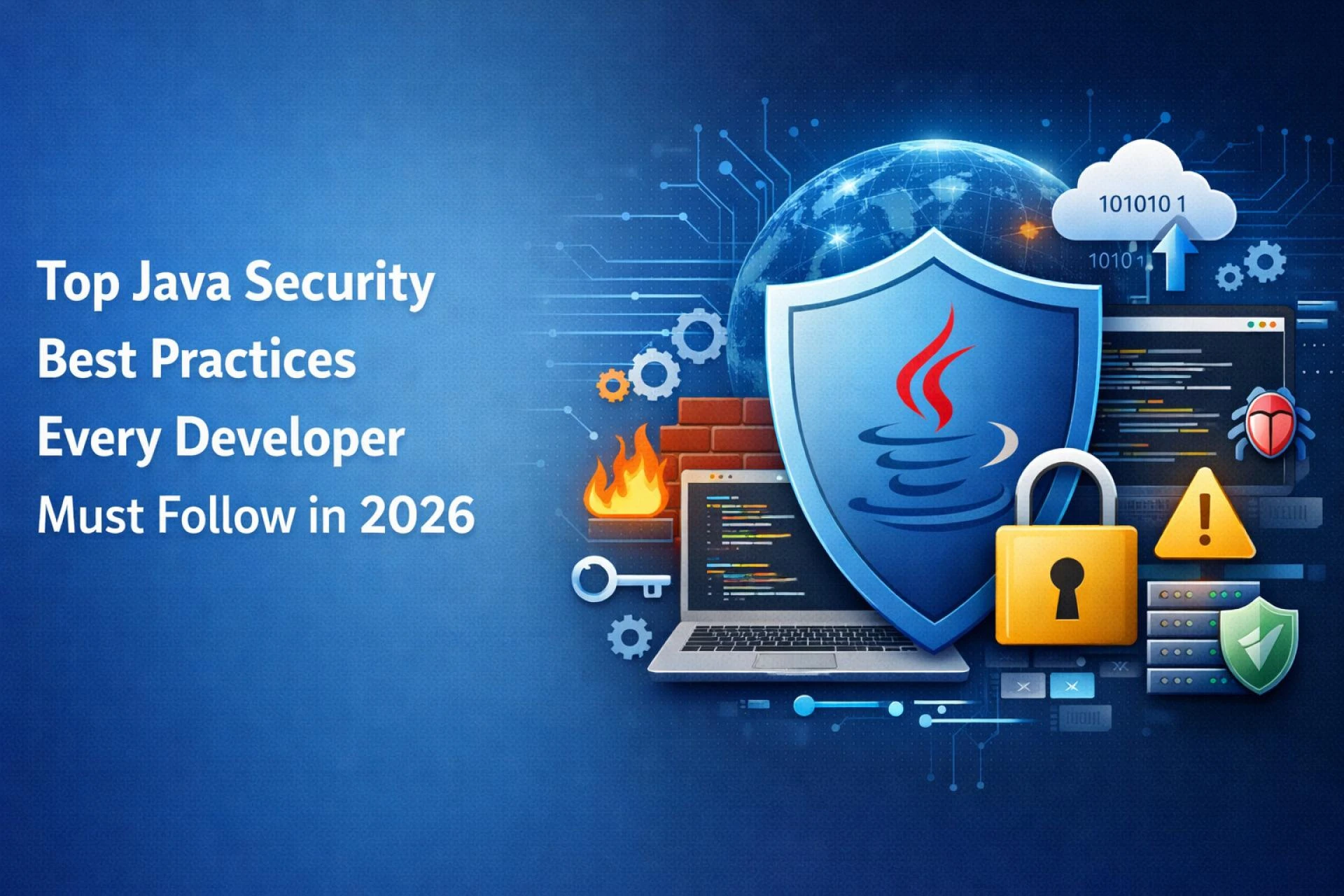

Java continues to power mission-critical systems across banking, healthcare, SaaS, and large-scale enterprise platforms. But as Java applications grow more distributed and API-driven, their attack surface expands just as fast. Security is no longer something teams “add later”; it’s a design requirement.
What’s changed in 2026 isn’t just the volume of threats, but how subtle and costly they’ve become. Many breaches today don’t happen because of zero-day exploits, but because of small, overlooked gaps in application logic, dependencies, or configurations. This is why modern development teams are rethinking how they approach Java security best practices, often aligning closely with experienced Java Development Services partners to embed security from day one.
This guide breaks down the most critical Java security best practices developers must follow in 2026 grounded in real-world lessons, not theory.
Why Java Security Requires a New Mindset in 2026
Traditional Java security focused heavily on perimeter defenses and basic input validation. That approach no longer holds up.
Modern Java applications are:
- Microservices-based and API-heavy
- Deployed across cloud and hybrid environments
- Dependent on open-source libraries and frameworks
Each of these introduces new risks. Java security best practices 2026 emphasize defense-in-depth, automation, and secure-by-default design rather than reactive fixes.
1. Treat Input Validation as a First-Class Security Control
Input validation remains one of the most overlooked yet critical Java secure coding practices.
What Still Goes Wrong
- Trusting client-side validation
- Allowing loosely typed or partially validated inputs
- Sanitizing data after it’s already processed
Best Practice
Validate inputs at every boundary: APIs, message queues, file uploads, and UI layers. Use strict schemas (JSON Schema, OpenAPI) and enforce them server-side. Validation should happen before business logic is executed, not after.
2. Secure Authentication and Authorization by Design
Authentication failures are still among the top causes of Java application breaches.
Modern Best Practices
- Use OAuth 2.0 and OpenID Connect instead of custom auth logic
- Enforce short-lived tokens with proper refresh strategies
- Apply role-based and attribute-based access controls
A common failure pattern in Java applications is strong authentication but weak authorization checks deep in service logic. Every sensitive operation must explicitly verify permissions not assume them.
3. Manage Dependencies as Actively as Your Own Code
Most Java vulnerabilities in production come from third-party libraries, not custom code.
Real-World Insight
A financial services platform once patched its own code quickly after a security alert, but missed an outdated logging library. That single dependency exposed the entire system to remote exploitation.
Best Practice
- Continuously scan dependencies for known vulnerabilities
- Remove unused libraries aggressively
- Lock dependency versions and review updates regularly
This is a core pillar of Java application security best practices and one area where automation pays off immediately.
4. Protect Secrets and Configuration Data Properly
Hardcoded secrets remain one of the most common Java security failures even in mature teams.
What to Avoid
- Credentials in source code or configuration files
- Secrets committed to repositories
- Shared credentials across environments
Best Practice
Use centralized secret management solutions and inject secrets at runtime. Enforce environment-specific configurations so development shortcuts never reach production.
Many organizations rely on external Java Development Services midway through projects to clean up secret management after incidents an avoidable cost with the right early practices.
5. Design Secure APIs, Not Just Functional Ones
APIs are the primary attack surface for modern Java applications.
Common API Security Gaps
- Excessive data exposure
- Missing rate limiting
- Weak validation of request payloads
Best Practice
- Validate request size, structure, and intent
- Apply rate limiting and throttling
- Log and monitor suspicious access patterns
Secure APIs aren’t just about blocking attacks; they’re about limiting blast radius when something goes wrong.
6. Use Encryption Correctly—and Consistently
Encryption mistakes are often subtle and dangerous.
Best Practices for 2026
- Use modern, well-reviewed cryptographic libraries
- Avoid custom encryption implementations
- Encrypt data both in transit and at rest
Just as important: rotate keys regularly and separate encryption responsibilities from business logic.
7. Harden Logging, Monitoring, and Error Handling
Poor logging can leak sensitive data. Poor monitoring can hide active attacks.
Secure Logging Guidelines
- Never log credentials, tokens, or personal data
- Sanitize exception messages exposed to users
- Centralize logs and monitor anomalies
A well-secured Java application assumes failures will happen—and ensures those failures don’t become security incidents.
8. Shift Security Left Without Slowing Development
Security shouldn’t be a release blocker; it should be part of daily development.
Effective Approaches
- Static code analysis during development
- Automated security testing in CI/CD pipelines
- Clear coding standards enforced through reviews
Teams that follow Java security best practices 2026 treat security feedback like compiler errors—early, visible, and actionable.
9. Prepare for Compliance Without Overengineering
Regulatory requirements continue to evolve, but overengineering security can slow teams down.
Smart Compliance Strategy
- Build traceability into authentication and access control
- Maintain audit-ready logs
- Document security decisions clearly
Security that supports compliance should feel integrated, not bolted on.
Conclusion: Security Is a Long-Term Java Strategy
Security isn’t about perfection; it’s about reducing risk consistently and predictably. The Java security best practices outlined here focus on practical defenses secure coding, dependency management, API protection, and proactive monitoring.
Organizations that take Java security seriously in 2026 recognize that tools alone aren’t enough. They invest in people, processes, and partnerships. Working with a Trusted Java Development Company helps teams apply Java application security best practices correctly, avoid common pitfalls, and build systems that stay resilient as threats evolve.
Strong Java security doesn’t just protect applications it protects business continuity, customer trust, and long-term growth.





























Sign in to leave a comment.