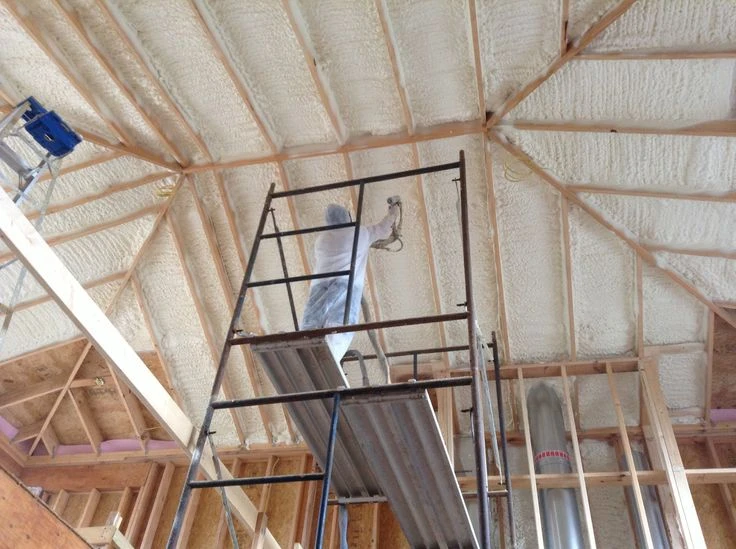

Many of the most persistent myths about commercial insulation performance come from an outdated focus on a single metric: R-value. Business owners often believe that a high R-value is the only thing that matters, that more insulation is always better, and that its primary job is just to keep a building warm. In reality, the true performance of a commercial insulation system depends far more on its ability to control air leakage and manage moisture, which are often bigger drivers of high energy costs than heat conduction alone.
These misconceptions can lead to poor investment decisions, resulting in buildings that are expensive to operate and uncomfortable for employees or tenants. Debunking some of the top myths still circulating in the commercial property world helps business owners avoid these pitfalls. The information here is based on the practical, on-the-ground experience of insulation professionals who deal with the consequences of these myths every day.
Myth 1: The R-Value Is the Only Metric That Counts
This is by far the most common misunderstanding. R-value measures an insulation's ability to resist conductive heat flow, which is important. However, it says nothing about its ability to stop convective heat loss, which is heat carried by moving air. In large commercial buildings, especially warehouses or manufacturing facilities with big open spaces and numerous joints and seams, air leakage can be the single largest source of energy waste, sometimes accounting for up to 40% of heating and cooling costs.
A building insulated with material that has a high R-value but allows for air movement is like wearing a thick wool sweater on a windy day. The sweater is warm, but the wind cuts right through it. Modern insulation systems like closed-cell spray foam address this by creating a monolithic, airtight barrier. It expands to seal every gap, joint, and penetration, effectively stopping the wind. This real-world performance is why a building insulated with spray foam often uses significantly less energy than a building insulated to a higher R-value with a more air-permeable material.
Bonus Tip: Business owners can request a professional energy audit that includes a blower door test or thermal imaging scan. These tools provide visual evidence of air leakage, showing exactly where conditioned air is escaping the building.
Myth 2: Minor Gaps in Insulation Don't Matter
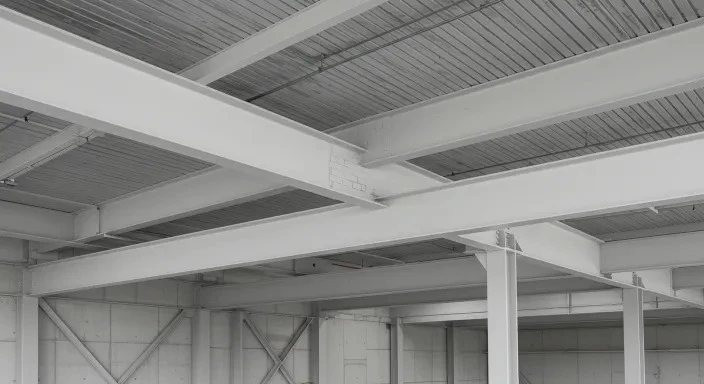
In commercial construction, it's easy to assume that small gaps around steel beams, conduit, or wall-to-roof joints are insignificant. The truth is, these gaps have a disproportionately large impact on the overall performance of the insulation system. This is due to thermal bridging, where heat takes the path of least resistance through a less-insulated area.
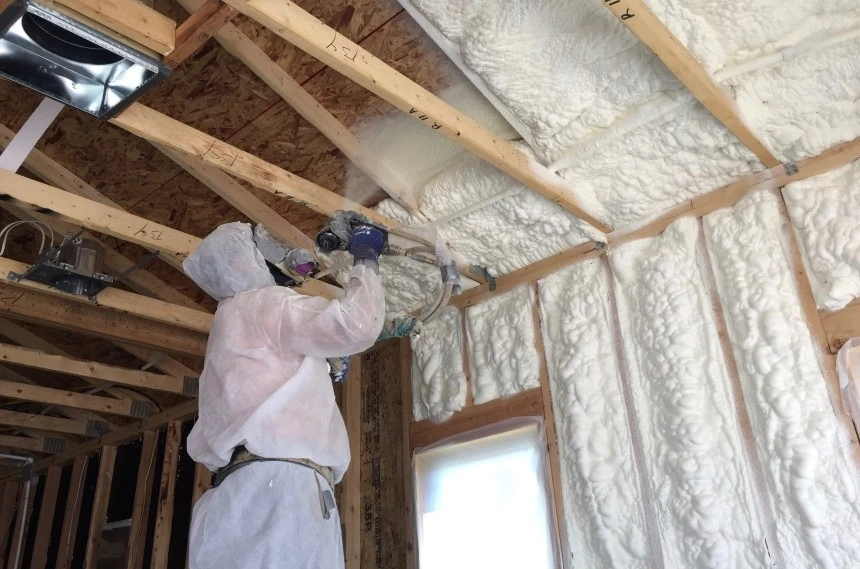
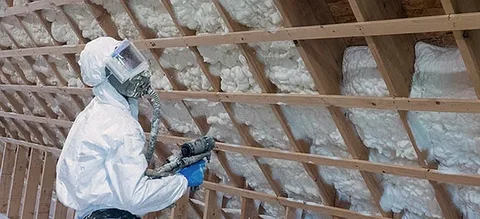
Even a small percentage of uninsulated area can reduce the effective R-value of an entire wall or roof assembly by a huge margin. For example, the thermal performance of a wall can be cut in half if just 5% of its surface area consists of uninsulated gaps. This is why the installation method is just as important as the material itself. Pre-cut batts or rigid boards will always have seams and gaps. Spray foam, because it is applied as a liquid, creates a custom-fit layer of insulation with no joints or gaps, eliminating thermal bridging and delivering its full stated R-value across the entire surface.
Myth 3: Insulation Is Only for Cold Climates
This myth costs businesses in warmer regions a fortune in cooling expenses. Professional spray foam Insulation works by slowing the transfer of heat, and that process works in both directions. In the winter, it keeps heat in. In the summer, it keeps heat out. For a commercial building with a large, flat roof exposed to direct sun, the amount of heat radiating downward into the space can be immense.
Properly insulating the roof deck can dramatically lower the interior temperature, sometimes by 20 degrees or more. This massively reduces the load on the air conditioning system, which is often a company's largest single energy expense. For businesses like refrigerated warehouses or data centers, where maintaining a specific low temperature is critical to operations, a high-performance insulation system isn't a luxury; it's a core piece of business equipment.
Myth 4: The Upfront Cost Is the Most Important Factor
Focusing solely on the initial price of an insulation material ignores the total cost of ownership over the life of the building. A cheaper insulation might save money on day one, but it can lead to much higher energy bills, increased HVAC maintenance, and potential moisture-related repairs for years to come.
A smarter approach is to compare materials based on their lifecycle cost.
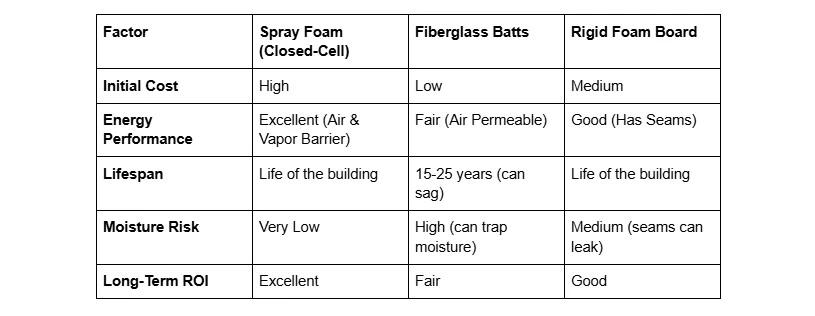
While spray foam has a higher upfront cost, its superior performance and durability often result in a much lower total cost of ownership and a faster return on investment through operational savings.
Bonus Tip: For steel buildings, as little as two inches of closed-cell spray foam applied directly to the metal panels can completely stop condensation, a major cause of rust and water damage to inventory.
Things to Consider Before Choosing Commercial Insulation
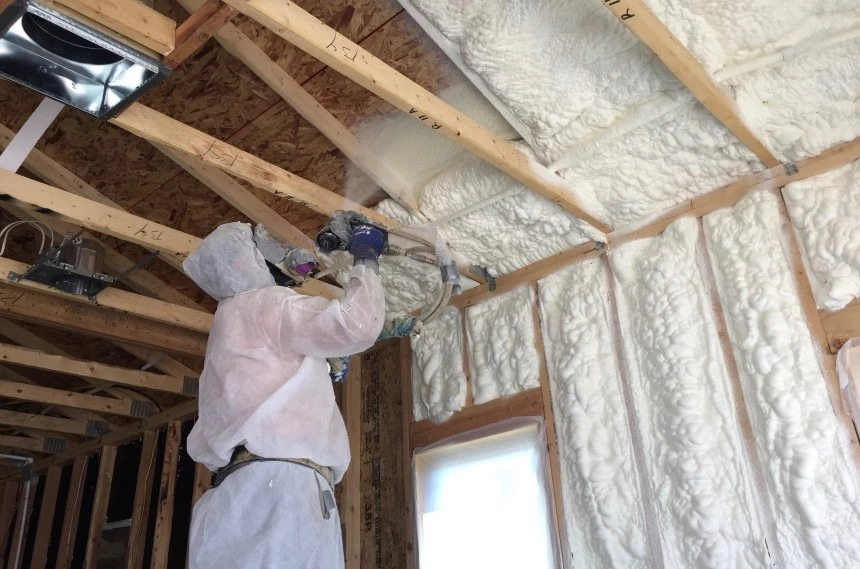
The right insulation for a commercial building depends on more than just the climate.
- Building Use: A retail store has different needs than a welding shop or a food processing plant. Factors like occupant comfort, humidity control, and durability all come into play.
- Building Structure: The construction material (steel, concrete tilt-up, wood frame) affects which insulation type is most suitable. For example, the ability of spray foam to adhere directly to steel and concrete is a major advantage.
- Code Compliance: Modern energy codes are increasingly focused on mandatory air barrier requirements, not just R-value. Choosing an insulation that meets these evolving standards can future-proof the building.
Questions People Ask About Commercial Insulation
How does insulation affect a commercial flat roof?
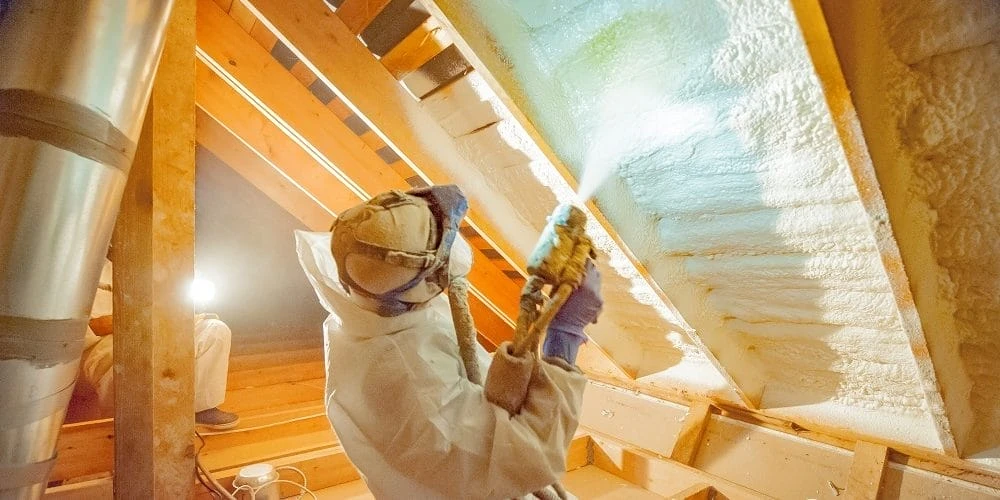
Applying spray foam directly to the underside of the roof deck can protect the roof membrane from extreme temperature swings. This reduces the expansion and contraction that stresses seams and can extend the life of the roofing system.
Can you insulate a building without disrupting business operations?
Yes. Professional installers are accustomed to working in active commercial environments. Projects can often be completed in sections, during off-hours, or on weekends to minimize disruption to the business.
Is spray foam a good choice for food-grade or agricultural buildings?
Closed-cell spray foam is an excellent choice for these applications. Once cured, it is inert, provides no food source for pests, and does not support mold growth. Its seamless, durable surface can also be power-washed for sanitation.
What kind of return on investment can a business expect?
The ROI varies based on the building, its use, and local energy costs, but it's often faster than many business owners think. Payback periods of 3 to 7 years through energy savings alone are common for commercial spray foam projects.
Does insulation help with sound control in a loud commercial space?
Yes. Both open-cell and closed-cell spray foam can significantly reduce noise. Open-cell foam is a fantastic sound absorber, making it ideal for creating quieter office spaces within a louder manufacturing facility or for reducing noise from outside.
Making a Smart Long-Term Decision
Choosing the right commercial insulation requires looking beyond old myths and focusing on total building performance. By prioritizing air sealing and moisture management in addition to R-value, business owners can create a building that is less expensive to operate, more durable, and more comfortable for everyone inside. It's a decision that pays dividends not just in lower utility bills, but in the long-term durability and value of the asset itself.
Get an Expert Opinion on Your Building's Performance
The best way to understand these factors for a specific property is through a professional assessment. An experienced insulation contractor can provide a detailed analysis of your building's current performance and model the potential savings from an upgrade. For business owners considering their options, the team at FOAMWORX Spray Foam Insulation has extensive experience in commercial and agricultural projects. They can offer a clear assessment of costs, benefits, and expected ROI. To schedule a consultation for your property, you can contact them at [email protected] or by phone at (507) 407-0678.
Reviewer: Jacob Wright has 6 years of experience in spray foam insulation. He reviewed this content and made sure it focused on the real decisions small business owners deal with every day.

























Sign in to leave a comment.