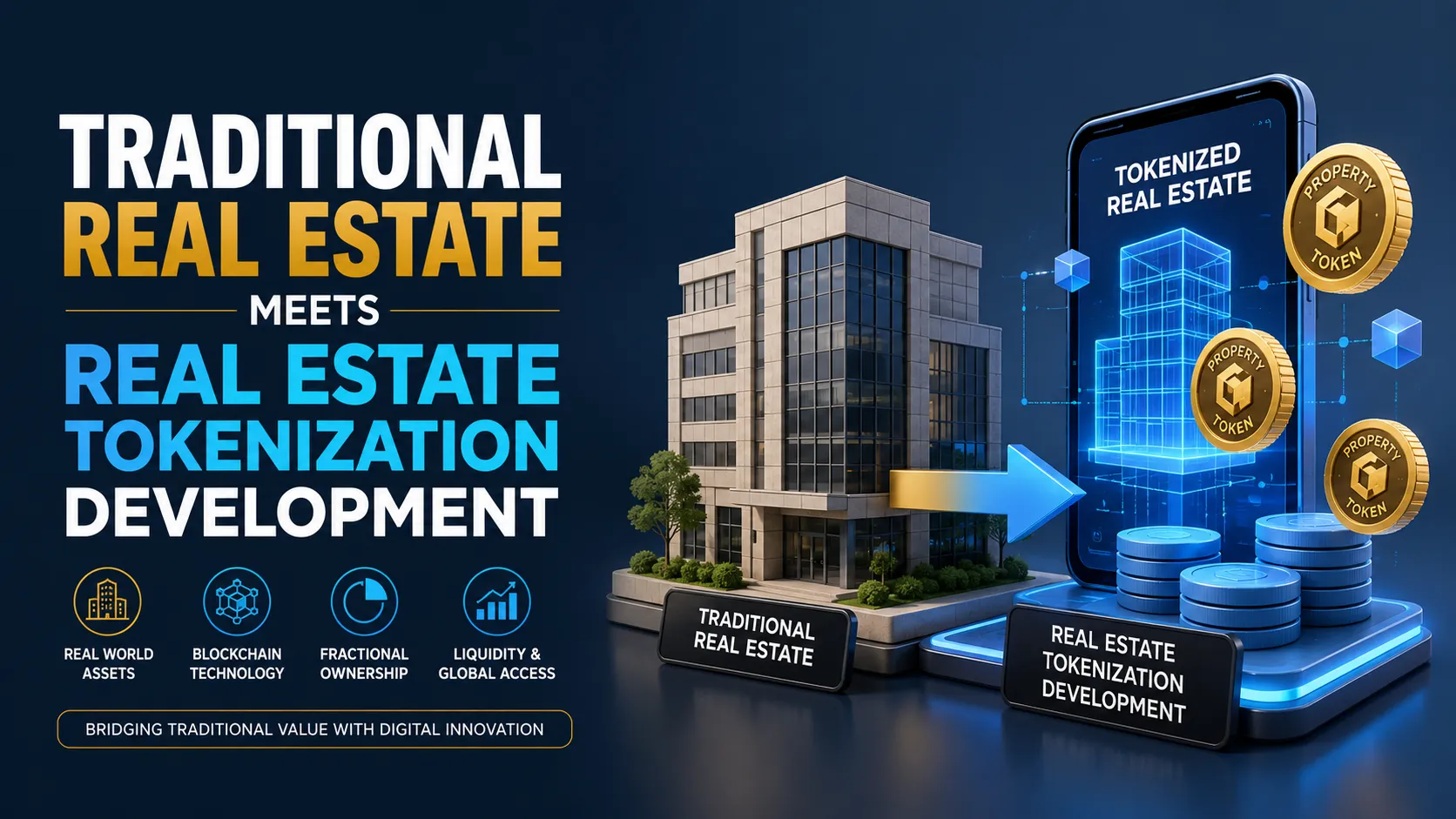

For decades, real estate has been one of the most preferred investment options for individuals and businesses. Property ownership has long been associated with financial security, rental income, and long-term value appreciation. However, the traditional real estate market also comes with several limitations. High investment requirements, paperwork, lengthy transactions, limited liquidity, and geographical restrictions often make property investment difficult for many investors.
Today, digital technologies are changing the way assets are managed and exchanged. Among these developments, real estate tokenization development has gained attention because it introduces a different approach to property ownership and investment. Instead of purchasing an entire property, investors can own digital tokens that represent a portion of a real estate asset. This approach makes participation possible for a wider group of investors while simplifying several operational processes.
Businesses, investors, developers, and financial institutions are increasingly looking at Real Estate Tokenization as a practical way to modernize property investment. As regulations become more supportive and blockchain technology continues to mature, organizations are considering tokenized assets as part of their long-term digital investment strategies.
This article explains how traditional real estate meets digital asset technology, the role of tokenization platforms, business advantages, development stages, challenges, and future opportunities.
Understanding Traditional Real Estate
Traditional real estate has been the standard investment model for generations. Investors purchase residential, commercial, industrial, or mixed-use properties to earn rental income or capital appreciation.
The process usually involves multiple parties, including brokers, banks, legal advisors, government authorities, and property managers. Documentation, ownership verification, financing approvals, and legal procedures often extend the timeline before ownership changes hands.
Some common characteristics include:
- Direct ownership of physical property
- High capital investment
- Lengthy buying and selling procedures
- Property registration and legal documentation
- Limited access for smaller investors
- Ongoing maintenance responsibilities
Although this model continues to serve millions of investors worldwide, growing digital adoption has created interest in more flexible investment options.
What Is Real Estate Tokenization?
Real Estate Tokenization is the process of converting ownership rights of a physical property into digital tokens stored on a blockchain network. Each token represents a specific share of the property and can be purchased by eligible investors according to applicable regulations.
Rather than buying an entire building, investors purchase fractions represented through digital assets. Ownership records remain securely stored on blockchain networks while smart contracts automate several transaction-related activities.
This approach does not replace physical real estate. Instead, it introduces a digital ownership structure that works alongside existing property markets.
Many organizations work with a Real Estate Tokenization company to convert commercial buildings, apartments, hotels, warehouses, and other valuable properties into tokenized investment opportunities.
Why Traditional Real Estate Needs Digital Innovation
The conventional property market still faces several operational challenges.
High Investment Requirements
Buying premium real estate often requires significant financial resources, preventing many investors from entering the market.
Limited Liquidity
Selling property usually takes weeks or months. Market conditions, buyer availability, and legal formalities affect transaction speed.
Complex Documentation
Ownership verification, contracts, title checks, taxation, and compliance involve substantial paperwork.
Geographic Barriers
International investors frequently encounter legal restrictions, banking regulations, and administrative processes.
Administrative Expenses
Property management, legal consultation, brokerage commissions, and maintenance increase overall ownership costs.
These limitations have encouraged companies to consider real estate tokenization development as an additional investment model.
How Real Estate Tokenization Development Works
The tokenization process follows several structured stages.
Property Selection
The property owner identifies an asset suitable for tokenization. Residential buildings, office spaces, shopping centers, warehouses, hotels, and industrial facilities are common choices.
Legal Evaluation
Ownership documents, regulatory requirements, valuation reports, and investor eligibility are reviewed before token creation.
Asset Valuation
Professional valuation determines the market value of the property. This valuation helps determine the number of digital tokens issued.
Token Creation
Blockchain-based smart contracts generate digital tokens representing ownership shares.
Investor Participation
Eligible investors purchase tokens through a digital investment platform.
Revenue Distribution
Rental income or profits can be distributed according to token ownership through automated smart contract logic.
A professional Real Estate Tokenization Development company usually manages these technical and compliance-related activities during implementation.
Comparing Traditional Real Estate and Tokenized Real Estate
| Traditional Real Estate | Tokenized Real Estate |
|---|---|
| Full property ownership | Fractional ownership |
| High investment amount | Smaller investment options |
| Lengthy transaction process | Digital transactions |
| Limited liquidity | Improved trading opportunities |
| Extensive paperwork | Digital ownership records |
| Restricted investor participation | Wider investor access |
| Manual revenue distribution | Smart contract automation |
Both models continue to exist, but tokenization introduces additional investment opportunities without replacing conventional ownership.
Fractional Ownership Creates New Investment Opportunities
Fractional ownership has become one of the most attractive aspects of Real Estate Tokenization.
Instead of requiring millions of dollars to purchase an office building, ownership can be divided into thousands of digital tokens. Investors purchase only the portion they can afford.
This model benefits:
- Individual investors
- Institutional investors
- Property developers
- Real estate funds
- International investors
Real estate asset tokenization helps expand investment participation without requiring full property ownership.
Smart Contracts Support Property Management
Smart contracts are programmable agreements stored on blockchain networks.
They automatically execute predefined conditions once requirements are met.
In tokenized real estate, smart contracts may handle:
- Token issuance
- Ownership transfers
- Rental income distribution
- Investor records
- Compliance verification
- Dividend calculations
Automation reduces repetitive administrative work while improving record management.
Benefits for Property Owners
Property owners also gain several business advantages from tokenization.
Faster Capital Access
Instead of selling an entire property, owners can sell a percentage through digital tokens while retaining partial ownership.
Larger Investor Pool
Fractional ownership attracts investors with different financial capacities.
Digital Ownership Records
Blockchain records simplify ownership tracking and transaction history.
Portfolio Diversification
Developers can tokenize multiple assets across different property categories.
Many businesses partner with a Real Estate Tokenization company to introduce these investment opportunities to existing clients.
Benefits for Investors
Tokenized real estate introduces several advantages for investors.
Lower Entry Requirements
Investors can participate without purchasing an entire property.
Portfolio Diversification
Investment funds can be distributed across several properties instead of concentrating on one asset.
Easier Portfolio Management
Digital platforms allow investors to monitor holdings from a single dashboard.
Income Opportunities
Rental income and profit-sharing can be distributed according to token ownership.
International Participation
Eligible investors from different regions may participate depending on local regulations.
These advantages continue to increase interest in Real Estate Tokenization Services across global property markets.
Industries Adopting Real Estate Tokenization
Several property sectors are already considering tokenization.
Residential Housing
Apartment complexes and housing projects attract fractional investors.
Commercial Buildings
Office spaces generate rental income that can be distributed among token holders.
Hotels
Hospitality properties provide another investment category for digital ownership.
Industrial Warehouses
Logistics facilities continue attracting institutional investors.
Retail Properties
Shopping centers and commercial retail spaces are suitable for shared ownership structures.
Each asset category presents different investment opportunities through real estate asset tokenization.
The Role of Real Estate Tokenization Platform Development
A secure platform acts as the operational center of a tokenized property ecosystem.
Real Estate Tokenization Platform Development generally includes several important modules.
Investor Registration
Identity verification and compliance checks are completed before participation.
Property Listings
Available tokenized assets are displayed with investment details.
Digital Wallet Integration
Investors store and manage digital assets securely.
Smart Contract Management
Token issuance and ownership transfers are handled through blockchain logic.
Investment Dashboard
Users can monitor holdings, transaction history, and income records.
Administrative Controls
Platform administrators manage users, assets, compliance, and reporting.
A well-planned platform simplifies property management while offering a better experience for investors.
Compliance Remains an Important Part of Development
Real estate investments operate under financial and property regulations.
Development teams must consider:
- KYC verification
- AML compliance
- Securities regulations
- Property ownership verification
- Tax reporting
- Investor eligibility
- Data protection requirements
Every country has different legal frameworks, making compliance planning an important part of real estate tokenization development.
Choosing the Right Development Partner
Selecting an experienced development partner influences project quality.
A reliable Real Estate Tokenization Development company should offer:
- Blockchain development experience
- Smart contract development
- Security testing
- Platform architecture planning
- Wallet integration
- Compliance guidance
- Technical maintenance
- Platform upgrades
Many organizations also evaluate previous projects, technical expertise, and long-term support before making a decision.
Future Outlook of Tokenized Real Estate
Digital investment markets continue expanding as blockchain adoption increases.
Several developments may influence future growth.
Institutional investors are showing greater interest in digital property investments. Governments are gradually introducing regulatory frameworks that support digital assets. Financial institutions are studying blockchain-based investment products, while technology providers continue improving blockchain infrastructure.
As these developments continue, Real Estate Tokenization Development Services are expected to receive growing attention from developers, investment firms, real estate agencies, and financial organizations seeking modern property investment models.
Conclusion
Traditional real estate continues to hold significant value, but digital ownership models are creating additional investment opportunities for property owners and investors alike. Real Estate Tokenization combines physical assets with blockchain technology to support fractional ownership, digital records, simplified investment management, and wider market participation. Businesses planning to introduce tokenized property investments should work with experienced professionals who understand blockchain development, compliance, and platform design. Blockchain App Factory provides Real Estate Tokenization Services, helping businesses develop secure platforms, manage tokenized assets, and support digital real estate investment initiatives through complete development solutions.
FAQs
1. What is Real Estate Tokenization?
Real Estate Tokenization is the process of representing ownership of a physical property with digital tokens on a blockchain. These tokens represent shares of the property and can be purchased by eligible investors.
2. How does real estate tokenization development benefit investors?
It allows investors to participate with smaller investment amounts, diversify across multiple properties, receive proportional income, and manage investments through digital platforms.
3. What types of properties can be tokenized?
Residential buildings, commercial offices, hotels, shopping centers, warehouses, industrial facilities, and mixed-use developments are commonly considered for tokenization.
4. Why should businesses choose Real Estate Tokenization Platform Development?
A dedicated platform provides investor onboarding, property listings, wallet integration, smart contract management, compliance features, and administrative controls in one system.
5. What services does a Real Estate Tokenization Development company provide?
A Real Estate Tokenization Development company typically offers blockchain development, smart contract creation, token issuance, compliance integration, wallet connectivity, security testing, platform maintenance, and Real Estate Tokenization Development Services for businesses entering the digital property market.



























Sign in to leave a comment.