
Introduction
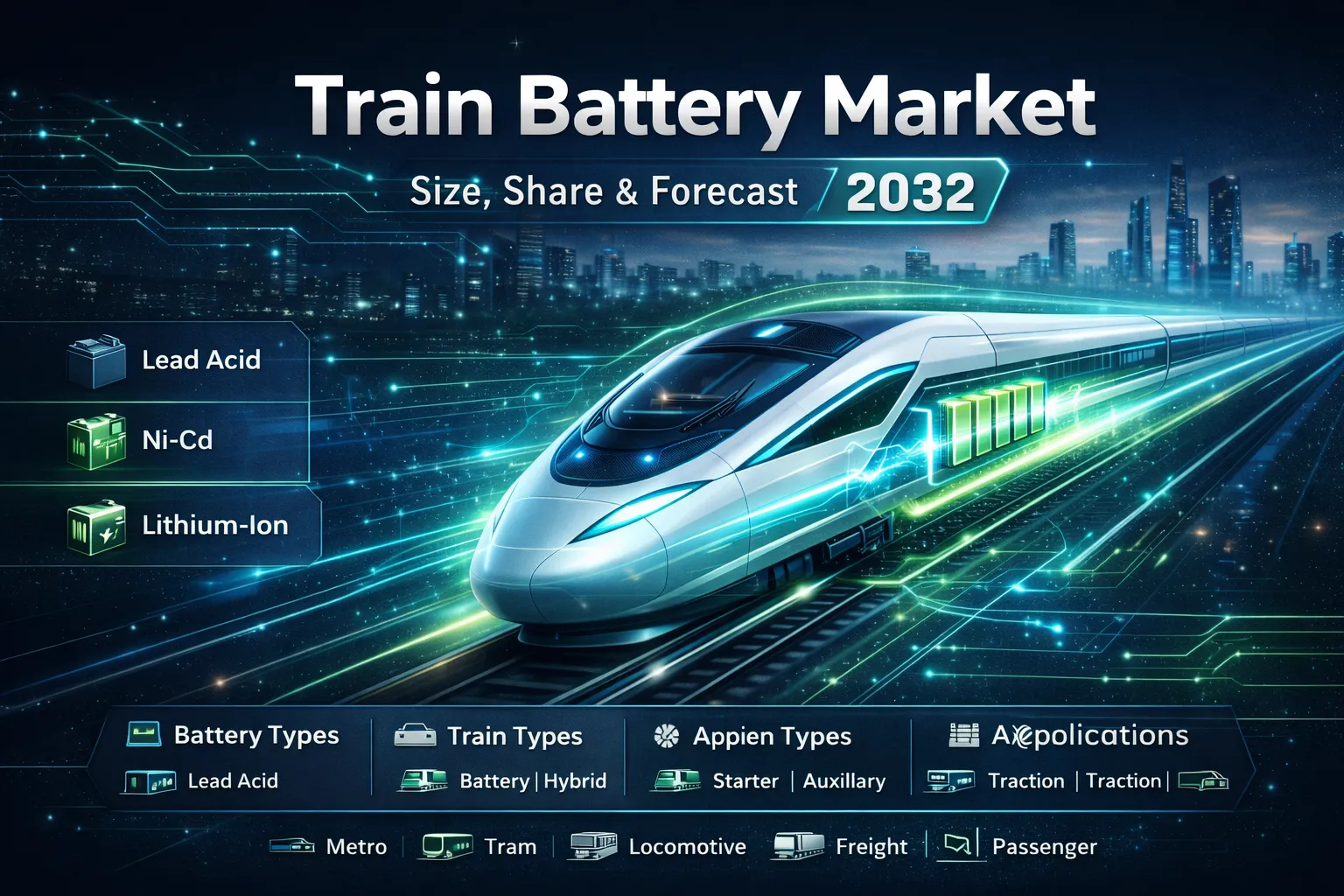
The global train battery market is gaining significant traction as the railway industry accelerates its transition toward cleaner and more energy-efficient transportation systems. Valued at USD 598.7 million in 2025, the market is projected to reach USD 849.6 million by 2032, growing at a CAGR of 5.4% during the forecast period (2026–2032).
This steady growth is primarily driven by increasing railway electrification initiatives, the rising adoption of battery-powered and hybrid trains, and a global push toward sustainable mobility solutions. As governments and transportation authorities focus on reducing carbon emissions, train batteries are becoming an essential component of modern rail systems.
What is a Train Battery?
A train battery is a critical onboard energy storage system used to power various auxiliary and essential functions in railway systems. These batteries support operations such as:
- Emergency braking systems
- Lighting and HVAC (heating, ventilation, and air conditioning)
- Communication and signaling systems
- Backup power during outages
- Operation in non-electrified rail sections
Train batteries ensure uninterrupted performance and safety, making them indispensable in both conventional and advanced rail networks.
Market Overview and Growth Drivers
1. Rising Railway Electrification Initiatives
Railway electrification is one of the most significant drivers of the train battery market. Electrified rail systems are more energy-efficient and environmentally friendly compared to diesel-powered trains. Governments worldwide are heavily investing in electrification projects to reduce greenhouse gas emissions and improve operational efficiency.
For instance, according to the International Energy Agency, India achieved 98.83% electrification of its broad-gauge network by April 2025, covering 68,701 route kilometers. Such large-scale initiatives create strong demand for train batteries, particularly for backup power and auxiliary systems.
Even in highly electrified networks, batteries remain essential for ensuring seamless operation during power disruptions and in partially electrified routes.
2. Growing Adoption of Battery-Powered and Hybrid Trains
The shift toward battery-electric multiple units (BEMUs) and hybrid trains is transforming the railway landscape. These trains use batteries either as a primary power source or in combination with overhead electric lines and diesel engines.
Battery-powered trains offer several advantages:
- Zero emissions during operation
- Reduced noise pollution
- Lower operating and maintenance costs
- Flexibility in non-electrified routes
Regions such as Europe and North America are leading the adoption of battery-electric trains, reflecting a broader industry transition toward sustainable rail transport.
3. Increasing Focus on Sustainable Transportation
Sustainability has become a central theme in global transportation strategies. Railways are already one of the most energy-efficient modes of transport, and the integration of battery technologies further enhances their environmental performance.
Governments and organizations are setting ambitious targets to reduce carbon emissions, encouraging the adoption of clean energy solutions in public transportation. Train batteries play a vital role in achieving these goals by enabling energy storage, regenerative braking, and efficient power management.
4. Demand for Reliable Backup Power Systems
Train batteries are crucial for maintaining operational continuity and safety. In the event of power failures, batteries provide immediate backup to critical systems such as braking, lighting, and communication.
As rail networks become more technologically advanced, the need for reliable and high-performance battery systems continues to grow. This is particularly important in high-speed rail and urban transit systems where safety and reliability are paramount.
Technological Advancements in Train Batteries
Technological innovation is playing a key role in shaping the train battery market. Manufacturers are focusing on developing advanced battery solutions that offer higher efficiency, longer lifespan, and improved safety.
Key innovations include:
- Lithium-ion batteries: Lightweight, high energy density, and longer life cycles
- Solid-state batteries: Enhanced safety and performance (emerging technology)
- Improved battery management systems (BMS): Real-time monitoring and optimization
- Fast-charging capabilities: Reduced downtime and improved operational efficiency
These advancements are enabling train batteries to meet the demanding requirements of modern railway systems.
Market Segmentation
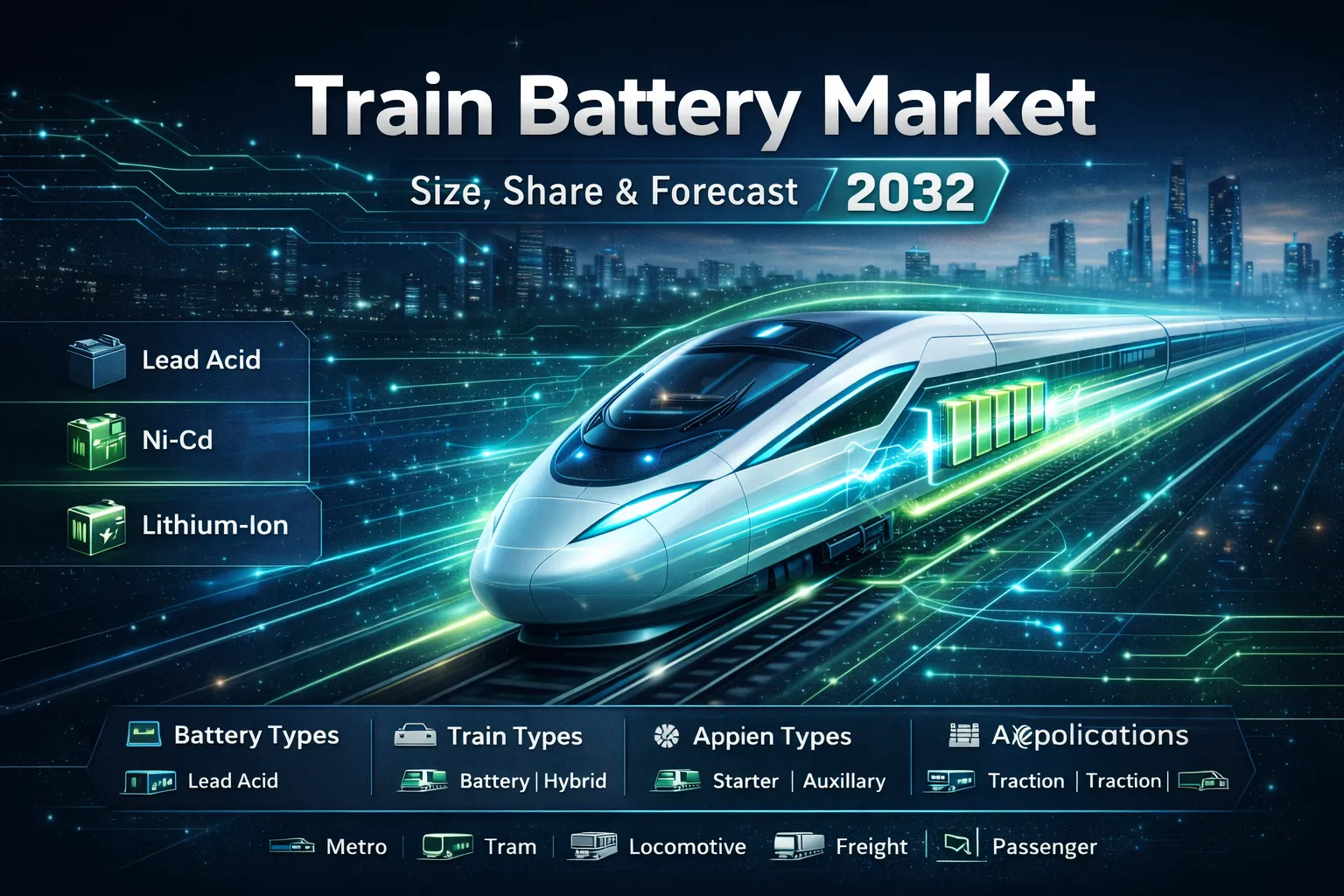
By Battery Type:
- Lead-acid batteries
- Lithium-ion batteries
- Nickel-cadmium batteries
- Others
By Application:
- Locomotives
- Metro and light rail
- High-speed trains
- Freight trains
By Region:
- North America
- Europe
- Asia-Pacific
- Rest of the World
Among these, lithium-ion batteries are expected to witness the fastest growth due to their superior performance and declining costs.
Regional Insights
Asia-Pacific
Asia-Pacific dominates the train battery market, driven by extensive railway networks and large-scale electrification projects in countries like India and China. Government initiatives and investments in rail infrastructure continue to support market growth in this region.
Europe
Europe is at the forefront of adopting battery-electric trains and sustainable rail technologies. Stringent environmental regulations and strong policy support are key factors driving the market.
North America
North America is witnessing growing interest in hybrid and battery-powered trains, particularly in urban transit systems. Investments in modernizing rail infrastructure are expected to boost demand for train batteries.
Challenges in the Train Battery Market
Despite its growth potential, the train battery market faces several challenges:
- High initial costs: Advanced battery systems can be expensive to deploy
- Limited charging infrastructure: Especially in developing regions
- Battery disposal and recycling issues: Environmental concerns related to battery waste
- Performance limitations in extreme conditions: Temperature sensitivity can impact efficiency
Addressing these challenges will be crucial for sustained market growth.
Future Trends and Opportunities
The future of the train battery market looks promising, with several emerging trends expected to drive growth:
1. Integration with Renewable Energy
Train batteries can be integrated with renewable energy sources such as solar and wind, enabling cleaner and more sustainable rail operations.
2. Expansion of Battery-Electric Trains
The deployment of battery-electric trains is expected to increase significantly, particularly in regions with partially electrified rail networks.
3. Smart Rail Systems
The adoption of digital technologies and IoT in railways will enhance battery performance monitoring and predictive maintenance.
4. Government Support and Investments
Continued government funding and policy support will play a crucial role in accelerating market growth.
The global train battery market is on a steady growth trajectory, driven by the increasing emphasis on sustainability, railway electrification, and technological innovation. With a projected market size of USD 849.6 million by 2032, train batteries are set to become a cornerstone of modern rail systems.
As the world moves toward cleaner and more efficient transportation solutions, train batteries will play a vital role in enabling zero-emission rail travel, improving operational efficiency, and ensuring safety. Stakeholders across the railway ecosystem—including governments, manufacturers, and service providers—must collaborate to overcome challenges and unlock the full potential of this evolving market.
Read Full Report:https://www.igtps.com/report/train-battery-market
About Us - IG Transformation Partners
IG Transformation Partners (IGTP) is a global market research and business consulting company dedicated to delivering accurate insights, data-driven strategies, and transformative intelligence to organizations worldwide. We specialize in providing comprehensive industry analysis, market forecasts, competitive intelligence, and strategic advisory services that empower businesses to make informed decisions and achieve sustainable growth.
Our research approach combines advanced data analytics, industry expertise, and rigorous methodologies to deliver reliable and actionable market insights across diverse industries. From emerging technologies and energy markets to healthcare, automotive, manufacturing, and digital transformation sectors, we help organizations understand market trends, identify growth opportunities, and navigate evolving industry landscapes.
At IG Transformation Partners, we believe that quality insights drive successful business transformation. Our team of experienced analysts and consultants works closely with clients to provide customized research solutions tailored to their strategic goals. By delivering high-quality reports, market intelligence, and consulting services, we support companies in strengthening their market position and accelerating innovation.
Our mission is to become a trusted partner for organizations seeking strategic market intelligence, future-ready insights, and business transformation solutions.
Contact Us
IG Transformation Partners
Mail: [email protected]
































Sign in to leave a comment.