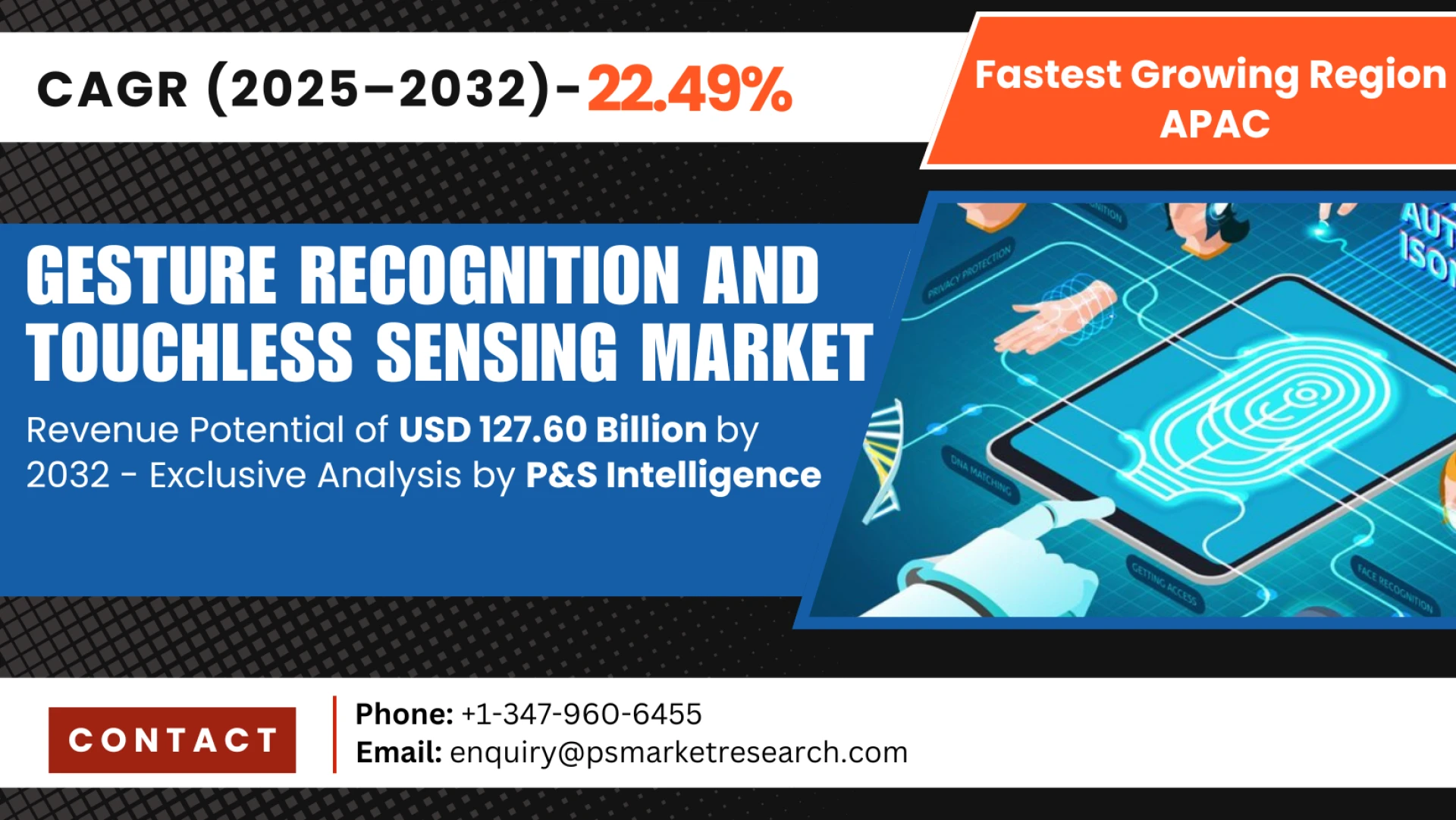

In the rapidly evolving landscape of technology, gesture recognition and touchless sensing are emerging as game-changing innovations that promise to redefine how we interact with devices, environments, and digital interfaces. With the market projected to skyrocket from USD 25.38 billion in 2024 to an impressive USD 127.60 billion by 2032, this technological frontier is not just growing—it's experiencing a transformative explosion.
The Rise of Touchless Technology
The journey of gesture recognition and touchless sensing is a testament to human ingenuity. What once seemed like science fiction is now becoming an everyday reality. From smartphones that respond to mid-air gestures to smart home systems that can be controlled with a simple wave, these technologies are breaking down the barriers between human intention and technological response.
Market Dynamics and Growth Potential
The staggering compound annual growth rate of 22.49% between 2025 and 2032 reflects more than just technological advancement—it represents a fundamental shift in how we conceptualize human-machine interaction. This growth is driven by several key factors:
- Healthcare Innovations: Touchless technologies are revolutionizing medical environments, allowing surgeons to access critical information without compromising sterile conditions.
- Automotive Advancements: Modern vehicles are increasingly incorporating gesture recognition for safer, more intuitive control systems.
- Consumer Electronics: Smartphones, smart home devices, and wearable technologies are pushing the boundaries of touchless interactions.
- Pandemic-Induced Acceleration: The global health crisis has dramatically increased the demand for contactless technologies across various sectors.
Technical Breakthroughs Driving the Market
The magic behind gesture recognition lies in a complex interplay of advanced technologies:
- Computer Vision: Sophisticated algorithms that can interpret human movements with unprecedented accuracy.
- Machine Learning: AI systems that continuously improve their ability to understand and predict human gestures.
- Advanced Sensors: Cutting-edge hardware that can detect the most subtle of human movements.
Emerging Applications
The potential applications are mind-boggling. Imagine:
- Operating complex machinery with simple hand movements
- Controlling medical equipment without physical contact
- Creating more accessible interfaces for individuals with mobility challenges
- Enhancing security systems with unique gesture-based authentication
Challenges and Opportunities
Despite the tremendous growth, the market is not without its challenges. Privacy concerns, technical limitations, and the need for more intuitive interfaces remain significant hurdles. However, these challenges are precisely what drive innovation.
Companies at the forefront of this technology are investing heavily in:
- Improved accuracy of gesture recognition
- Reduced latency in gesture detection
- More natural and intuitive interaction models
- Enhanced privacy and security features
The Human Touch in a Touchless World
What makes this technological revolution truly exciting is its potential to make technology more human-centric. Gesture recognition isn't about replacing human interaction but enhancing it. It's about creating interfaces that understand us, that respond to our natural movements and intentions.
Looking Ahead: A Touchless Future
As we move towards 2032, the projected market value of USD 127.60 billion seems not just possible, but almost conservative. The convergence of artificial intelligence, advanced sensors, and human-centered design is creating a new paradigm of interaction.
For businesses, researchers, and innovators, the message is clear: the future of human-machine interaction is touchless, and the opportunities are limitless.
The gesture recognition and touchless sensing market is more than a technological trend—it's a glimpse into a more intuitive, responsive, and accessible technological future.
























Sign in to leave a comment.