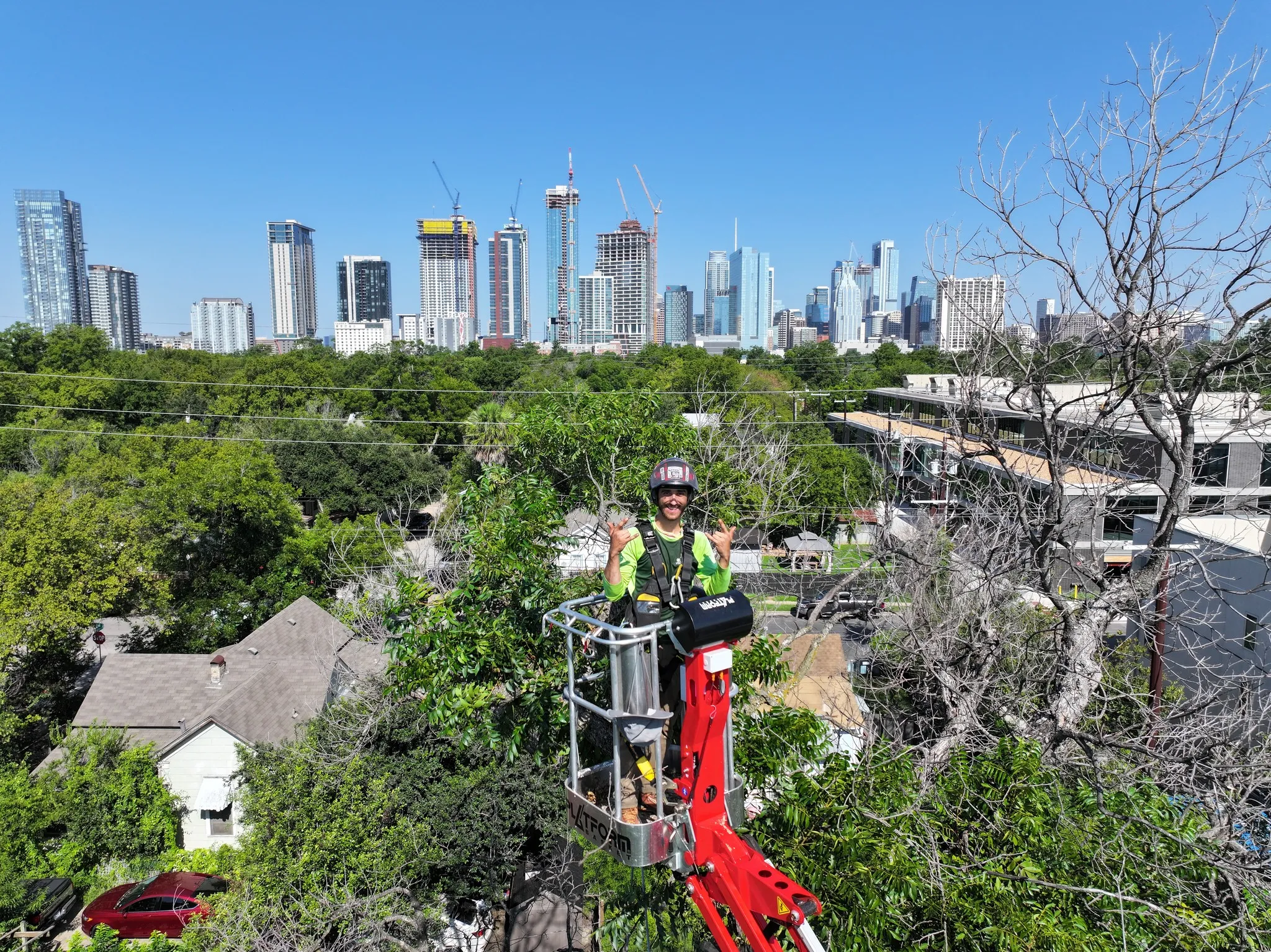

Living in Central Texas means sharing your space with hardy shade trees that battle long summers, blazing sunlight, and unpredictable rainfall. Many homeowners notice branches growing wild or thinning leaves when temperatures spike. That’s where tree trimming in Austin becomes part of regular home care. While routine trimming might seem simple, thoughtful pruning practices actually help trees handle drought stress, heat exposure, and soil challenges much better.
Austin’s climate pushes trees to their limits, especially during extended heat waves. Instead of simply cutting back branches, strategic pruning helps trees breathe, absorb sunlight efficiently, and stay structurally strong. When you understand how to care for trees properly, you don’t just maintain your yard—you protect one of the most valuable parts of your landscape.
Why Trees in Austin Struggle During Extreme Heat
Central Texas summers stretch long and intense. Soil often turns alkaline and shallow, and rainfall shifts between heavy storms and dry spells. Under these conditions, trees experience real stress. Leaves lose moisture quickly, roots struggle to absorb nutrients, and overcrowded branches block airflow.
That’s why homeowners frequently turn to tree trimming in Austin as a way to maintain healthy landscapes. However, trimming alone doesn’t always solve deeper problems. When cuts happen randomly or too aggressively, trees lose protective foliage and become even more vulnerable to heat.
Instead, strategic pruning removes only what a tree no longer needs—dead limbs, crossing branches, or areas restricting airflow. This thoughtful approach helps trees redirect energy toward stronger growth and better resilience.
The Difference Between Trimming and Strategic Pruning
People often use trimming and pruning as if they mean the same thing, but they serve different purposes.
Routine trimming focuses mostly on appearance. You might cut branches to shape a tree, clear a roofline, or reduce shade over a driveway. While useful, this method sometimes ignores the tree’s long-term health.
Strategic pruning, on the other hand, targets the tree’s internal structure. You remove damaged limbs, improve spacing between branches, and encourage balanced growth patterns. This process supports stronger trunks and better canopy distribution.
When homeowners think about tree trimming in Austin, it helps to view pruning as a smarter, science-based extension of that process. Instead of quick cosmetic fixes, strategic pruning builds stronger trees that can survive scorching summers.
How Strategic Pruning Helps Trees Beat the Heat
Proper pruning creates noticeable improvements in tree health. The benefits go far beyond appearance.
First, pruning improves airflow. When branches grow too densely, heat becomes trapped within the canopy. Removing select limbs allows air to circulate, which lowers temperature stress on leaves.
Second, pruning distributes sunlight evenly. Crowded branches often block sunlight from reaching inner foliage. Strategic cuts open the canopy, allowing light to reach more leaves so the tree can photosynthesize efficiently.
Third, pruning strengthens drought resilience. When you remove unnecessary growth, the tree directs water and nutrients toward essential branches and roots. That efficiency helps trees survive dry periods common in Central Texas.
Over time, this approach supports healthier shade trees that protect your yard from heat instead of struggling against it.
Smart Pruning Requires Local Knowledge
Trees respond differently depending on climate, soil, and seasonal timing. In Central Texas, pruning decisions must consider factors such as oak wilt risks, freeze damage recovery, and drought cycles.
You can’t treat Austin trees the same way you would trees in cooler regions. Pruning too aggressively during peak heat weakens the tree. Cutting branches during the wrong season can also expose trees to disease.
Local arborists study these patterns carefully. They evaluate soil composition, root health, and canopy balance before making a single cut. This science-based approach ensures pruning supports long-term tree health rather than temporary aesthetics.
When you think about tree trimming in Austin, remember that climate-aware pruning keeps trees resilient in an environment where summers can easily stretch past 100 degrees.
Supporting the Urban Canopy in Growing Neighborhoods
Austin continues to grow rapidly. As new homes and developments appear, protecting mature trees becomes even more important. Shade trees reduce urban heat, improve air quality, and support local ecosystems.
Strategic pruning helps these trees coexist with expanding infrastructure. By maintaining healthy canopies and balanced root systems, trees stay strong even near sidewalks, driveways, and construction zones.
Homeowners also benefit directly. Well-maintained trees lower energy costs by providing shade and improving airflow around homes. During scorching summers, that natural cooling effect makes a noticeable difference.
Regular pruning also prevents safety hazards. Removing unstable limbs protects roofs, vehicles, and walkways from falling branches during storms.
Signs Your Trees May Need Professional Pruning
Many homeowners assume trees only need attention when branches become obviously dangerous. In reality, early signs often appear long before visible damage occurs.
You might notice branches rubbing against each other. Leaves may grow unevenly across the canopy. Some limbs may look weak or lean awkwardly after storms.
These symptoms suggest structural imbalances that strategic pruning can correct early. Addressing these issues prevents larger problems later, especially when intense summer heat stresses already weakened trees.
Instead of waiting for severe damage, regular assessments help keep trees healthy year-round.
Community-Focused Tree Care in Austin
Austin residents often take pride in maintaining green neighborhoods. Shade trees define the character of many streets, parks, and residential areas. When homeowners care for trees thoughtfully, the entire community benefits.
Modern arboricultural techniques support this goal. Tools that protect underground utilities, advanced planting systems that conserve water, and environmentally friendly tree protection methods all help strengthen the urban canopy.
Tree care today goes beyond trimming branches. It involves understanding how trees interact with soil, climate, and surrounding infrastructure. When homeowners approach pruning with that mindset, landscapes thrive even during challenging Texas summers.
Conclusion
Caring for trees in Central Texas requires more than occasional maintenance. While tree trimming in Austin remains common for managing overgrowth and appearance, strategic pruning delivers far greater benefits. By improving airflow, distributing sunlight, and strengthening drought resilience, thoughtful pruning helps trees survive intense heat and unpredictable weather.
When homeowners treat pruning as a science-guided practice rather than simple trimming, trees grow stronger, healthier, and more resilient year after year. In a climate where summers push landscapes to their limits, smart care makes all the difference. That’s why many Austin residents continue to rely on responsible practices like tree trimming to protect the shade trees that define their neighborhoods and keep outdoor spaces livable even during the hottest months.




























Sign in to leave a comment.