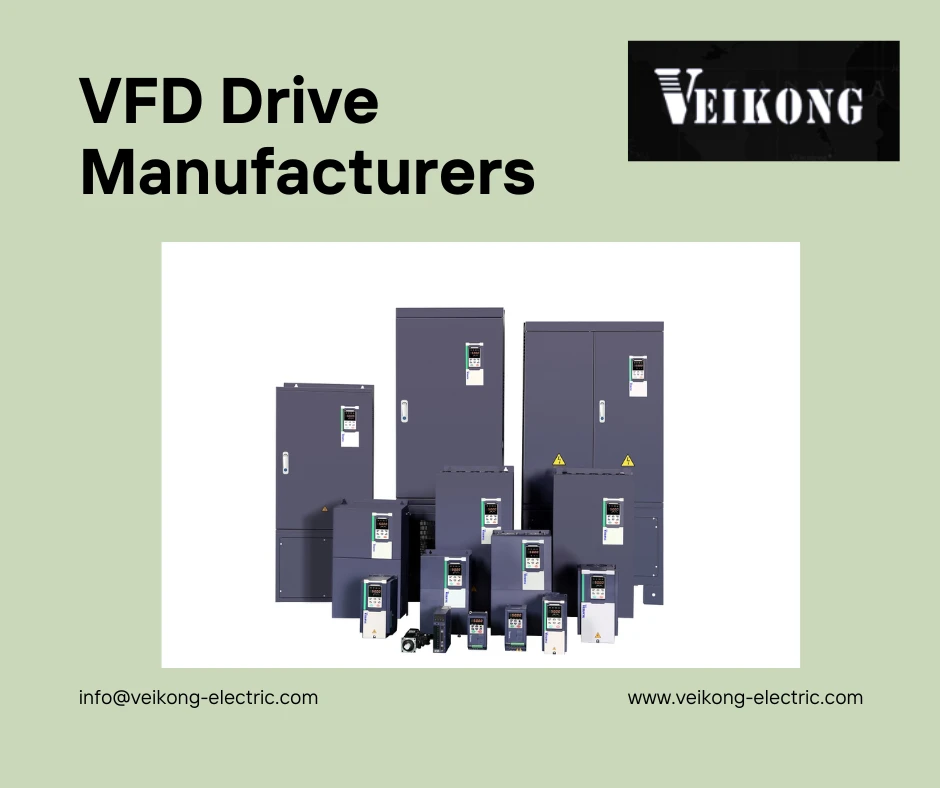

Variable Frequency Drives (VFDs) are essential components in modern industrial applications, offering precise control over motor speed and energy efficiency. However, like any electrical device, VFDs can encounter issues that disrupt operations. In this article, we'll explore some common problems associated with VFD drives and provide troubleshooting tips and solutions, which you can also discuss with VFD drive manufacturers when purchasing.
Issue 1: Motor Overheating
Possible Causes:
Excessive current or voltage fluctuations.Insufficient cooling or ventilation.Motor overload.Troubleshooting and Solutions:
Ensure proper cooling and ventilation for the motor by cleaning cooling fans and maintaining a clear airflow path.Check and adjust motor overloads settings if necessary.Verify that the VFD is not overloading the motor by examining the output current and voltage.Issue 2: Voltage Fluctuations
Possible Causes:
Power supply issues.Poor grounding.VFD harmonic distortion.Troubleshooting and Solutions:
Use a power quality analyzer to monitor voltage fluctuations and identify any irregularities in the power supply.Ensure that the VFD is properly grounded to reduce electromagnetic interference.Install harmonic filters to mitigate harmonic distortion issues.Issue 3: Motor Vibrations and Noise
Possible Causes:
Mechanical misalignment.Loose motor or drive connections.Unbalanced loads.Troubleshooting and Solutions:
Inspect the mechanical alignment of the motor and driven equipment and realign if necessary.Check and tighten all motor and drive connections.Balance rotating components to reduce vibrations.Issue 4: VFD Overheating
Possible Causes:
Inadequate ventilation around the VFD.Overloaded VFD.High ambient temperatures.Troubleshooting and Solutions:
Ensure proper ventilation and cooling for the VFD by maintaining adequate clearance and cleaning cooling fans.Verify that the VFD is not overloaded by checking its output current and voltage.Install external cooling solutions or air conditioning in high-temperature environments.Issue 5: Fault Codes and Error Messages
Possible Causes:
Sensor or feedback device failures.Configuration or programming errors.Hardware or software issues.Troubleshooting and Solutions:
Refer to the VFD's user manual or documentation to interpret fault codes and error messages.Inspect sensors, encoders, or feedback devices for damage or misalignment.Review and correct the VFD's configuration and programming to resolve software-related issues.Issue 6: Ground Faults
Possible Causes:
Faulty insulation.Moisture or contaminants.Cable or wiring issues.Troubleshooting and Solutions:
Perform insulation resistance tests to identify faulty insulation and replace damaged cables or wires.Keep VFDs and associated components dry and protected from moisture and contaminants.Ensure proper cable shielding and grounding to prevent ground faults.Issue 7: Motor Stall or Jerking
Possible Causes:
Incorrect tuning or control parameters.Mechanical issues with the driven load.Voltage or current limitations.Troubleshooting and Solutions:
Review and adjust the VFD's control parameters and tuning settings to match the load and application.Inspect the mechanical components of the driven load for issues like binding or misalignment.Verify that the VFD is not operating near its voltage or current limitations.Issue 8: Inadequate Speed Control
Possible Causes:
Incorrect programming.Sensor or feedback device problems.Motor or drive issues.Troubleshooting and Solutions:
Double-check and recalibrate the VFD's programming to ensure precise speed control.Inspect sensors or feedback devices for accuracy and replace if necessary.Evaluate the motor and drive components for any faults that may affect speed control.Conclusion:
Troubleshooting VFD issues requires a systematic approach that includes proper diagnosis, understanding of the system, and knowledge of the VFD's configuration and programming. Regular maintenance, preventive measures, and adherence to VFD drive manufacturer guidelines are crucial for minimizing downtime and ensuring the reliable operation of VFD drives in industrial applications. When in doubt, consulting with qualified electrical engineers or VFD experts can help identify and address complex issues effectively.

























Sign in to leave a comment.