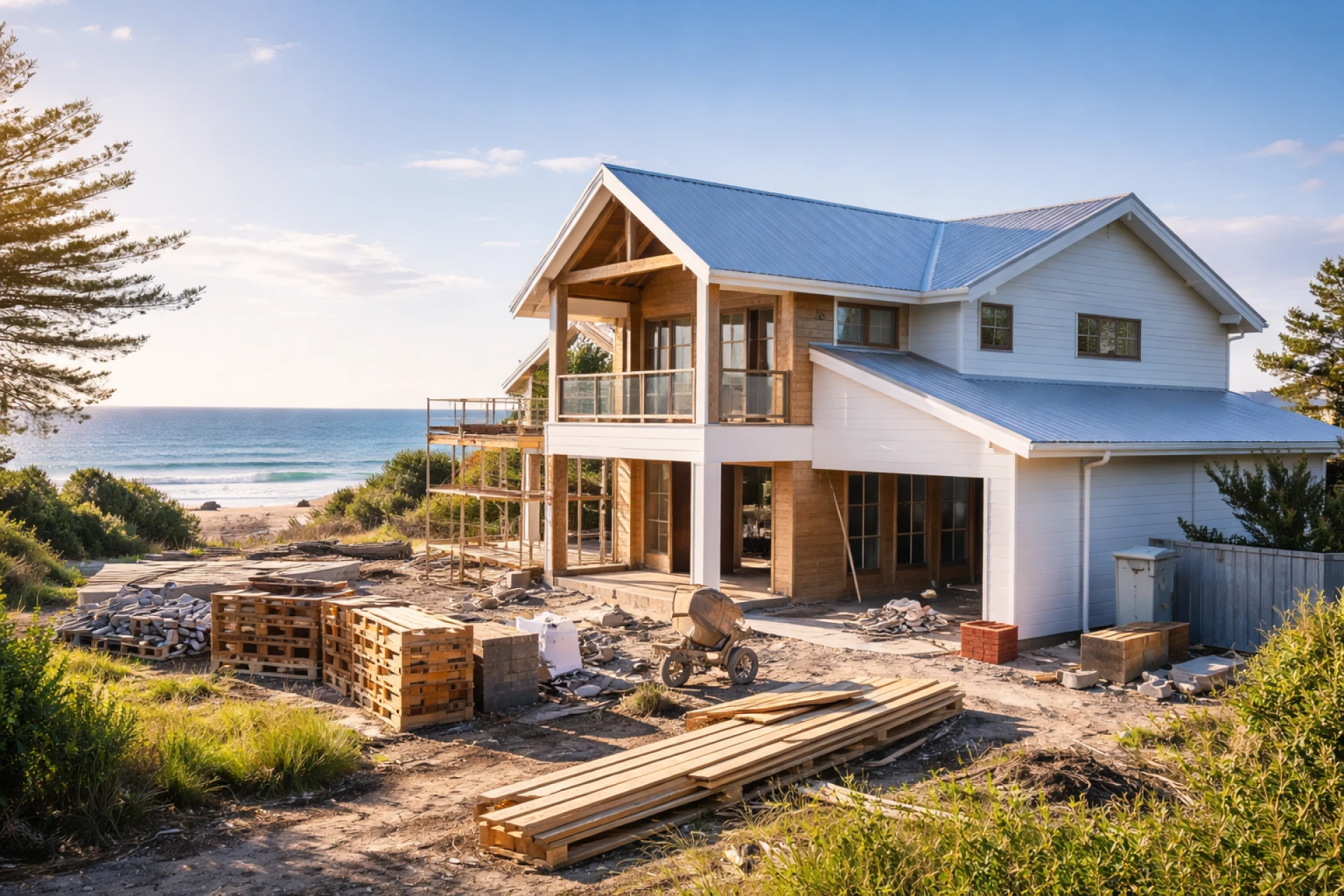

Build timelines are one of the most confused aspects of building a house. Most homeowners start with the expectation that once construction commences it’s going to go quickly and in a predictable manner. In fact what you end up actually seeing as the build phase is typically just a small part of what is really happening.
Tweed Coast Timeframes are effected by local town planning weather and trade availability. Knowing how each stage functions and where bottlenecks occur also enables homeowners to have a realistic timeline and takes pressure off them.
This guide details what a normal construction timeline looks like for homes beginning in 2026, and outlines some of the things that tend to impact progress at each step.
What usually affects progress at each stage.
Most confusion comes from focusing only on construction. Friends might say their home was built in nine months which may be true for the on site phase. What is often left out is the year or more spent planning designing and securing approvals before work even began.
On the Tweed Coast these early stages are particularly important. Council requirements site conditions and environmental considerations all play a role long before a slab is poured.
Stage One Planning and Design
Typical timeframe
Three to six months
What happens during this stage
Planning and design involves working through concept designs site constraints budget alignment and early consultant input. This is where layout orientation and compliance considerations are resolved.
Common Tweed Coast delay factors
Coastal zoning overlays flood considerations bushfire planning requirements and design revisions driven by council feedback often extend this stage. Sloping sites also require more detailed design work.
Rushing this phase often leads to redesigns later which can add months overall.
Stage Two Development Approval and Certification
Typical timeframe
Three to six months
DA and CDC context
Some homes proceed under a Development Application while others may qualify for a Complying Development Certificate. The pathway depends on zoning site constraints and design complexity.
Common Tweed Coast delay factors
Council requests for additional information neighbour notification periods environmental assessments and certifier availability can all extend approval timelines. The Tweed Coast has stricter scrutiny in some areas due to environmental sensitivity.
Approval timeframes vary widely and are never guaranteed.
Stage Three Pre Construction and Site Preparation
Typical timeframe
Two to four months
What happens during this stage
This stage includes final construction drawings engineering approvals trade scheduling material ordering and site preparation works.
Common Tweed Coast delay factors
Material lead times for items such as windows cabinetry and roofing can vary. Site access challenges and additional engineering requirements due to soil conditions are also common in this region.
Clear documentation at this stage reduces delays once construction begins.
Stage Four Construction Phases
Overall construction timeframe
Nine to twelve months for a standard new home
Construction is often perceived as one continuous process but it is made up of multiple phases each with its own timing considerations.
Site works and slab
Four to six weeks
Weather delays are common particularly during wetter months.
Framing
Four to eight weeks
Availability of framing crews and inspections can influence progress.
Lock up
Six to eight weeks
Roofing windows and external cladding are completed during this stage.
Internal works
Three to four months
This includes services plastering cabinetry waterproofing and fit off. Coordination between trades is critical.
Common Tweed Coast delay factors
Weather trade scheduling inspections and changes requested during construction are the most frequent causes of delays.
Stage Five Final Inspections and Handover
Typical timeframe
Four to six weeks
This stage includes final inspections compliance certificates defect rectification and occupancy approvals.
Common delay factors
Inspection availability documentation corrections and final trade adjustments can all extend this stage. Small issues often take time to resolve even when the build is largely complete.
Why Homes Starting in 2026 May Follow Different Timelines
Homes starting in 2026 may experience slightly longer pre construction phases due to ongoing demand planning requirements and regulatory updates. While supply chains have stabilised compared to recent years some materials still require early ordering.
Trade availability across Northern NSW remains competitive which can influence scheduling particularly during peak building periods.
These factors do not stop projects but they do reinforce the importance of realistic timelines.
How Homeowners Can Reduce Delays
While not all delays can be avoided homeowners can reduce risk by
· Allowing sufficient time for planning and approvals
· Finalising design decisions early
· Responding promptly to information requests
· Understanding site specific constraints
· Being cautious with mid build changes
Clear communication and patience during early stages often result in smoother construction later.
Understanding Renovation Timelines on the Tweed Coast
For those considering home renovations tweed heads timelines can be less predictable than new builds. Renovations often uncover unknown conditions once work begins which can extend timeframes.
A renovation that appears straightforward may require additional approvals structural work or compliance upgrades. Allowing flexibility in both time and budget is important.
Putting the Timeline Together
For most homeowners building on the Tweed Coast a realistic end to end timeframe from initial design to handover is eighteen to twenty four months.
Some projects may finish sooner. Others may take longer. Site complexity approval pathways weather and design changes all play a role.
Understanding this from the outset helps homeowners plan with confidence rather than frustration.
Final Note
In the case of residential construction, planning is the leading consideration followed by locality factors and then regulatory challenges. Homeowners seeking information on Tweed Coast home builders and the residential building process in the area can find more information here: Preston Building
No matter which construction company is involved, accurate timelines require proper planning, patience, and a clear understanding of the progression of each step of the construction process.

























Sign in to leave a comment.