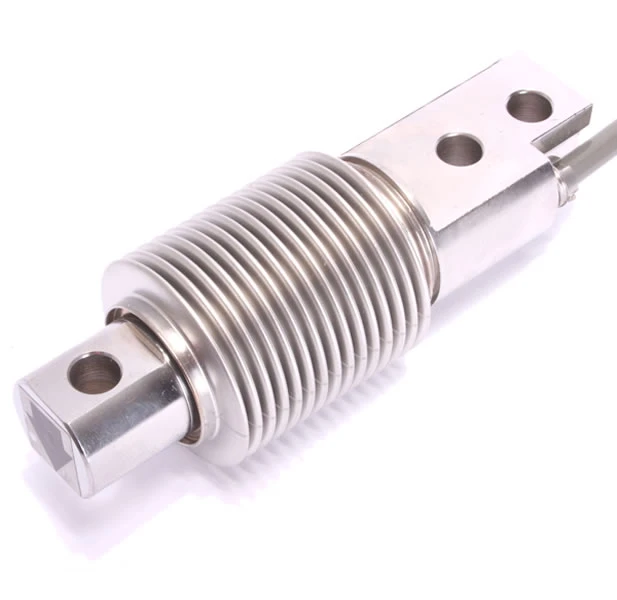

In a world increasingly reliant on precise measurements, the humble load cell plays a pivotal, yet often unsung, role. From the scales at your local grocery store to the complex machinery weighing components in a factory, load cells are the fundamental technology enabling accurate weighing across countless industries. But what exactly are these devices, and how do they work their magic?
At its core, a load cell is a transducer that converts a force, such as weight, into an electrical signal. This signal is then processed and displayed as a measurable value. While the concept seems straightforward, the underlying technology involves ingenious applications of physics and engineering.
The Inner Workings: Strain Gauges and Deflection
The most common type of load cell operates on the principle of strain measurement. Imagine a robust piece of metal, often steel or aluminum, precisely machined into a specific shape – a beam, a S-type, a single point, or a canister, depending on the application. This is the load cell body or spring element. When a force is applied to this body, it undergoes a minute, elastic deformation. Think of it like a very stiff spring – it bends slightly but returns to its original shape once the force is removed.
Crucially, bonded to the surface of this load cell body are tiny, delicate devices called strain gauges. These aren't just any wires; they are thin metallic foil patterns, typically arranged in a grid, and designed to change their electrical resistance when stretched or compressed. This change in resistance is directly proportional to the amount of strain (deformation) experienced by the load cell body.
To amplify and measure this minute change, multiple strain gauges are typically wired together in a Wheatstone bridge configuration. This electrical circuit is incredibly sensitive to small changes in resistance. As the load cell body deforms under load, the strain gauges attached to it are either stretched (tensile strain) or compressed (compressive strain). This causes their resistance to change, unbalancing the Wheatstone bridge and producing a proportional voltage output. This voltage, though often very small (in millivolts), is the electrical signal that represents the applied force.
Types of Load Cells: A World of Applications
While the strain gauge principle is dominant, the diverse needs of various industries have led to the development of different load cell types, each optimized for specific applications:
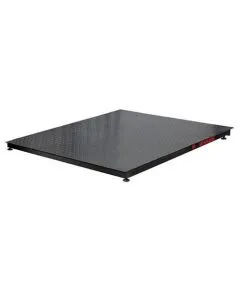
- Single Point Load Cells: Single point load cell often found in platform scales and retail weighing applications, these are designed to be insensitive to eccentric loading, meaning the weight can be placed anywhere on the platform without affecting accuracy.
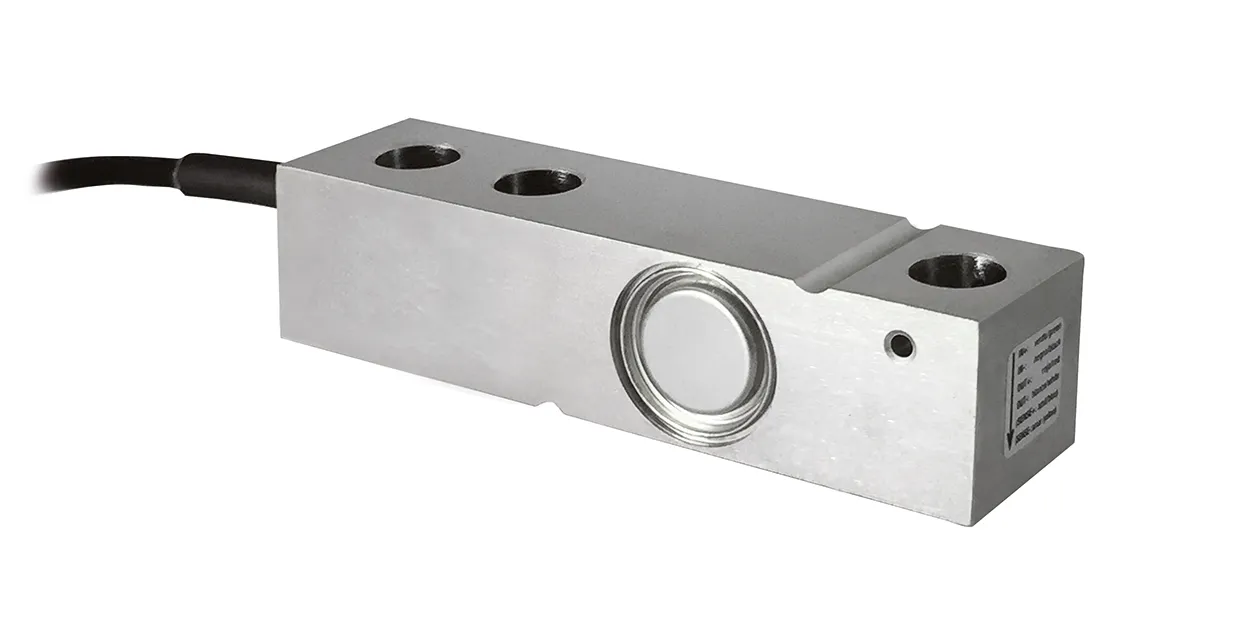
- Beam Load Cells (Bending Beams, Shear Beams): Beam load cells are versatile and widely used in tank weighing, hopper scales, and many industrial weighing systems. They are typically loaded in bending or shear, with strain gauges strategically placed to measure the resulting deformation.
- S-Type Load Cells: S-type load cells named for their characteristic "S" shape, these are ideal for tension and compression applications, such as suspended weighing, force measurement in material testing, and crane scales.
- Canister Load Cells (Compression Load Cells): Robust and high-capacity, compression load cells are designed primarily for compression applications and are commonly used in truck scales, rail scales, and heavy industrial weighing.
- Pancake Load Cells: Low-profile and often used where vertical space is limited, they are suitable for both tension and compression applications.
- Hydrostatic Load Cells: Unlike strain gauge load cells, these operate on the principle of hydraulic pressure. They are particularly robust and can withstand harsh environments, making them suitable for heavy-duty applications.
- Pneumatic Load Cells: These use air pressure to balance the applied force, offering advantages in hazardous environments where electrical signals might be problematic.
Key Characteristics and Considerations
When selecting or understanding load cells, several key characteristics come into play:
- Capacity: This refers to the maximum weight the load cell can accurately measure without damage. It's crucial to select a load cell with a capacity appropriate for the expected loads, with some safety margin.
- Accuracy Class: Load cells are classified by their accuracy, often according to OIML (International Organization of Legal Metrology) standards. Higher accuracy classes (e.g., C3, C4) indicate greater precision and linearity.
- Material: Load cells are commonly made from alloy steel, stainless steel, or aluminium. Stainless steel offers superior corrosion resistance, making it suitable for harsh environments or food processing applications.
- Environmental Protection (IP Rating): The IP (Ingress Protection) rating indicates the load cell's resistance to dust and water ingress. Higher IP ratings (e.g., IP67, IP68) signify better protection, crucial for outdoor or washdown applications.
- Temperature Compensation: Temperature fluctuations can affect the accuracy of load cells. Many load cells incorporate temperature compensation circuits to minimize these errors.
- Output Sensitivity (mV/V): This specifies the electrical output of the load cell in millivolts per volt of excitation voltage. It's a critical parameter for connecting the load cell to a compatible weighing indicator.
- Creep: Over time, a load cell under constant load may exhibit a slight, gradual change in its output. This phenomenon, known as creep, is typically specified as a percentage of the applied load over a certain time.
- Hysteresis: This refers to the difference in output for the same load when approached from increasing versus decreasing load directions. Ideally, hysteresis should be minimal.
From Signal to Display: The Weighing System
A load cell rarely works in isolation. It's a critical component of a larger weighing system, which typically includes:
- Load Cell(s): The transducer itself.
- Junction Box (for multiple load cells): Connects multiple load cells in a system, allowing their signals to be summed before being sent to the indicator.
- Weighing Indicator/Controller: This is the "brain" of the system. It receives the millivolt signal from the load cell(s), amplifies it, converts it into a digital format, and displays the weight reading. Many indicators also offer advanced features like tare, zero, unit conversion, and connectivity to other systems.
- Cabling: High-quality, shielded cabling is essential to minimize electrical noise and ensure signal integrity.
- Mounting Hardware: Proper mounting accessories (e.g., load feet, mounting plates) are crucial for correct load application and optimal performance.
The Future of Accurate Weighing
The evolution of load cell technology continues. Advancements in materials science, manufacturing techniques, and digital signal processing are leading to even more accurate, robust, and intelligent load cells. Integrated electronics, wireless capabilities, and enhanced diagnostics are becoming more common, further streamlining weighing processes and enabling more sophisticated data analysis.
In conclusion, load cells are far more than just simple sensors. They are meticulously engineered devices that form the backbone of accurate weighing across an astonishingly wide array of applications. Understanding their fundamental principles, diverse types, and key characteristics is essential for anyone involved in precision measurement, ensuring that the weight we see on a screen is indeed the truth.






























Sign in to leave a comment.