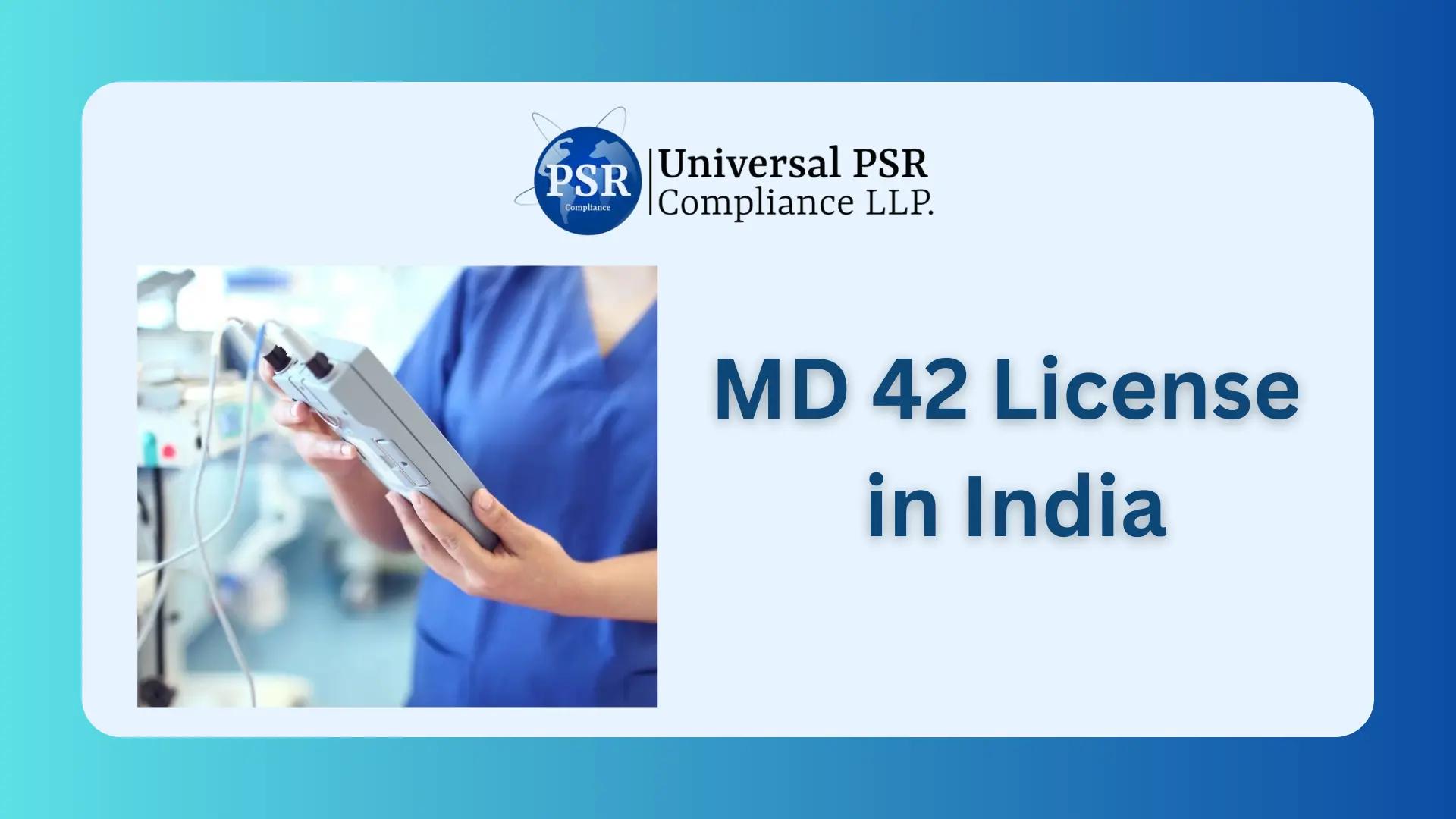

What is the MD 42 License?
The MD 42 license is issued under the Medical Devices Rules, 2017 by the Central Drugs Standard Control Organization (CDSCO). It is required for the manufacture of Class C and Class D medical devices—which are considered to be of higher risk. This includes products like diagnostic equipment, surgical instruments, and life-supporting medical devices.
This license ensures that manufacturers adhere to the highest standards of safety, performance, and quality control as mandated by Indian regulatory authorities.
Who Needs the MD 42 License?
If your business involves manufacturing Class C or Class D medical devices in India, then you are legally required to obtain an MD 42 license. Importers dealing in these device classes must apply for a different license, but must still meet stringent compliance standards.
Examples of Class C and D medical devices include:
- MRI machines
- Dialysis equipment
- Cardiac stents
- Infusion pumps
- Blood analyzers
Key Requirements for the MD 42 License
To obtain an MD 42 license, manufacturers must fulfill several technical and documentation requirements:
- Manufacturing site details and infrastructure layout
- Quality Management System (QMS) based on ISO 13485
- Device Master File (DMF) and Plant Master File (PMF)
- Proof of compliance with Good Manufacturing Practices (GMP)
- Biocompatibility and safety testing reports
The application must be submitted through the CDSCO online portal, and the premises are usually inspected by notified bodies before approval.
Application Process
- Classification of Device: Confirm whether your device falls under Class C or D.
- Preparation of Documents: Collect technical files, QMS certification, and product testing reports.
- Online Application: Apply on the CDSCO portal using the prescribed Form MD-7.
- Fee Payment: Pay the required application fee.
- Inspection and Review: The CDSCO or notified body will conduct an audit of your manufacturing site.
- Grant of License: Upon successful review, the MD 42 license is granted in Form MD-9.
Why Compliance Matters
Operating without the proper license is a punishable offense under Indian law. Moreover, the MD 42 license boosts your brand’s credibility and provides access to national and international markets. Compliance with the latest regulations also ensures patient safety and product reliability.
Expert Assistance for MD 42 Licensing
Navigating the regulatory pathway can be time-consuming and complex. That’s why many manufacturers turn to professional compliance consultants to simplify the process. For expert guidance on obtaining your MD 42 license in India, check out this detailed blog from PSR Compliance:
























Sign in to leave a comment.