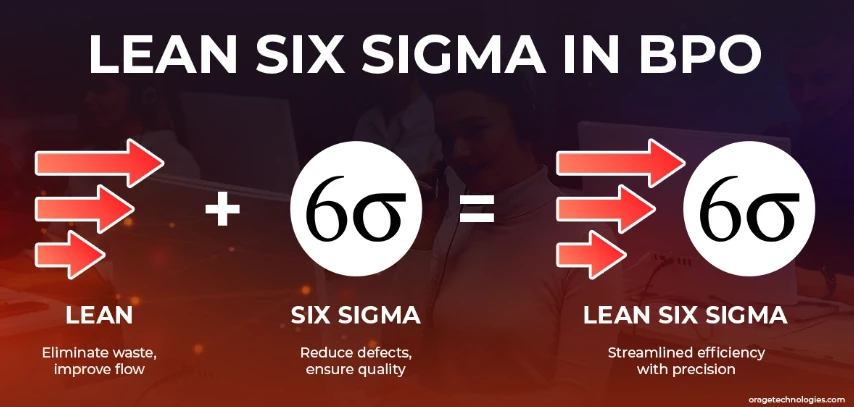

Business Process Outsourcing (BPO) is a competitive field that demands speed, accuracy, and customer satisfaction. BPOs manage core operations (customer service, data processing, etc.) for clients in various industries across the globe. With growing competition and changing client needs, constant optimization of BPO processes is essential. Six Sigma in BPO, in combination with Lean elements, is a structured methodology that helps BPOs eliminate waste and errors while improving operations and performance. This blog considers the benefits of Lean Six Sigma in BPO by answering several key questions. The functions include a FAQ section that addresses common questions about Lean Six Sigma in BPO, giving insight and learning points to help you take action.
What is Lean Six Sigma and Why is it Important for BPOs?
Lean Six Sigma takes the waste-reduction methods of Lean and combines them with the process variability reduction focus of Six Sigma, to drive superior quality. In the BPO space, which is often dominated by repeated processes such as call handling, claims processing, and financial transactions, inefficiencies turn into errors which can interrupt business processes and ruin client trust. Lean Six Sigma provides a logical and data-backed way of dealing with that.
Take for example a BPO that manages technical support for a third-party, and they have inconsistent response times. Lean Six Sigma techniques such as process mapping, and statistical analysis, can be used to find where these delays occur in the process and standardize the workflow. BPOs will provide faster, more reliable service and give more value to their clients.
How Lean Six Sigma Can Simplify BPO Operations?
BPO performance rests heavily on efficiency; clients desire quick and accurate service. Lean Six Sigma in BPO helps companies streamline operations by identifying and eliminating inefficiencies such as redundant checks on the data or taking excessive time for approvals, which don't add any value to a service. Lean's phrase, "Seven Wastes," helps BPOs identify operational problems with overproduction, waiting, or defects that could lead to wasted time, creating an opportunity for process improvements and streamlined workflows. Lean Six Sigma also focuses on consistency with the Six Sigma method.
An example is a BPO service provider with a customer onboarding process. Using value stream mapping to analyze onboarding processes related to timing, they might realize that it may be taking too long to onboard customers because of some manual verification steps. Implementing Lean Six Sigma processes to automate or redesign process steps could help to reduce onboarding times by 25 – 35%, leading to greater efficiency without losing quality.
Can Lean Six Sigma Increase Client Satisfaction in BPO?
Client satisfaction is the lifeblood of BPO operations, and directly influences retention and reputation. Lean Six Sigma increases client satisfaction by improving process reliability and sustainability in reducing error. Six Sigma emphasizes reducing defects so that processes (like resolving customer complaints) occur accurately in the first attempt, effectively reducing redoing work.
Another benefit of Lean Six Sigma is it allows BPOs to measure their key performance indicators (KPI)'s such as First Call Resolution (FCR) and Net Promoter Score (NPS). For example, a call center could use Six Sigma to assess call data analysis, reducing their escalations by twenty percent (.20). This results in satisfied clients and greater partnership.
How Lean Six Sigma helps organizations to reduce operational costs?
Cost efficiency is a vital goal for BPO organizations because clients expect high quality output at every competitive tariff point. Lean Six Sigma helps BPOs to streamline their operations by minimizing defects and waste. Lean focuses on your current operational inefficient practices such as unnecessary tasks with high manual activity expenditures. Six Sigma focuses on making processes faster and more reliable to accuracy and efficiency.
A BPO that was processing a large volume of financial transactions, initially experienced extremely high labour costs due to performing repetitive manual entries. Lean Six Sigma allowed the organization to automate the routine repetitive manual tasks and reduce the error rate. Initial results from the project estimated up to 30% cost reduction for labor, while maintaining same service levels. The operational savings supplemented the BPO's profit margin, maintaining their competitive position in all interactions.
Why Is Data Vital to Lean Six Sigma in BPO?
Data is at the heart of Lean Six Sigma success in BPO as it provides the basis for informed decision making. Six Sigma leverages statistical tools to assess process performance, to identify the variation that exists and to unearth root causes of waste or inefficiency. Lean uses data to visualize and map workflows then eliminate waste.
As an example a BPO company that manages order processing might notice that data entry errors tend to happen in a repeated pattern. By analysing data around error rates and using statistical tools from Six Sigma like a fishbone diagram, they can determine contributing issues and apply solutions to fix each one. The use of data provides the basis for being able to measure the impact of process improvements and sustainability.
How Does Lean Six Sigma Enable BPO Employees to make Improvements on Their Own?
Lean Six Sigma is more than just a process; it changes the culture of the workplace to empower employees. By training workers in Lean Six Sigma methods, BPO's allow workers to take ownership and challenge the status quo. They are trained to find waste and offer solutions, which increases engagement.
Consider an example of a BPO conducting a Kaizen workshop to brainstorm ideas for reducing call handling time. Employees trained in Lean Six Sigma will find ways to make small, process adjustments, such as automating repeat questions which could save them seconds per call, or even change a discursive process to automated, as the automation takes away time complexity at the unit level, a few seconds per call is still several hours a week. These changes may seem like small changes, but over time they add up to huge gains, and of course deliver benefits, take performance measurement and improvements, but also improve employee satisfaction levels.
What Are the Difficulties in Implementing Lean Six Sigma in BPO?
Implementing Lean Six Sigma at a BPO can come with difficulties. Employees may resist the changes involved when they are being introduced to Lean Six Sigma because of a fear of automation and impact on their job security. Additionally, with new procedures or processes in place, BPOs may have to focus upfront costs as it will require time and dedicated budgets for training the team and investments in tools and in some cases, even new systems. Lastly, implementing Lean Six Sigma can involve legacy systems that make reporting, data collection, and analysis challenging.
To address these concerns, the BPO should ensure employees understand Lean Six Sigma is not developed to eliminate jobs but to enhance existing roles. By working to implement Lean Six Sigma through small pilot projects, the BPO can share success without depleting company resources. While the challenges of implementing Lean Six Sigma can be daunting, BPOs may be able to navigate them successfully.
How Can BPOs Begin Effectively Implementing Lean Six Sigma?
Getting started with Lean Six Sigma is essentially a regimented approach to identifying and fixing processes. BPOs should start by identifying processes that will have the biggest impact, such as those with the most errors and delays.
Following a knowledge transfer for critical employees in Lean Six Sigma (and certifying them at the Yellow or Green Belt level), each BPO can use DMAIC to conduct a pilot study that tests improvements.
For example, if a BPO company intended to target its claims processing workflow, it could map out the process, collect meta data on the process, and make small incremental changes to the claims process to accomplish a few quick wins before making changes to the entire-company process with fresh momentum. In addition, working with some experienced consultants will help fine-tune the improvement process and make progress for the BPO company!
Frequently Asked Questions About Lean Six Sigma in BPO
What Makes Lean Six Sigma Different from Other Improvement Methods?
Lean Six Sigma stands out by combining Lean’s waste-elimination focus with Six Sigma’s data-driven defect reduction. In BPO, this dual approach optimizes processes like customer support while ensuring consistent quality, unlike other methods that may focus solely on speed or cost.
How Quickly Can BPOs See Results from Lean Six Sigma?
Results depend on project scope. Small initiatives, like streamlining a single process, can yield results in 3–6 months. Larger projects may take 9–12 months. Continuous monitoring ensures improvements are sustained over time.
Is Lean Six Sigma Costly for BPOs to Implement?
While Lean Six Sigma requires upfront investment in training and tools, the long-term savings from reduced errors and improved efficiency often outweigh costs. Pilot projects allow BPOs to test ROI before scaling up.
Can Small BPOs Adopt Lean Six Sigma Effectively?
Yes, small BPOs can benefit by focusing on high-impact processes, such as data entry or customer queries. Tailored training and small-scale projects make Lean Six Sigma accessible, delivering measurable improvements without extensive resources.
How Does Lean Six Sigma Affect BPO Employee Roles?
Lean Six Sigma enhances employee roles by automating repetitive tasks, allowing staff to focus on higher-value work. It also empowers employees to contribute to process improvements, increasing engagement and job satisfaction.



























Sign in to leave a comment.