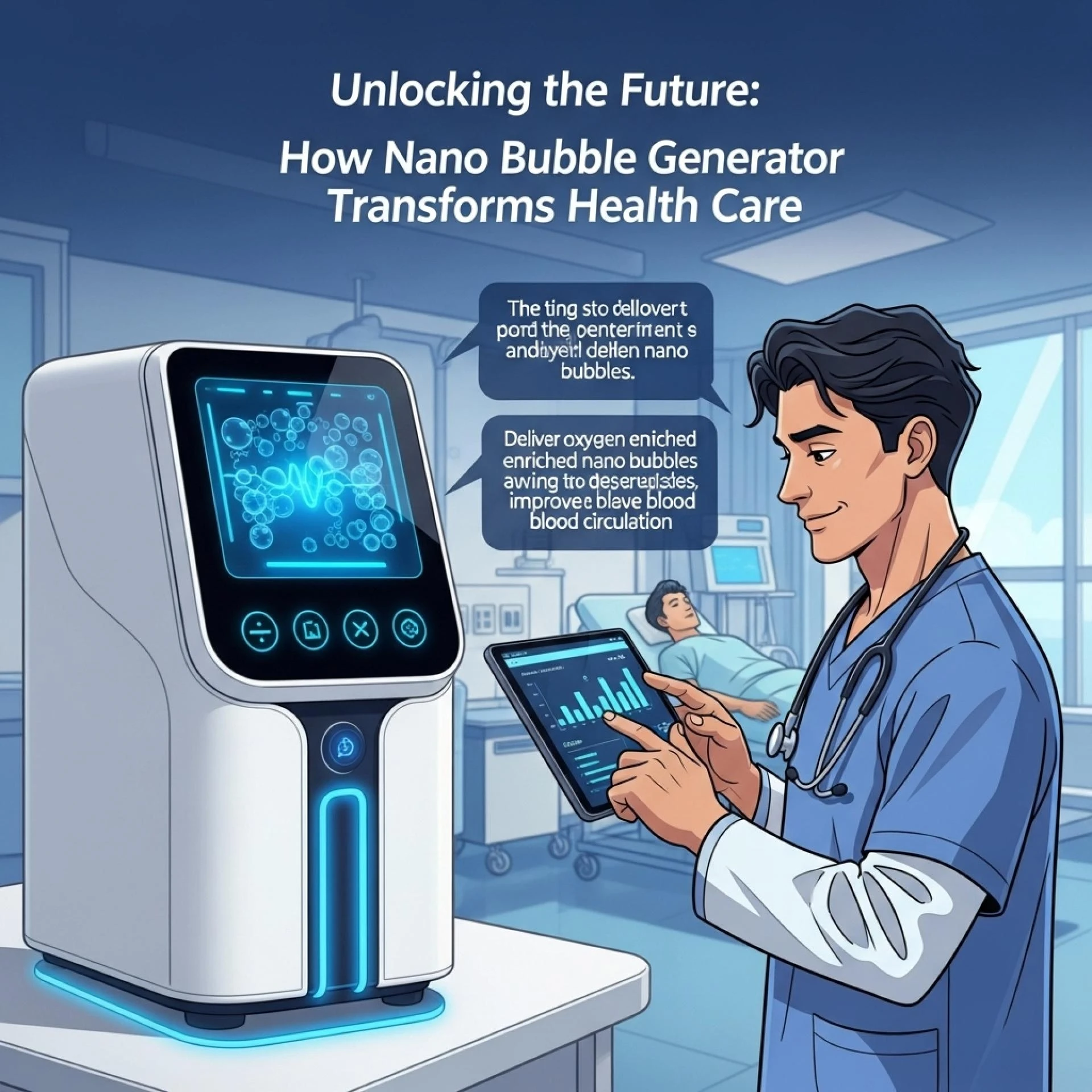
In recent years, nanobubble technology in health care has emerged as a revolutionary innovation, quietly reshaping treatment protocols and wellness solutions. The heart of this innovation lies in the nano bubble generator—a compact yet powerful device capable of producing microscopic gas bubbles that offer surprising therapeutic benefits.
What Are Nanobubbles?
Nanobubbles, also known as ultrafine bubbles, are gas-filled cavities less than 200 nanometers in diameter. Unlike larger bubbles, these do not rise and burst on the surface. Instead, they remain suspended in liquids for extended periods due to their neutral buoyancy and unique surface charge. This characteristic allows them to penetrate deeply into tissues and biological systems, making them ideal for medical applications.
The Rise of Nanobubble Technology in Health Care
The adoption of nanobubble technology in health care is driven by its potential to enhance medical procedures, improve patient outcomes, and reduce the need for invasive treatments. Hospitals, rehabilitation centers, and wellness clinics are starting to explore the capabilities of this technology in diverse areas, including wound healing, infection control, and oxygen therapy.
1. Wound Healing and Skin Therapy
When integrated into hydrotherapy systems, the nano bubble generator helps produce oxygen-rich water that promotes tissue regeneration. The ultrafine bubbles enhance oxygen solubility in water, accelerating healing in chronic wounds and skin ulcers. Some dermatological treatments now incorporate nanobubbles to improve skin hydration and texture without harsh chemicals.
2. Improved Drug Delivery
Nanobubbles are being studied for their role as drug carriers. Their small size and ability to target specific tissues make them ideal for delivering medication with precision. Researchers are investigating how nanobubble technology in health care can reduce side effects by minimizing systemic drug exposure.
3. Antimicrobial Applications
One of the key benefits of nanobubbles is their ability to generate reactive oxygen species (ROS) when exposed to certain wavelengths of light or physical agitation. These ROS can destroy bacteria and viruses, making nanobubble-infused water a potent antimicrobial agent. Hospitals can use this for sanitizing medical instruments and surfaces more effectively than traditional methods.
How a Nano Bubble Generator Works
A nano bubble generator functions by injecting gas—commonly oxygen, ozone, or air—into a liquid under high pressure through specialized nozzles or membranes. The resulting nanobubbles exhibit a negative surface charge, which prevents them from coalescing and helps maintain their suspension in liquids for long durations.
These generators are available in various sizes and are often integrated into existing medical or water treatment systems. Their compact nature and low energy requirements make them highly adaptable across different health care settings.
Clinical and Wellness Applications on the Rise
The versatility of nanobubble technology in health care has led to its application in a wide range of settings:
● Rehabilitation Clinics use oxygen nanobubbles in water therapy to aid in post-surgical recovery.
● Dental Practices utilize ozone nanobubbles for gum disinfection and to promote oral hygiene.
● Spa and Wellness Centers employ hydrogen nanobubbles for anti-aging and relaxation therapies.
● Dialysis Units are exploring ways to improve water purification using nanobubble technology.
Each of these use cases demonstrates how the technology is being tailored to specific medical needs, making treatments safer and more efficient.
Scientific Support and Global Trends
Academic institutions and research labs around the world are investing in the study of nanobubbles. Clinical trials have shown promising results, particularly in the areas of wound management and oncology. Japan, South Korea, and the United States are currently leading in the adoption and research of nano bubble generator technology in medical settings.
Governments and regulatory bodies are also taking note. Health care providers are encouraged to evaluate the safety, efficacy, and cost-efficiency of integrating nanobubbles into their treatment regimes. As awareness grows, so does interest from private investors and tech startups in the biotech sector.
Challenges and Future Outlook
Despite its promising benefits, nanobubble technology in health care still faces hurdles. Standardization, regulatory approval, and long-term safety studies are essential before widespread adoption. The lack of universal manufacturing guidelines also presents a challenge in ensuring consistency and effectiveness across different brands of nano bubble generators.
Nevertheless, the future looks bright. With advancements in microfluidics and nanotechnology, newer models of nano bubble generator systems are expected to be more precise, cost-effective, and user-friendly.
Conclusion
From accelerating wound healing to revolutionizing drug delivery, the application of nanobubble technology in health care is expanding rapidly. As more health care providers recognize the benefits of the nano bubble generator, it is becoming a cornerstone of next-generation medical treatments. Its ability to work seamlessly across various health domains underscores its potential to be more than a trend—it could be the future of modern medicine.



























Sign in to leave a comment.