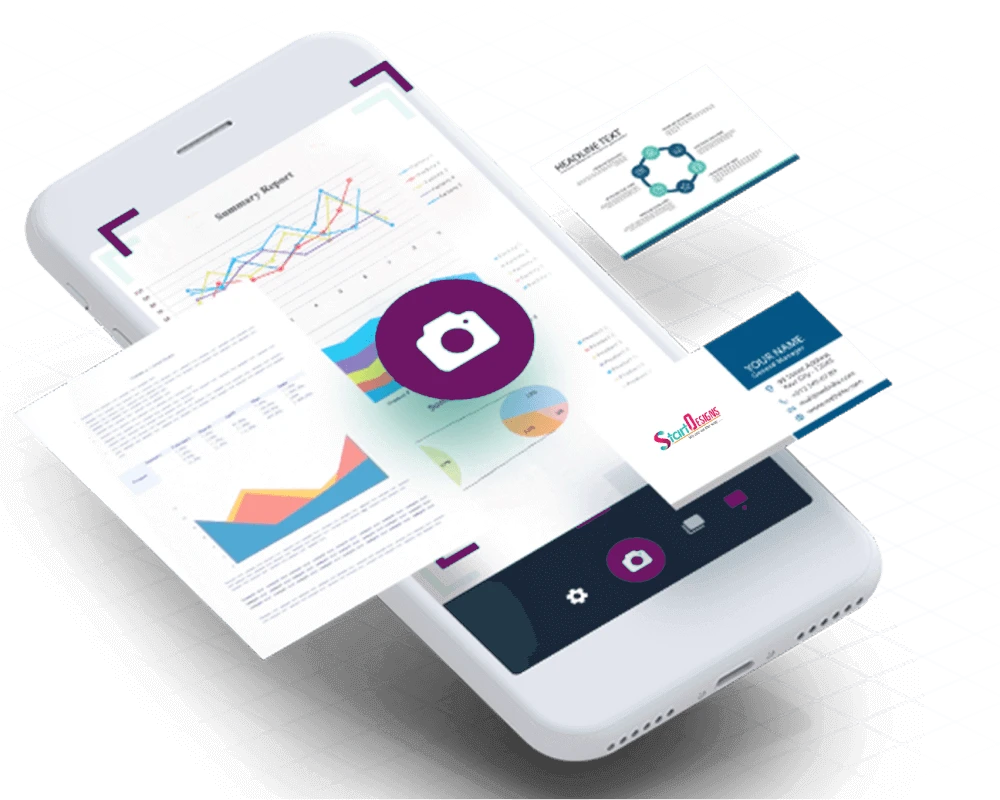

Mobile apps have become an integral part of our daily lives, with millions of apps available for download on various app stores. However, not all apps are created equal. Some stand out from the rest, providing a seamless and engaging user experience. Have you ever wondered what makes these top-notch mobile apps so exceptional? The answer lies in their tech stack - the combination of programming languages, frameworks, and tools used to develop them. In this blog post, we will unveil the secret behind the tech stack powering these successful mobile apps. Get ready to dive into the world of mobile app development and discover the technologies driving the best apps in the market.
Understanding the Tech Stack Concept
Whenever one starts to code, they come across the paradigm of "Tech Stack". But what exactly is it? Imagine a hamburger. Every layer containing bread, patty, veggies has its own worth when it comes to the taste of the burger. Indeed, a tech-stack is a layer of different tools and programming languages that help produce an online or mobile application.
The 'hamburger' is divided into two main parts such as the front-end and the back-end. The front-end can be best described by referring to it as the part of a burger's bite you take first. It is what we primarily interact with and forms the UI. The part of the application that is visible to the users, and the user can interact with it. This will involve interfaces, designs as well as mechanisms which are used to improve the experience.
Oppositely, the backend acts as the inner ingredients of a burger. You'd not see it but you'll definitely feel its presence. The back-end part of the tech stack is not visible to users; rather it works in the background handling tasks triggered by users on the front-end. Data is coordinated with the user-interface, through an application, database and server.
In software applications the front and back ends operate harmoniously to provide the product. This can be compared to yin yang mostly as they seem like one coherent part of a system. In order to have a fully functional mobile application, we need to carefully choose its technical stack.
Good To Read:- Top Mobile App Development Companies in India in 2024
Frontend and Backend – The Two Sides of the Tech Stack
The tech stack can be divided into two parts; the part that users interact with directly, also known as the front-end. The other part basically constitutes the back-end The two partners can be imagined as a perfectly synchronized dance. One is in the spotlight, and the other leads from behind.
Front-end of a mobile application is similar to the dancer who captures the public's attention through his dance. This area is called the front-end where users give input and get output directly. The experience is aimed to be fun and efficient because of the smart design, easy use and colorful front end. For any choreography to be performed, the instructions are written in a specific format understood by the computer. The languages used for front end back bones are HTML, CSS and JavaScript.
There are heroes working on the back end, who are ensuring that every update works perfectly on the front end. This portrays the struggle of a stagehand who has to handle lighting, music, and modifies backdrops on time. Three composites have been included in this phase to feed the front end and operate cohesively, which are; a server, an app and a database.
In case of the server not working properly, the communication between the application stalls, which ultimately decreases user engagement. In case a database that is both secure and well-structured is not in place, the app would be unable to deliver an optimized user experience.
The front-end and back-end interaction is important for the mobile to be successful. It does not focus on one part standing out of the two. It focuses on how well they collaborate to give an enhanced user experience. The tech stack is an example of how different elements can work together surprisingly efficiently.
Need to streamline operations & boost efficiency? Hire mobile app developers create solutions that empower your business.
A Peek into the Tech Stack of Top Apps
Now, we will have a look at the few most successful mobile applications. It's a way of getting backstage to a magic show to experience how magical illusions are being set up.
Python is commonly used in the back-end of well-known social media app Instagram. A powerful language that is easy to learn and understand. It can be used to develop functionalities quickly. The user experience on Instagram is quite intuitive and thematic due to the JavaScript framework it follows called React Native.
Uber is one of the most important case studies in technology. The back-end of the Uber app is constructed on Node.js to manage and perform at maximum level among a large number of users. In order to easily communicate in real-time and track rides, Uber uses WebSocket. To make the user interface fast and relevant, they use Swift with Java.
Have you ever pondered about the behind-the-scenes process of your favorite music streaming app; spotify? To perform back-end operations efficiently, Spotify uses Python, Java and C++ extensively. Heavy computational tasks can be handled by Python, and if you want to process data at high speed, then use Java and C++. Spotify uses JavaScript on the front-end to make the user interface more interactive. They use Android (Java) and iOS (Swift) for native app development.
Slack uses a high corporate and complicated hierarchy to get things done with efficiency. The backend part is handled by Java and PHP, these languages deal with server-side operations. However, the front-end part is designed using JavaScript, CSS, and HTML5 that make it easy to use for users.
These top-rated apps have gained the trust of people through selecting a tech stack that provides an exceptional user experience. It is necessary to understand that in order to choose the right tools for your project, you need to rather copy the tech stack of some successful venture. The magic happens when you combine front-end and back-end technologies really well, like a symphony.
Reduce Costs, Boost Efficiency: Hire Dedicated Developers in India at competitive rates and unlock significant savings compared to onshore teams.
Key Factors in Choosing the Right Tech Stack
If you are looking to choose the right tech stack for your mobile application, here are a few things that you need to be sure about.
Firstly, comprehend the project requirements. The selection of ingredients by a cook is similar to the selection of a tech stack according to the user's needs. What services are provided through your app? On which platforms is it available? How complex will it be? Assuming these questions will give you a path to choose the right tools and languages.An app efficiently scalable refers to a feature to upgrade or downgrade in order to meet the customer's required amounts. Beforehands, choosing a tech stack that has potential in handling expansion is the thing to do if you're expecting growth in user traffic or app features. When an app is developed using the technology that provides high scalability, this offers the application to grow and expand in a smooth manner.Focus on how the employee is operating his or her workload. When it comes to mobile apps, faster is better. People want to use fast and high performance applications. Choose a set of technologies that can work in large amounts of data without reducing the performance and efficacy.Now, analyze all other aspects which come under security measures. Cyber threats are the ones that get ahead rapidly, so providing security to user data and the application is really important. Always use highly advanced technologies in order to provide high security features, this will help you save your program from any possible cyber-attacks.Lastly, the most important thing is to ensure what kind of resources you have for this work. If you want to get skilled developers and valuable resources then try to use popular technologies.Don't forget the cost, while making any decision. Other than direct development costs, it also has potential expenses of resource up-gradation and maintenance.
Do you want to start this fun journey? We need to make sure we want to decide the right tech stack, we have our app’s requirements clear and we have prioritized performances. Happy tech stack hunting!
Must Read:- Top Mobile App Development Trends in 2024
Exploring the Future of Mobile App Tech Stacks
In the coming days, mobile applications are supposed to reach new heights with their usability and outreach. The new software, updated processes will change the way through which mobile apps are being experienced; and it's not necessarily emphasized to learn a new language or tool. Let's go to a thrilling future side by side.
Focus on the two most important aspects of Computer Science: AI and ML. Emerging technologies have not only impacted but paved their ways in numerous industries, whatsoever. AI and ML will impact the user experiences. As a result, there will be more personalized, dynamic and predictive encounters on sites.Moreover, there is a reliable and effective technology of block chaining. Mobile apps' new domain will be blockchain because it is safe, spread, and clear apart from the way it drives digital currencies. The developers are actively working on exploring and identifying such tech stacks that can easily integrate with the blockchain technology.PWAs are another innovative technology in the web development domain. Imagine a web Application that works like a native application with an extra feature of an offline mode. Such apps required a mix between front and back end techs in order to fill the gap between web and mobile endpoints.There is also cross-platform app development that we need to keep in mind. The developers now can cut down their coding time, monetary resources and still retain the quality of their user experience on both platforms;Fluter and React Native enable them to write one code that would work across multiple devices. This approach is significant because it highly influences the technologies used in an app.What are your plans for AR and VR this year? Due to their impact on gaming, and social media, this immersive technology is bound to show up in how we now use apps. The developers are required to find technology stacks that can improve the capabilities of AR/VR.There are a lot of challenges that will come with new advancements. These challenges will be related to many aspects such as increasing resources, security threats and increased complexity among other things. Nonetheless, in reality we believe that every challenge brings a new beginning. This will provide an opportunity to develop mobile apps that are impactful and meaningful. Get ready, because the upcoming mobile app technologies are gonna blow your mind!
Conclusion
In the dynamic arena of mobile app development, the tech stack is indeed the unsung hero, laying the foundation for the app's prowess, adaptability, and user appeal. As we navigate through the fast-evolving technological landscape, the range of tech stacks is bound to expand and transform. Staying updated and making strategic choices is paramount for the success of your mobile app. Let’s not forget, it's not about finding the most popular or the latest tech stack. It's about finding the perfect harmony of front-end and back-end technologies, tailored to meet your unique app requirements. Remember, just like a well-conducted orchestra, every tool and language in your tech stack should play its part in the symphony, contributing to a superior, seamless, and satisfying user experience. So, stay curious, stay informed, and may your tech stack choices power your app to the pinnacle of success!





















Sign in to leave a comment.