
Managing taxes is one of the most essential yet complicated responsibilities for small business owners and self-employed entrepreneurs. Unlike traditional employees, who have taxes withheld from their paychecks, self-employed professionals must estimate and pay taxes on their own income. This includes income tax, self-employment tax, and in some cases, state and local taxes. Otto understands that navigating these complexities can be overwhelming, which is why tools like a 1099 tax calculator are crucial. By using a 1099 tax calculator, entrepreneurs can efficiently estimate their quarterly tax payments and avoid surprises during tax season.
Understanding 1099 Income and Tax Obligations
If you are a small business owner, freelancer, or independent contractor, you likely receive Form 1099-NEC or 1099-MISC from clients instead of a traditional W-2. This form reports your income, and it is your responsibility to report this income to the IRS. Unlike W-2 employees, there is no automatic tax withholding, meaning you are responsible for paying your federal income taxes, self-employment taxes (Social Security and Medicare), and potentially state taxes.
Failure to estimate and pay quarterly taxes can result in underpayment penalties and interest. That's why accurately estimating your quarterly tax payments is critical for staying compliant with the IRS and maintaining your financial health. A 1099 tax calculator simplifies this process by helping you calculate your estimated tax payments based on your income and deductions.
How a 1099 Tax Calculator Works
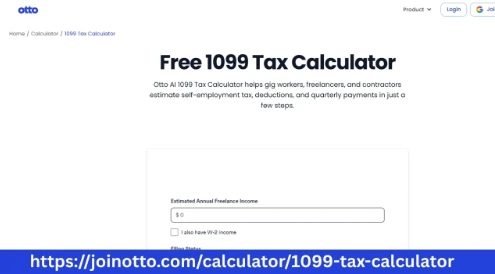
A 1099 tax calculator is an online tool designed to help self-employed professionals and small business owners estimate how much they owe in taxes. These calculators typically ask for your total income, business expenses, filing status, and location. Some advanced calculators, like those provided by Otto, also factor in additional variables such as deductions for home office expenses, health insurance premiums, and retirement contributions.
Once you input your data, the 1099 tax calculator provides an estimate of your federal income tax, self-employment tax, and potential state taxes. It also divides the total estimated taxes into four quarterly payments, giving you a clear picture of what you need to pay and when.
Why Small Business Owners and Entrepreneurs Should Use a 1099 Tax Calculator
For small business owners and self-employed entrepreneurs, financial planning is key to sustainable success. Estimating tax payments ahead of time allows you to plan your cash flow, avoid penalties, and focus on growing your business. Here are some reasons why using a 1099 tax calculator is beneficial:
1. Simplifies Tax Estimations
Tax calculations can be confusing, especially when dealing with multiple income sources and various deductions. A 1099 tax calculator automates these calculations, making the process simple and straightforward.
2. Helps Avoid IRS Penalties
The IRS requires self-employed individuals to pay taxes quarterly. If you underpay your taxes throughout the year, you may face penalties and interest. By using a 1099 tax calculator, you can ensure you are making accurate payments each quarter.
3. Provides Financial Clarity
Knowing how much you owe in taxes helps you plan your business finances better. You can set aside money each month to cover your quarterly payments and avoid cash flow issues when tax deadlines arrive.
4. Saves Time and Reduces Errors
Manually calculating your taxes can be time-consuming and prone to errors. With a 1099 tax calculator, you can complete your estimates quickly and accurately, freeing up your time for other important tasks.
How Otto Supports Small Business Tax Management
Otto is committed to supporting small businesses and entrepreneurs with practical, easy-to-use financial tools. The 1099 tax calculator offered by Otto is designed specifically with the needs of independent professionals in mind. It incorporates up-to-date tax laws and ensures that your tax estimates are as accurate as possible.
In addition to providing a 1099 tax calculator, Otto offers a variety of business tools, including invoice generation, expense tracking, and financial reporting. These features integrate seamlessly to provide a comprehensive financial management solution. By using Otto, entrepreneurs can not only estimate their taxes but also gain insights into their overall business performance.
Steps to Estimate Quarterly Taxes Using Otto’s 1099 Tax Calculator
If you are new to using a 1099 tax calculator, follow these simple steps to get started:
- Gather Your Financial Information: Collect all your income sources, 1099 forms, and records of deductible business expenses.
- Access the Calculator: Go to Otto’s website and open the 1099 tax calculator.
- Enter Your Information: Fill in the required fields, including your income, expenses, and filing status. The calculator may also ask for your state of residence to account for local taxes.
- Review the Estimates: The calculator will display your estimated federal income tax, self-employment tax, and potential state taxes. It will also break down your total estimated tax into four quarterly payments.
- Set Aside Funds: Based on the estimates, allocate a portion of your income each month so you will have the necessary funds ready when quarterly payments are due.
- Pay Quarterly Taxes: Use the IRS online payment system or your state’s tax payment portal to submit your payments on time.
Common Mistakes to Avoid When Estimating Taxes
Even with a reliable 1099 tax calculator, small business owners and entrepreneurs should be aware of common pitfalls:
- Forgetting Deductions: Ensure you include all eligible deductions such as business expenses, home office deductions, and health insurance premiums.
- Ignoring State and Local Taxes: Some states require quarterly tax payments in addition to federal taxes.
- Not Updating Income Estimates: Your income may fluctuate throughout the year. Revisit the 1099 tax calculator each quarter to update your income and adjust your estimated payments.
- Missing Payment Deadlines: IRS deadlines for quarterly payments typically fall in April, June, September, and January. Missing these dates may result in penalties.
Conclusion
Managing taxes doesn’t have to be complicated for small business owners and self-employed professionals. By using a 1099 tax calculator, you can take the guesswork out of estimating your quarterly tax payments and stay compliant with IRS requirements. Otto’s user-friendly 1099 tax calculator makes it easy for entrepreneurs to plan ahead, manage cash flow, and focus on what matters most—growing their business.
Staying proactive about your taxes is a crucial part of running a successful small business. With Otto’s 1099 tax calculator and suite of financial tools, you can confidently navigate your financial responsibilities and build a solid foundation for long-term success.

























Sign in to leave a comment.