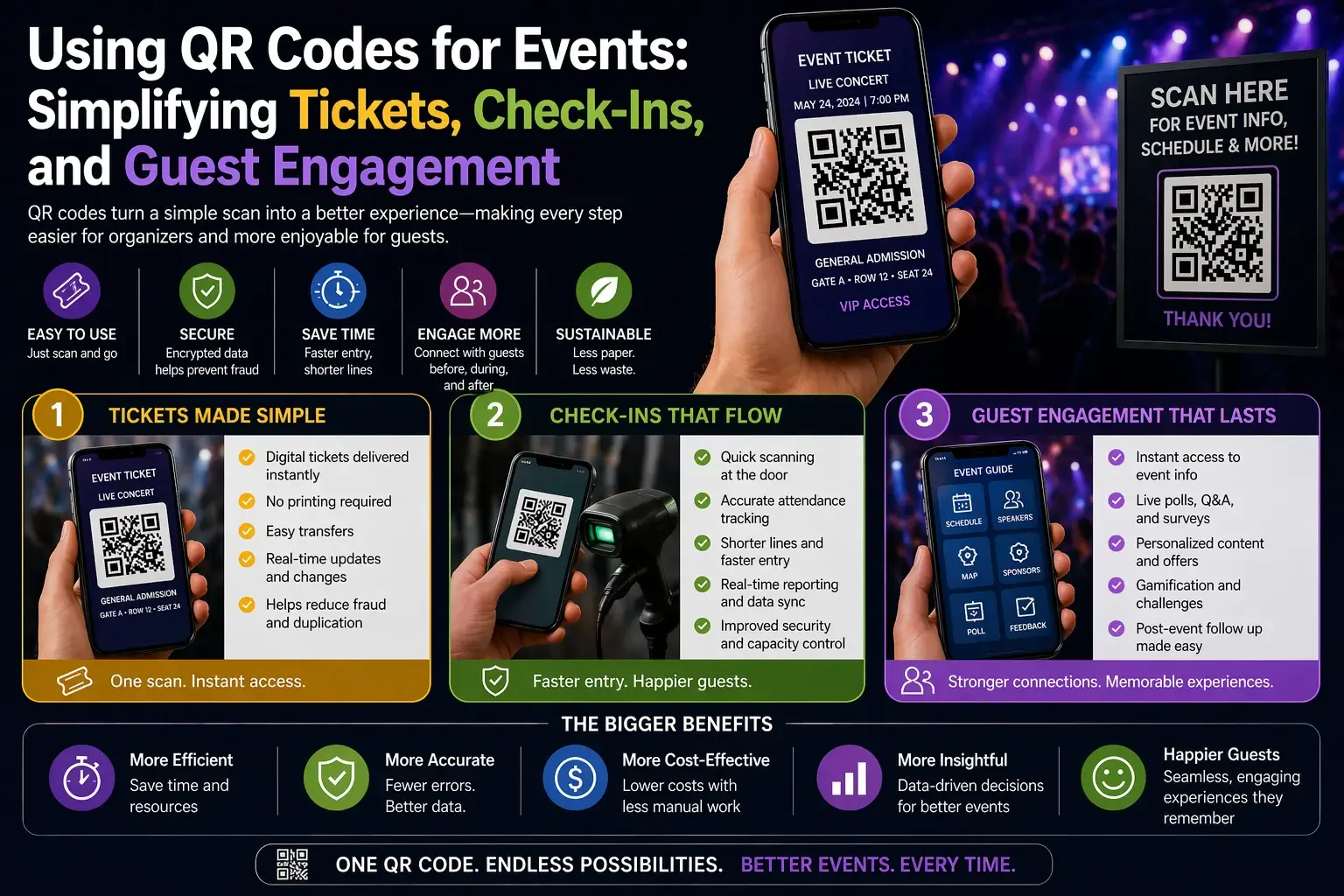

Managing an event involves coordinating multiple processes—from ticket distribution to entry management and attendee interaction. Even small inefficiencies can lead to delays or a less organized experience.
QR codes offer a practical way to streamline these processes. By connecting physical access points with digital systems, they help organizers improve efficiency while enhancing the overall attendee experience.
What Role Do QR Codes Play in Events?
QR codes are scannable codes that provide instant access to digital content. In an event setting, they are commonly used for tickets, registration, information sharing, and engagement.
They replace manual steps with faster, more reliable digital interactions.
Digital Ticketing Made Simple
One of the most common applications of QR codes in events is ticketing.
Instead of issuing printed tickets, organizers can generate unique QR codes and send them directly to attendees.
How it works
- Each ticket is assigned a unique QR code
- The attendee receives it via email or mobile device
- The code is scanned at the event entrance
Key benefits
- Eliminates the need for physical tickets
- Reduces the risk of loss or duplication
- Enables fast and scalable distribution
- Supports efficient entry management
Improving Check-In Efficiency
Event check-ins can quickly become a bottleneck if handled manually.
QR codes simplify this process by allowing staff to scan tickets and verify access instantly.
Advantages
- Faster entry and shorter queues
- Reduced manual errors
- Real-time attendance tracking
- Better crowd flow control
This is particularly valuable for large events with high attendance.
Providing Information in Real Time
QR codes can also be used to share important event information.
Attendees can scan codes to access:
- Schedules and agendas
- Maps and directions
- Speaker or performer details
- Session materials or downloadable content
This approach reduces reliance on printed materials and allows updates as needed.
Supporting Guest Engagement
Beyond logistics, QR codes can improve how attendees interact with an event.
They can be used to connect users to:
- Feedback forms and surveys
- Live polls or interactive features
- Social media platforms
- Registration for future events
This helps extend engagement beyond the event itself.
Effective Placement of QR Codes
To maximize usage, QR codes should be placed where attendees naturally look or interact.
Typical locations include:
- Entry points for ticket scanning
- Registration desks
- Signage and directional displays
- Presentation screens
- Exhibition booths
Strategic placement ensures that QR codes are both visible and useful.
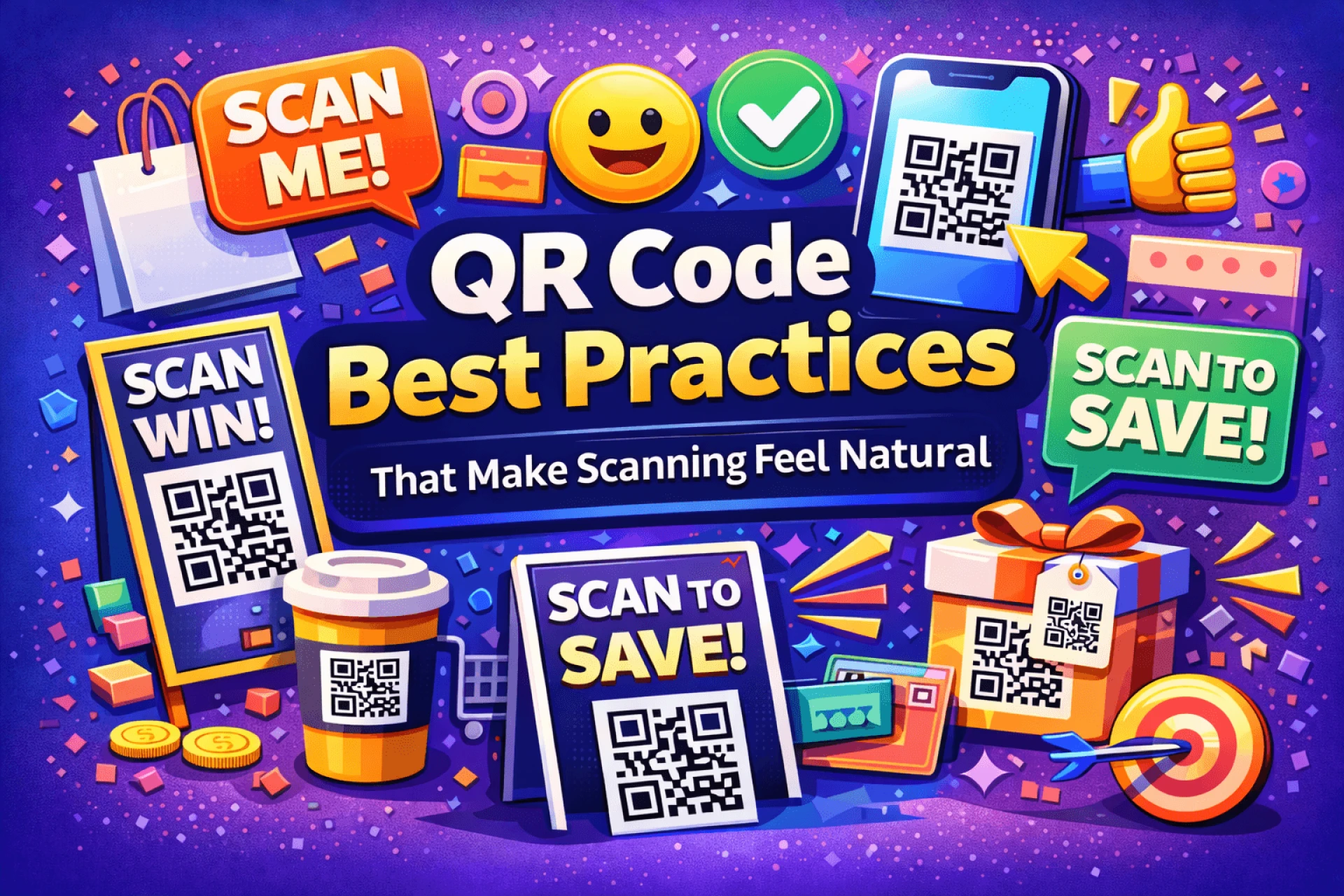
Best Practices for Implementation
To ensure a smooth experience:
- Provide clear instructions
Let attendees know what the QR code is for - Ensure fast access
Linked pages should load quickly on mobile devices - Keep the experience focused
Each QR code should serve a specific purpose - Use high-contrast design
This improves scanning reliability - Test before the event
Verify functionality across different devices
Creating QR Codes for Event Use
Setting up QR codes for an event is straightforward.
Organizers can use tools like QRColor to generate QR codes for tickets, information pages, and engagement features → https://qrcolor.com
This allows for quick deployment without complex systems.
When QR Codes Are Most Effective
QR codes are suitable for a wide range of events, including:
- Conferences and seminars
- Concerts and festivals
- Corporate events
- Workshops and training sessions
- Private gatherings
They are especially useful when managing large audiences or multiple interaction points.
Conclusion
QR codes provide a simple and efficient way to improve how events are organized and experienced.
By streamlining ticketing, accelerating check-ins, and enabling real-time engagement, they help create smoother and more organized events.
With minimal setup and strong practical benefits, QR codes have become an important tool for modern event planning.





























Sign in to leave a comment.