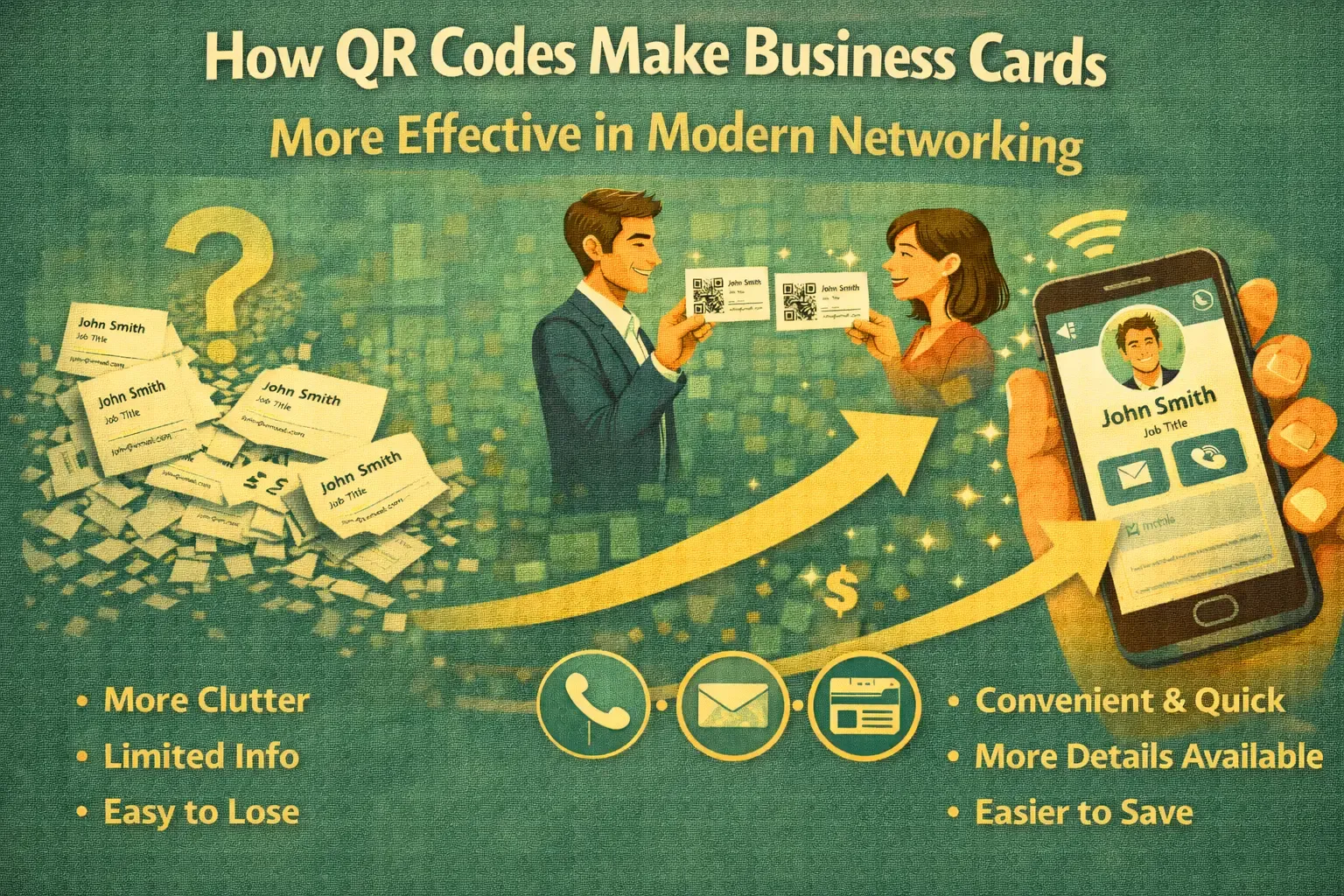

Business cards still play a role in professional interactions—but the way people connect has changed.
Today, most follow-ups happen digitally. And that creates a gap: traditional business cards exist in the physical world, while relationships continue online.
QR codes help bridge that gap.
By adding a QR code to a business card, you turn a static piece of information into a direct path to your digital presence.
The Gap Between Receiving a Card and Taking Action
The biggest weakness of traditional business cards isn’t the design—it’s what happens after they’re handed over.
In most cases, the process looks like this:
- The card is received
- It gets stored somewhere
- It may or may not be used later
Even when there’s genuine interest, small delays reduce the chances of follow-up.
QR codes reduce that delay to almost zero.
From Passive Information to Immediate Interaction
With a QR code, the interaction doesn’t stop when the card changes hands.
It continues immediately.
A single scan can:
- Save your contact details
- Open your website or portfolio
- Connect to your social profiles
- Display a page with multiple links
Instead of relying on memory or effort later, the connection happens in real time.
Turning Business Cards Into Flexible Tools
Another key advantage of QR codes is adaptability.
Printed information is fixed.
Digital destinations are not.
By using a QR code, you can:
- Update your contact details without reprinting cards
- Change where the code leads at any time
- Adjust your content based on your current goals
Platforms like QRColor make it easy to create and manage QR codes that link to your digital profile → https://qrcolor.com
This flexibility makes business cards more sustainable and long-lasting.
Choosing the Right Destination for Your QR Code
The effectiveness of a QR code depends on what it links to.
Common options include:
- A digital contact card (vCard)
- A personal website or portfolio
- A simple landing page with key links
- A scheduling or booking page
The best choice depends on your objective—whether that’s getting contacted, showcasing work, or generating leads.
Static vs Dynamic QR Codes
There are two main types of QR codes to consider:
Static QR codes
- Fixed content
- Cannot be edited after creation
- Suitable for permanent information
Dynamic QR codes
- Editable after printing
- Allow updates over time
- May provide basic analytics
For business cards, dynamic QR codes are generally more practical.
Best Practices for QR Code Business Cards
To ensure your QR code adds value:
- Use a clear call-to-action
Let people know what to expect when scanning - Keep the experience focused
Avoid overwhelming users with too many options - Design for readability
High contrast improves scan reliability - Test across devices
Ensure consistent performance - Optimize for mobile
The destination should load quickly and display cleanly
Where QR Code Business Cards Create the Most Value
QR codes are especially effective in environments where:
- You meet multiple people in a short time
- Quick follow-up is important
- Your work or brand exists primarily online
This includes networking events, conferences, and digital-first industries.
Enhancing, Not Replacing, Traditional Cards
QR codes do not eliminate the need for business cards.
Instead, they enhance them.
You still benefit from the physical presence of a card, while adding a direct link to your digital identity.
This combination aligns better with how modern networking actually works.
Conclusion
QR codes transform business cards from static information holders into interactive tools for connection.
By enabling instant access, reducing friction, and allowing ongoing updates, they improve both the efficiency and effectiveness of networking.
In a professional environment where timing and convenience matter, that small upgrade can make a meaningful difference.




























Sign in to leave a comment.