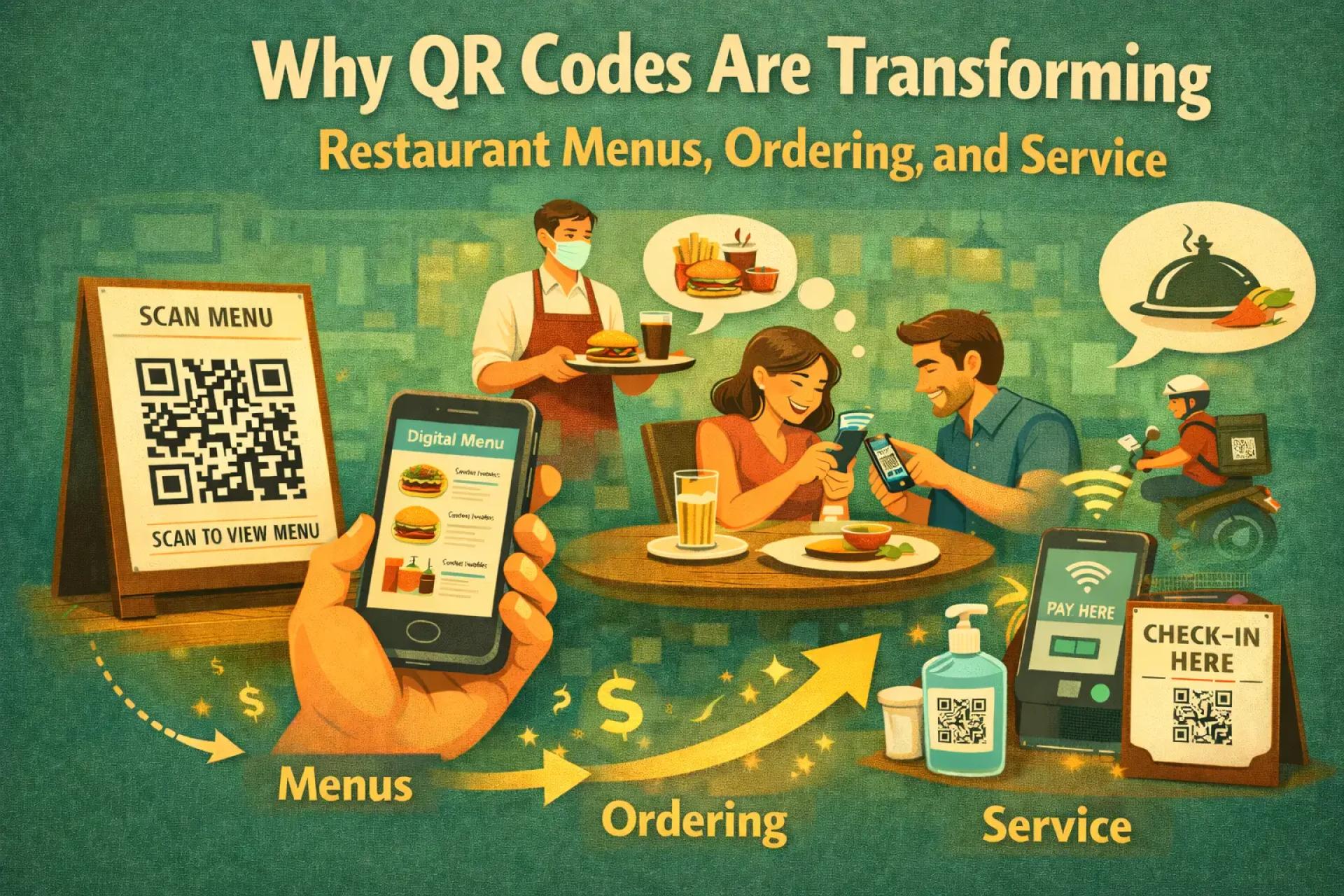

QR codes have become one of the simplest upgrades a restaurant can make—and one of the most effective.
What looks like a small change on the surface (a scannable code on a table) actually improves multiple parts of the dining experience at once: access to menus, ordering speed, payment flow, and even customer engagement.
For restaurants trying to stay efficient and adaptable, QR codes offer a practical solution without requiring major changes to existing operations.
The Move Away From Static Menus
Traditional menus are static by nature. Once printed, they’re fixed—until the next reprint.
That becomes a problem when:
- Prices change
- Items sell out
- Seasonal dishes rotate
- New offerings are introduced
QR codes solve this by turning menus into dynamic content.
A single scan gives customers access to a live menu that can be updated instantly. Restaurants no longer need to worry about outdated information or repeated printing costs.
Using platforms like QRColor, businesses can create a QR code and connect it directly to a digital menu → https://qrcolor.com
Reducing Friction in the Ordering Process
One of the most common delays in restaurants happens before the food is even ordered.
Customers wait to:
- Receive a menu
- Decide what to order
- Get a server’s attention
QR codes reduce or remove these steps.
With a scan, customers can access the menu immediately—and in some setups, place orders directly from their device.
What this improves
- Faster decision-making
- Fewer ordering errors
- Reduced pressure on staff
- Better flow during busy hours
Instead of relying entirely on manual interaction, the process becomes more streamlined.
Simplifying Payments and Table Turnover
Payment is another area where small delays add up.
QR codes allow customers to complete payments digitally, often without needing to wait for a bill or card machine.
This creates:
- Faster checkout experiences
- Easier bill splitting
- Reduced congestion during peak hours
For restaurants, this can improve table turnover without rushing the dining experience.
From Utility to Engagement
Beyond operational benefits, QR codes also open up new ways to interact with customers.
Restaurants can use them to:
- Share promotions or limited-time offers
- Encourage loyalty program sign-ups
- Collect feedback in real time
- Connect customers to social channels
Instead of being a one-time interaction, a QR code can extend the relationship beyond the table.
Where QR Codes Deliver the Most Value
QR codes are most effective when placed where customers naturally engage.
Common high-performing placements include:
- Dining tables (menus and ordering)
- Entrance areas (menu preview before seating)
- Receipts (feedback or promotions)
- Takeout packaging (repeat engagement)
Placement should feel intuitive, not forced.
Best Practices for Reliable Performance
To ensure QR codes work as intended, a few fundamentals matter:
- Clarity: Make it obvious what the QR code does
- Speed: Ensure fast-loading mobile pages
- Focus: One QR code should lead to one primary action
- Design: Use strong contrast for easy scanning
- Testing: Check functionality across multiple devices
Poor implementation can create frustration, while a well-executed setup feels seamless.
Balancing Technology and Hospitality
QR codes are not meant to replace the human element of dining.
Instead, they reduce repetitive tasks—freeing staff to focus on service quality and customer interaction.
Restaurants that use QR codes effectively often combine them with traditional service, creating a balance between convenience and experience.
Conclusion
QR codes have evolved into a reliable tool for modern restaurants.
They simplify menu management, accelerate ordering, streamline payments, and create new opportunities for engagement—all without requiring complex systems.
As customer expectations continue to shift toward speed and convenience, QR codes provide a straightforward way to meet those expectations while maintaining flexibility.




























Sign in to leave a comment.