

Food allergies trigger only about ten percent of canine allergy cases, yet they can send new puppy parents into a panic. Before you pull every grain, remember the FDA paused its grain-free ⇄ DCM updates in 2022 because no causal link is proven. In short, ditching grains without evidence can backfire.
We teamed up with practicing veterinarians and boarded nutritionists to score every grain-free “allergy” formula we could verify—then rank the eight that clear real medical, growth, and quality-control bars.
Over the next few minutes we’ll walk you through:
- The exact rubric that decides who ranks first and why.
- A fast, punchy profile of each food—so you can spot wins and deal-breakers at a glance.
- A side-by-side comparison table that makes price, protein, and allergen flags impossible to miss.
By the end, you’ll know which bag (or fresh-food box) deserves to hit your doorstep—and how to roll it out without upsetting tiny tummies. Let’s dig in.
How we built the ranking

Before any brand could earn a spot on our list, it had to clear a high bar. We started with one question: Would we feed this to our own allergic puppies? Then we turned that gut check into a five-pillar rubric veterinarians use every day.
We scored each candidate out of 100 points; higher scores outrank lower ones. Here is what each pillar measures, in plain English.
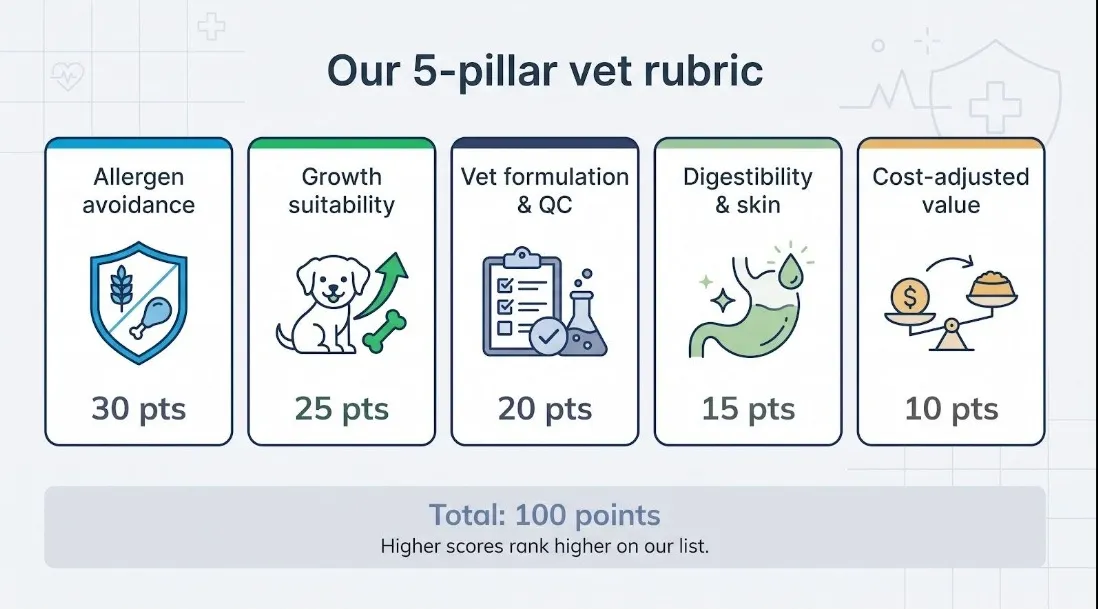
Allergen avoidance (30 points)
We awarded top marks to formulas that dodge the usual culprits: beef, dairy, chicken, and wheat. Recipes built on novel or hydrolyzed proteins scored highest.
Growth suitability (25 points)
Puppies need precise calcium, phosphorus, and energy to build bone and muscle safely. We required a current AAFCO Growth or All-Life-Stage statement and double-checked large-breed safety when relevant.
Veterinary formulation & quality control (20 points)
A logo alone is not science. We looked for brands that employ board-certified veterinary nutritionists, follow WSAVA guidelines, and publish feeding-trial data. No transparent quality program, no points.
Digestibility & skin support (15 points)
Relief is not only about excluding triggers; it is also about calming skin and guts. Extra credit went to foods rich in omega-3s, added probiotics, or gentle fiber that firms stools and eases itch.
Cost-adjusted value (10 points)
Great nutrition fails if it breaks the budget. We compared price per 1,000 kilocalories, a true apples-to-apples metric. A friendly price never overruled medical safety, but we rewarded fair economics.
Add up the five pillars and you get a clear, evidence-led score. That transparency shows why a fresh, plant-based formula tops the list while a prescription kibble lands lower.
1. Bramble plant-based fresh food – best novel protein option
Picture an elimination diet with zero animal protein yet a full nutrient punch for a growing pup. That is Bramble in a nutshell. The recipe swaps chicken and beef for gently cooked chickpeas, lentils, peas, and quinoa, all designed by board-certified veterinary nutritionists. By removing common triggers entirely, the immune system has nothing to fight.
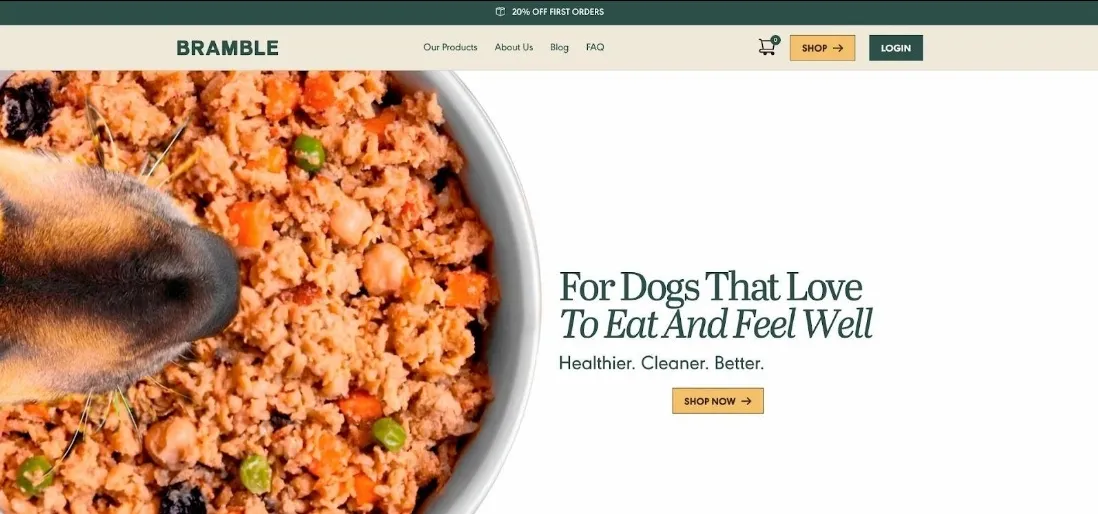
Bramble plant-based fresh dog food website screenshot for allergic puppies
Like every Bramble vet-formulated dog food, this recipe earns a perfect thirty on allergen avoidance. There is no meat, dairy, or egg to react to. Plant proteins are balanced with methionine, taurine, and l-carnitine, so growth remains on track.
Fresh diets shine on digestibility, and Bramble follows suit. Light steaming unlocks amino acids without scorching vitamins, while flax and sunflower oil supply skin-soothing omega-3s. Most owners notice firmer stools and calmer scratching within two weeks.
Growth labeling is the caveat. Bramble carries an Adult Maintenance statement, so a veterinarian or a veterinary nutritionist must guide portions and supplementation for puppies.
Price sits in premium-fresh territory, roughly five to eight dollars per day for a forty-pound adolescent. Factor in fewer allergy flares and vet visits, and the cost often balances out.
Bottom line: for puppies that react to nearly every animal protein, Bramble delivers a clean slate in a bowl, making it our top pick.
2. Natural Balance L.I.D. duck & potato puppy: classic limited-ingredient relief
Sometimes simple wins. Natural Balance builds its Limited Ingredient line on a single-protein, single-carb blueprint, and the Duck & Potato puppy recipe keeps that promise.
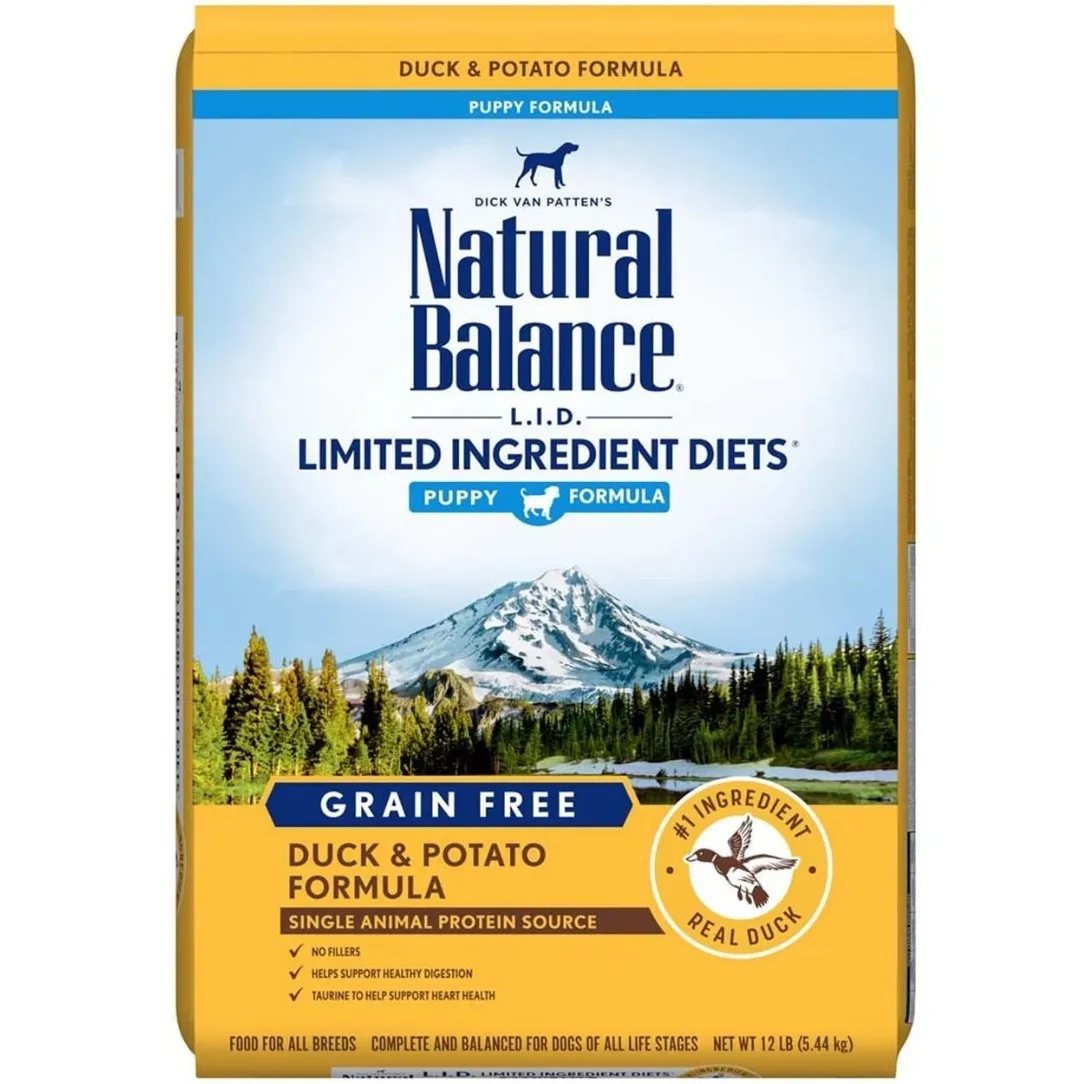
Natural Balance L.I.D. Duck and Potato Puppy food bag photo
Duck is the only meat. Potato supplies digestible energy. By removing chicken, beef, wheat, corn, and soy in one sweep, the recipe gives the immune system fewer targets.
Despite the lean label, nutrition stays robust. Protein sits at 25 percent, calcium and phosphorus land in the safe zone for growing bones, and menhaden fish oil adds DHA for brain development. The food meets AAFCO Growth standards without packing the bowl with extras you do not want.
Veterinarians favor Natural Balance for elimination trials because the company discloses ingredient sources and produces every batch in its own plant. That control lowers recall risk and lifts its quality-control score above many boutique brands.
Taste matters for strict compliance. Most pups finish a duck-based kibble on day one, so you are not begging them to eat their “medicine.” Owners also report smaller, firmer stools within a week, a quick win for anyone tired of yard patrol.
Cost falls in the mid-premium band, about three-fifty per pound at large retailers. With 400 calories per cup, a 22-pound bag often lasts a full month for a medium-breed pup.
In short, Natural Balance strips the diet to essentials, meets every growth benchmark, and keeps the price realistic. For a no-drama starting point before prescription territory, this duck duo is the logical first stop.
3. Purina Pro Plan HA hydrolyzed (vegetarian) prescription gold standard
When a puppy’s skin looks like a war zone and every snack sparks misery, veterinarians reach for hydrolyzed protein. Purina Pro Plan HA sets that benchmark.

Purina Pro Plan HA Hydrolyzed vegetarian prescription dog food bag
Hydrolysis chops soy protein into fragments so small the immune system fails to recognize them. This removes the antigenic “face” of the molecule and drops reaction odds close to zero. Purified corn starch (no wheat or barley) supplies energy while keeping allergens out.
Clinical data supports the hype. Dermatology specialists report that more than eighty percent of food-allergic dogs stop itching within six weeks on a strict HA trial when no other treats sneak in. This success rate keeps the diet at the top of referral-hospital protocols.
Growth support is dialed in. The formula meets AAFCO for all life stages, including large breeds, with a careful calcium-to-phosphorus ratio and about four hundred calories per cup. Your Doberman pup gains muscle, not just weight, while staying on therapy.
Taste can derail prescription foods, yet most puppies clean the bowl. If yours hesitates, add warm water to create a savory mash and boost aroma without new ingredients.
Cost sits above four dollars per pound and a vet authorization is required. Compare that with repeat cytopoint injections, ear-flush kits, and lost sleep. A two-month elimination trial often pays for itself through fewer follow-up visits.
In short, Purina HA provides the controlled environment your puppy’s body needs to pinpoint true triggers. If over-the-counter limited-ingredient diets fail, head here and let the science work.
4. Canidae PURE salmon & sweet potato puppy: omega-rich limited-ingredient fuel
If you want to calm itching and feed brain growth in one scoop, go fish-forward. Canidae PURE leads that charge with salmon as its solo animal protein and a recipe that stays under eight core ingredients.
Salmon offers two gains. First, it is novel for most American puppies raised on chicken. Second, it packs EPA and DHA, the omega-3s that ease inflamed skin and build neural pathways. Many owners notice less paw licking and a silkier coat after one bag.
Sweet potato steps in for grain, delivering slow-burn carbs without gluten. With roughly 480 calories per cup, you feed small volumes and still hit growth targets, a plus for sensitive stomachs.
Quality control adds trust. Canidae owns its Texas plant, follows WSAVA guidance, and consults veterinary nutritionists on every product line. That transparency boosts its formulation score above boutique brands that use co-packers.
Gut support is baked in. A post-cook dusting of probiotics and moderate fiber keep stools tidy during growth spurts. Puppies coming off antibiotics or battling loose stools often settle quickly.
Cost sits near three dollars per pound, but you pay for thirty percent protein and real salmon rather than filler. If you want an over-the-counter diet that handles mild allergies and powers healthy development, Canidae PURE checks every box.
5. Merrick grain-free chicken & sweet potato puppy: extra joint support in every bite
Not every allergic pup reacts to chicken. When grains, not poultry, cause trouble, Merrick’s flagship puppy recipe delivers full nutrition without wheat or corn.
Chicken provides 28 percent protein to build lean muscle, while sweet potato keeps carbs low glycemic and gut friendly. The standout is joint care. Each kilogram supplies about 1,200 milligrams of glucosamine plus chondroitin, cushioning hips and elbows long before problems start.
Merrick cooks every batch in its Texas facility, sources regional produce, and runs more than thirty quality checks from raw ingredient to sealed bag. After grain-free diets faced DCM scrutiny, Merrick boosted taurine and published third-party testing, earning a solid veterinary-formulation score.
Puppies thrive on the calorie density, around 475 calories per cup, so portions stay modest and stools stay compact. Pumpkin and probiotics add digestive steadiness during teething stress and vaccine visits.
Cost lands near three dollars per pound, squarely mid-premium for a recipe this rich. Built-in joint supplements save you an extra bottle of chewables, softening the price further.
Choose Merrick when chicken is safe in your allergy detective work and you want grain-free nutrition that supports growth, skin comfort, and future joint health in one kibble.
6. Royal Canin hydrolyzed protein puppy: prescription safety net for severe cases
When every scratch turns into a mystery, Royal Canin offers a shortcut. Its Hydrolyzed Protein Puppy formula breaks soy protein into oligopeptides small enough to slip past the immune system, then pairs them with ultra-refined rice starch.
Rice is technically a grain, yet it rarely causes trouble. Here it simply delivers easy energy while the protein does its stealth work. The result earns a perfect allergen-avoidance score, even if grain-free purists pause at the rice cameo.
Royal Canin’s edge is age targeting. This is the only hydrolyzed kibble tuned to puppy mineral needs from day one. Calcium, phosphorus, and calories follow a careful curve so Great Dane bones grow slow and steady, not brittle. Prebiotic beet pulp and fish-sourced omega-3s calm gut and skin together.
Palatability often derails medical diets, but puppies inhale these small, aromatic kibbles. Good compliance keeps an elimination trial honest and the diagnosis clean.
Price sits near five dollars per pound, and a vet authorization is required. Treat it like medicine: short term when possible, long term when necessary. For puppies with multi-protein reactions or concurrent GI disease, this diet provides the safety net no over-the-counter food can match
7. Wellness Simple turkey & potato (all-life-stage): gentle yet growth-ready
Wellness is known for clean labels and probiotic flair. While the Simple line carries an Adult Maintenance stamp, vets often use the Turkey & Potato recipe off label for puppies that need a short, back-to-basics reset.
Turkey steps in where chicken failed. Though they share ancestry, most chicken-allergic dogs tolerate turkey protein. By limiting the meat roster to turkey meal and boosting flavor with turkey fat, Wellness keeps cross-reactivity risk low without losing appeal.
Potato supplies the sole carbohydrate, steering clear of gluten and soy. Protein sits around 26 percent and fat at 13 percent, modest but above AAFCO puppy minimums. Salmon oil adds DHA for brain growth while calming itchy skin.
Digestive support is the star. A post-bake dusting of probiotics plus soluble fiber from ground flax tightens loose stools. For puppies swinging between constipation and cow-pie output, that stability feels like magic.
Because the food is labeled for adult maintenance, use it only as a short-term diagnostic tool under veterinary guidance. Your vet can adjust calcium and phosphorus to protect growing bones.
Price lands near three-seventy per pound. You pay for truly limited ingredients and rigorous in-house testing, not flashy marketing. If you want a straightforward turkey-only plan with zero chemical preservatives, Wellness Simple is the steady workhorse that calms skin while growth stays on schedule.
8. Wild Earth vegan all-life-stage: plant power for extreme protein allergies
When meat triggers every flare, Wild Earth offers a true escape hatch. The kibble swaps animal protein for cultured yeast, peas, and chickpeas, removing beef, poultry, fish, and dairy in one step.
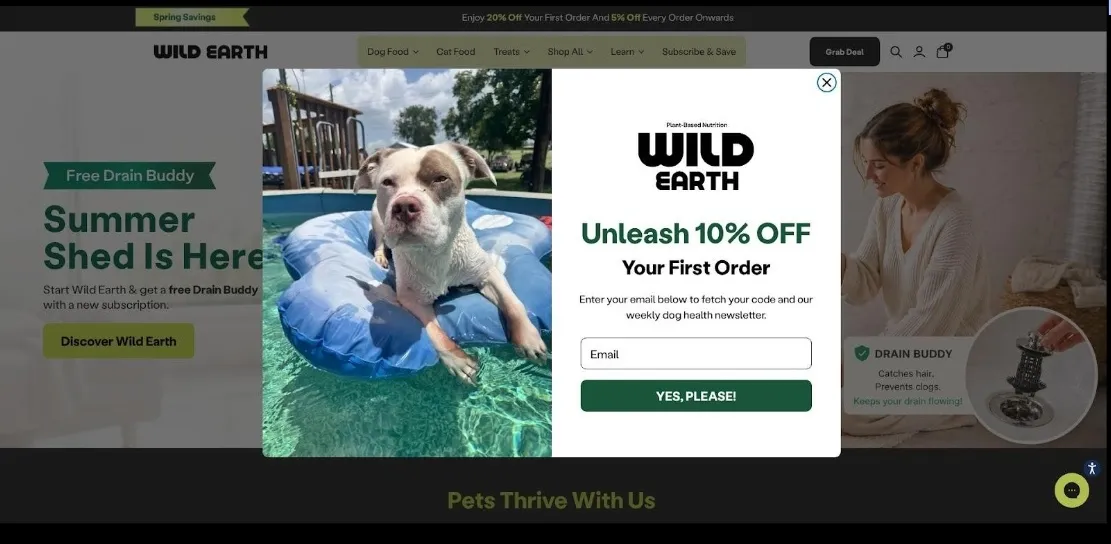
Wild Earth vegan dog food website screenshot for extreme protein allergies
Yeast protein punches above its weight, reaching 31 percent protein with digestibility that rivals chicken. Formulators add synthetic taurine, methionine, and lysine to complete the amino-acid profile, the same precision used in hydrolyzed prescription diets without the script.
Algae oil and flaxseed deliver pre-formed DHA and ALA, supporting brain growth and taming inflammation. Higher fiber firms stools for most dogs yet can loosen them in a few; a slow one-week transition usually resolves this.
The recipe carries an Adult Maintenance statement, so use it for puppies only under veterinary supervision as a short diagnostic diet. Regular weigh-ins and, if required, an extra DHA capsule keep growth on track.
Cost averages about 2.80 dollars per pound on subscription, below many premium meat kibbles. Add the environmental upside and zero chance of animal-protein cross-contact, and Wild Earth becomes the frontier diet for pups allergic to nearly everything on four legs, fins, or feathers.
Side-by-side snapshot: which food fits your pup?
Scanning eight detailed reviews can blur together. This quick table clears the fog by lining up each formula’s headline numbers so you can spot deal-breakers—or dream matches—at a glance.
Use this grid to zero in fast. Need prescription strength? Rows three or six. Want the lowest-cost animal-free bowl? Scroll to row eight. After you flag two front-runners, return to the full reviews to confirm your pick.
Vet Q&A: from first itch to last bite
How long does an elimination diet run?
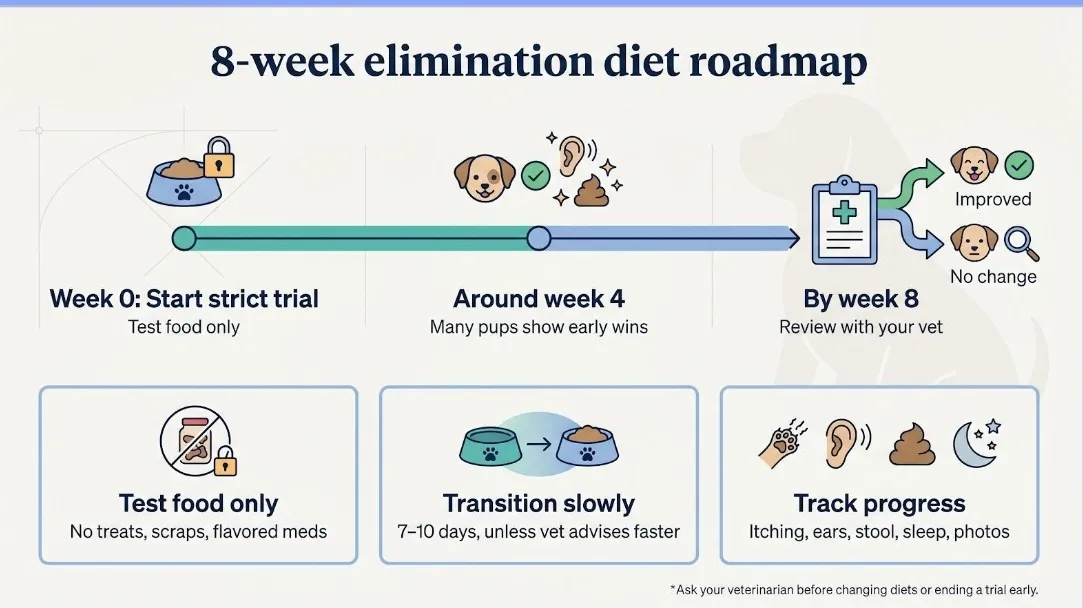
Eight full weeks is the magic minimum. Clinical reviews show that more than ninety percent of food-allergic dogs improve within that window. Cut the trial short and you risk ruling out a diet that just needed time to calm the immune system.
Do I really have to feed only the test food?
Yes. One flavored pill pocket or stolen cracker resets the clock. Keep treats, table scraps, and flavored preventives out of reach. For rewards, use measured kibble from the trial diet.
How do I switch without upsetting a puppy tummy?
Blend the new food over seven to ten days: 25 percent new for two days, 50 percent for two more, then 75 percent before going all in. Transition more slowly if stools soften. Puppies on prescription hydrolyzed diets can change faster under direct vet guidance.
What early wins should I track?
Log scratching, ear odor, stool quality, and sleep. Many pups show quieter ears or firmer stools by week four, with full skin relief closer to week eight. Take photos of problem areas so improvements are obvious, not guessed.
Where does grain-free heart risk fit in?
The FDA paused routine updates on its DCM investigation in 2022 due to limited data, but research continues. Every pick on our list leans on veterinary formulation and added taurine. Use grain-free only when a veterinarian confirms the need, not for marketing.
What happens if eight weeks pass and nothing changes?
Two options: try a different hydrolyzed or novel-protein diet, or move to environmental allergy testing. A failed, strictly controlled food trial strongly suggests pollen, dust, or fleas are the real culprits.
Conclusion
Bottom line: use grain-free the way you use an antibiotic, only when a veterinarian confirms it is the right tool. Otherwise, stick with balanced, time-tested recipes that protect the heart and the wallet.





























Sign in to leave a comment.