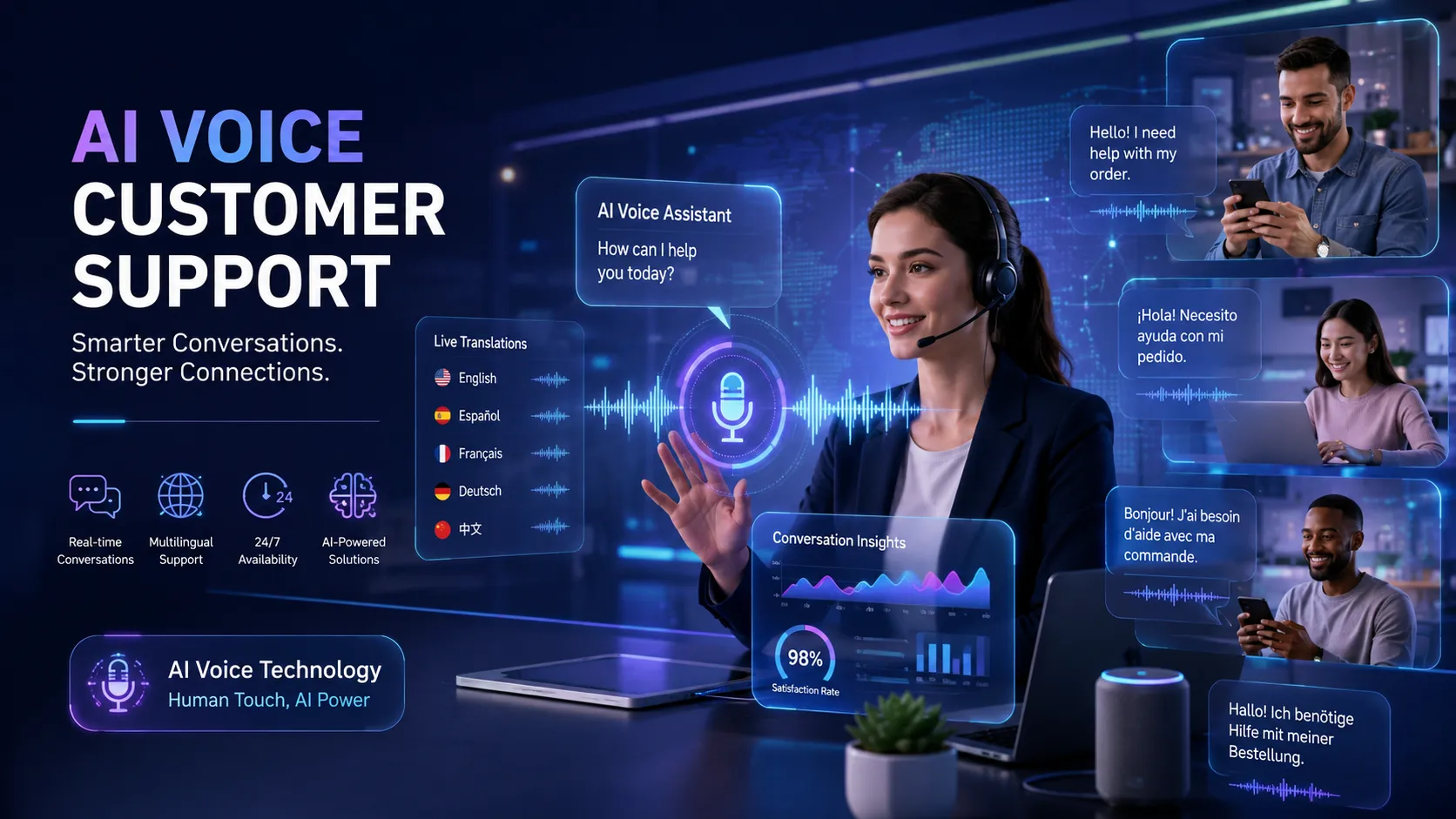

Customer expectations have changed significantly in the last few years. People no longer want to wait endlessly on hold, repeat their issues multiple times, or struggle through frustrating automated menus that fail to understand simple requests. Today’s customers expect fast, accurate, and human-like interactions whenever they connect with a business.
This shift has forced companies to rethink how they handle customer communication. Traditional support systems are slowly being replaced with smarter solutions that can understand speech, respond naturally, and provide instant assistance around the clock. From answering questions to resolving complaints and guiding customers through purchases, AI-driven communication systems are becoming an essential part of modern business operations.
But what exactly is powering this transformation? More importantly, how is it changing customer conversations for businesses across industries? Here are the details.
Why Customer Conversations Needed a Change
Traditional customer communication models worked well when customer expectations were lower and business interactions were simpler. However, the modern customer service landscape comes with growing challenges:
- Rising customer expectations for instant support
- High call volumes during peak hours
- Long waiting times and repetitive interactions
- Increasing operational costs for businesses
- Demand for multilingual and personalized communication
According to recent industry trends, customers increasingly prefer businesses that offer immediate resolutions rather than delayed responses. Slow service not only affects customer satisfaction but can also influence retention and brand loyalty.
The result:
Businesses are under pressure to deliver faster, smarter, and more scalable communication without compromising customer experience. This is where AI-powered voice technologies begin to make a measurable impact.
What Makes AI-Powered Customer Conversations Different?
Unlike traditional IVR systems that depend heavily on rigid menu options and scripted commands, modern conversational systems understand intent, context, and even variations in speech patterns.
A Voice AI Platform helps businesses automate and enhance customer interactions through intelligent voice-based communication that feels natural and responsive.
Instead of asking customers to press multiple buttons or repeat themselves, these systems can:
- Understand natural language requests
- Respond conversationally in real time
- Route complex queries intelligently
- Handle thousands of conversations simultaneously
- Offer multilingual support for diverse audiences
In simple terms:
Traditional customer support follows a script.
AI-powered communication understands conversations.
This shift is helping organizations move from reactive customer service to proactive engagement.
How This Technology Is Changing Customer Conversations
1. Faster Response Times Without Long Waits
One of the biggest frustrations for customers is waiting.
Long hold times often create poor customer experiences before a conversation even begins. AI-driven systems solve this issue by responding instantly and managing multiple conversations at once.
Some major improvements include:
- Immediate responses to common customer queries
- Faster issue resolution without human delays
- 24/7 availability across time zones
- Reduced dependency on large support teams
For businesses, this means improved efficiency. For customers, it means less frustration.
2. More Human-Like Conversations
Older automated systems often sounded robotic and limited. Customers had to speak in very specific ways to get correct responses.
Modern voice technologies have improved significantly by understanding:
- Natural speaking patterns
- Conversational pauses and interruptions
- Regional accents and language variations
- Context from previous interactions
This creates interactions that feel smoother and more natural rather than mechanical.
The goal is not simply automation; it is creating experiences that customers feel comfortable engaging with.
3. Better Personalization at Scale
Customers appreciate businesses that remember preferences and understand context.
AI-driven systems can personalize interactions by analyzing previous conversations, customer behavior, and purchase history to offer relevant responses.
Examples include:
- Order updates tailored to previous purchases
- Personalized recommendations
- Faster support based on historical issues
- Context-aware communication during repeat interactions
Instead of forcing customers to explain the same problem repeatedly, businesses can create continuity across conversations.
4. Improved Support Across Multiple Languages
Global businesses and regional markets often struggle with language barriers.
Hiring multilingual customer support teams can become expensive and difficult to scale. This is where voice automation becomes highly valuable.
Many organizations now use Voice AI for Customer Support to assist in multiple languages while maintaining consistency and speed.
This creates several benefits:
- Better accessibility for regional audiences
- Reduced communication misunderstandings
- Increased customer trust and satisfaction
- Scalable multilingual operations without excessive hiring
For countries with linguistic diversity, this becomes particularly valuable for customer engagement.
Industries Already Benefiting from Smarter Conversations
Several industries are already seeing meaningful improvements in customer interactions through AI-powered voice communication.
E-commerce
Retail brands use voice automation for:
- Order tracking
- Return requests
- Product recommendations
- Customer complaint handling
This reduces pressure on human support teams while maintaining faster responses.
Healthcare
Hospitals and clinics are using conversational systems for:
- Appointment scheduling
- Patient reminders
- Basic query resolution
- Follow-up communication
This helps healthcare providers manage administrative workloads more efficiently.
Banking and Financial Services
Banks are increasingly using intelligent voice systems for:
- Balance inquiries
- Fraud alerts
- Payment reminders
- Loan-related communication
Security and convenience are becoming equally important in financial interactions.
Education
Educational institutions benefit through:
- Admission inquiry handling
- Student support assistance
- Fee reminders
- Automated updates
This improves communication without overwhelming administrative staff.
Challenges Businesses Must Consider
Although the benefits are significant, adopting voice-driven customer communication is not without challenges.
Some common concerns include:
1. Data Privacy and Security
Customer conversations often involve sensitive information. Businesses must ensure secure systems and proper compliance practices.
2. Balancing Automation With Human Support
Not every issue should be automated.
Complex emotional or high-priority customer concerns still require human intervention. Successful businesses combine intelligent automation with human assistance rather than replacing it entirely.
3. Training the System Properly
Poorly trained conversational systems can misunderstand customer intent and create frustrating experiences.
Organizations that succeed usually:
- Continuously improve AI performance
- Analyze customer feedback regularly
- Update workflows based on real interactions
- Optimize conversations for better accuracy
A strong implementation strategy often determines long-term success.
The Future of Customer Conversations
Customer communication is moving toward faster, smarter, and more natural interactions. Businesses are increasingly recognizing that customers value convenience just as much as products or pricing. As expectations continue to rise, companies that fail to modernize their communication strategies may struggle to maintain customer satisfaction.
The future will likely focus on more personalized interactions, better contextual understanding, and smoother transitions between automated systems and human agents. Rather than replacing human communication entirely, intelligent voice systems are helping businesses remove repetitive friction so teams can focus on more meaningful customer needs.
As technology continues evolving, customer conversations will become less transactional and more intuitive, creating experiences that feel quicker, smarter, and far more human.




























Sign in to leave a comment.