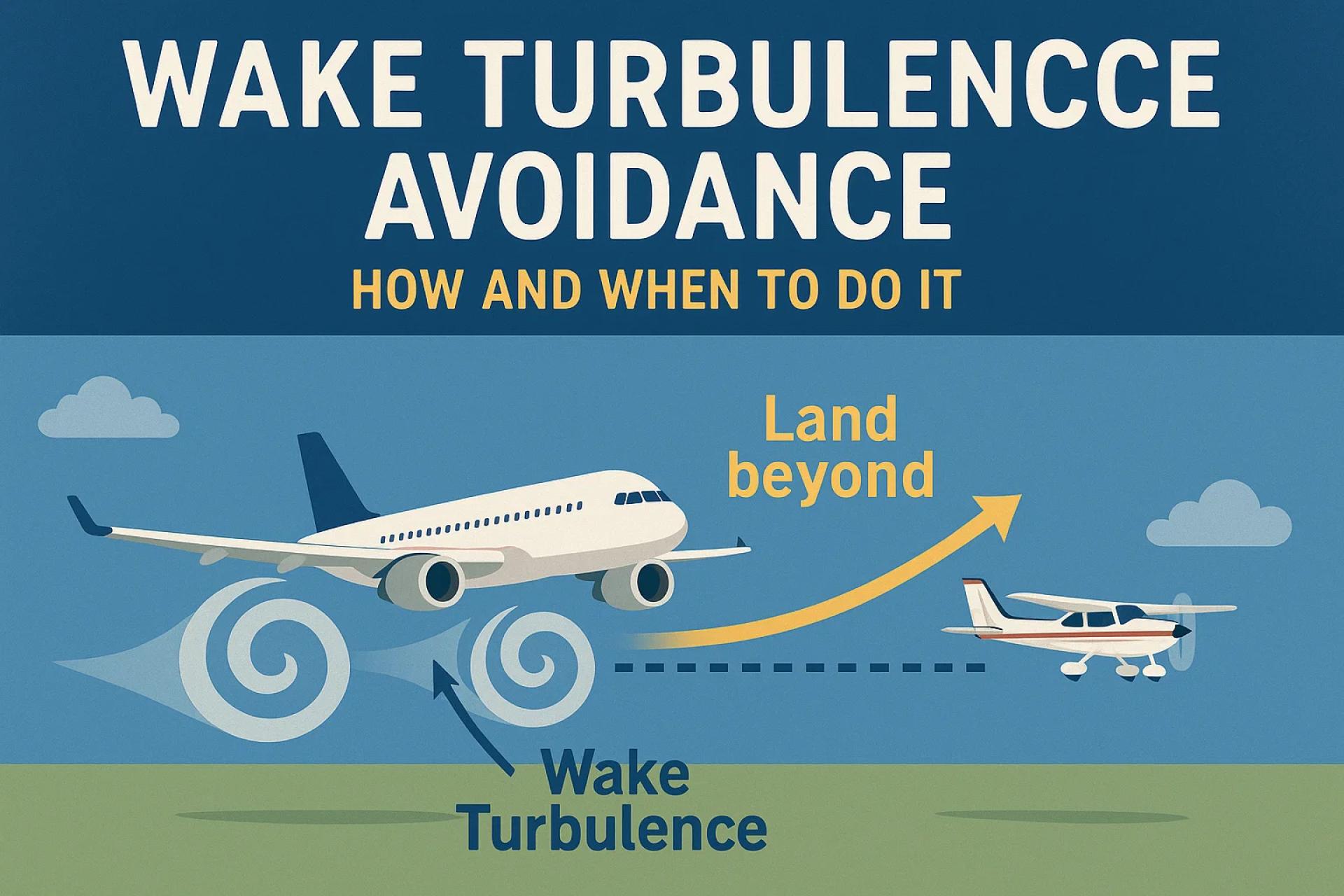

There are several unseen forces in flight that can be more dangerous than turbulence, icing, thunderstorms, or engine failure. Wake turbulence is one of them. It is created by any lifting surface in flight, most significantly by other aircraft.
Wake turbulence vortices are invisible, hard to predict, and avoid, but can cause major accidents, especially in small aircraft. We have covered the basics of wake turbulence, and in this article, we will discuss how to avoid it.
Whether you're training at a flight school in Singapore or logging hours toward certification, understanding wake turbulence and how to avoid it is essential to flight safety.
What is wake turbulence and why is it dangerous
Wake turbulence is the disturbance in the air left by a flying aircraft or helicopter. It is generated by the difference in pressure between the top and bottom wing surfaces, which results in a swirling vortex of air rotating around the aircraft’s centerline. When this vortex hits the following aircraft, it can roll it, cause a lack of control, or even break it.
It is most dangerous when created by heavy, slow aircraft with clean wings, such as during takeoff and landing, when pilots are close to each other and to the ground. The phenomenon is also more pronounced with calm wind, as turbulence dissipates when the wind is blowing. These situations make certain sectors of the airspace busy, particularly airport traffic patterns.
Wake turbulence is a rare but very serious reason for accidents. It can happen to any small plane if it follows too closely behind a heavy one on short final, or a large one while taking off. An aircraft on final approach may suddenly be rolled by the turbulence and then possibly crash into the ground as a pilot may not have time to recover. A takeoff behind the Boeing 747 may not get enough lift to rotate as its wake may meet the aircraft before it is safely airborne.
Air traffic controllers maintain a minimum separation distance between aircraft of different weight categories that are taking off or landing. Wake turbulence categories are defined by international standards:
● Light (L): less than 7 000 kg (15 000 lb)
● Medium (M): from 7 000 kg (15 000 lb) to 136 000 kg (300 000 lb)
● Heavy (H): more than 136 000 kg (300 000 lb)
● Super (J): specific super-heavy aircraft, such as Airbus A380
If a light-category aircraft is landing behind a heavy aircraft, the controller may direct it to wait up to two to three minutes at the point of initial approach fix before commencing the approach. For obvious reasons, pilots need to be even more cautious when flying VFR without ATC in uncontrolled airspace.
Wake turbulence avoidance
Wake turbulence avoidance is based on common sense. On takeoff, a pilot should rotate before the heavy aircraft’s rotation point and climb above it, if possible. On approach and landing, stay above the other aircraft’s glide path and land after its touchdown point. In cruise, avoid tailing directly behind a heavier aircraft at the same flight level, and attempt to climb or descend if wake turbulence is suspected.
Wake turbulence separation is a must, but often in busy airspace, controllers cannot always guarantee sufficient wake separation. A pilot can improve his chances of not encountering wake by maneuvering laterally or vertically as necessary and timing his approach to avoid being behind a heavy aeroplane.
Wake turbulence for student pilots
Training institutions, including those offering a private pilot license in Australia, introduce students early to the concept of wake turbulence. Through ground school, flight briefings, and simulator-based exercises, pilots learn how vortices behave under varying flight conditions and how to incorporate avoidance strategies into everyday flying.
The Role of Technology and Judgment
Modern navigation tools, including ADS-B and TCAS, help enhance situational awareness and monitor the proximity of other aircraft. However, technology alone cannot replace pilot judgment. Wake turbulence does not trigger an alert or warning on most systems, so pilots must be trained to anticipate where wake is likely to exist based on traffic flow and aircraft type. Environmental conditions like crosswinds may cause vortices to drift laterally across runways, while tailwinds may keep them in the landing path longer than expected. By incorporating these factors into their decision-making process, pilots can modify their flight paths accordingly.
Wake turbulence is an aerodynamic hazard that every pilot should be aware of. Though it is invisible, it can be easily avoided using the techniques described above. It is also predictable and relatively easy to teach. By maintaining adequate separation, recognising heavy takeoff/landing configurations and anticipating wake position, pilots can and do prevent accidents. Whether you are training to be a professional pilot, are already one, or are just looking for more information on aviation, understanding wake turbulence is an important part of airmanship.



























Sign in to leave a comment.