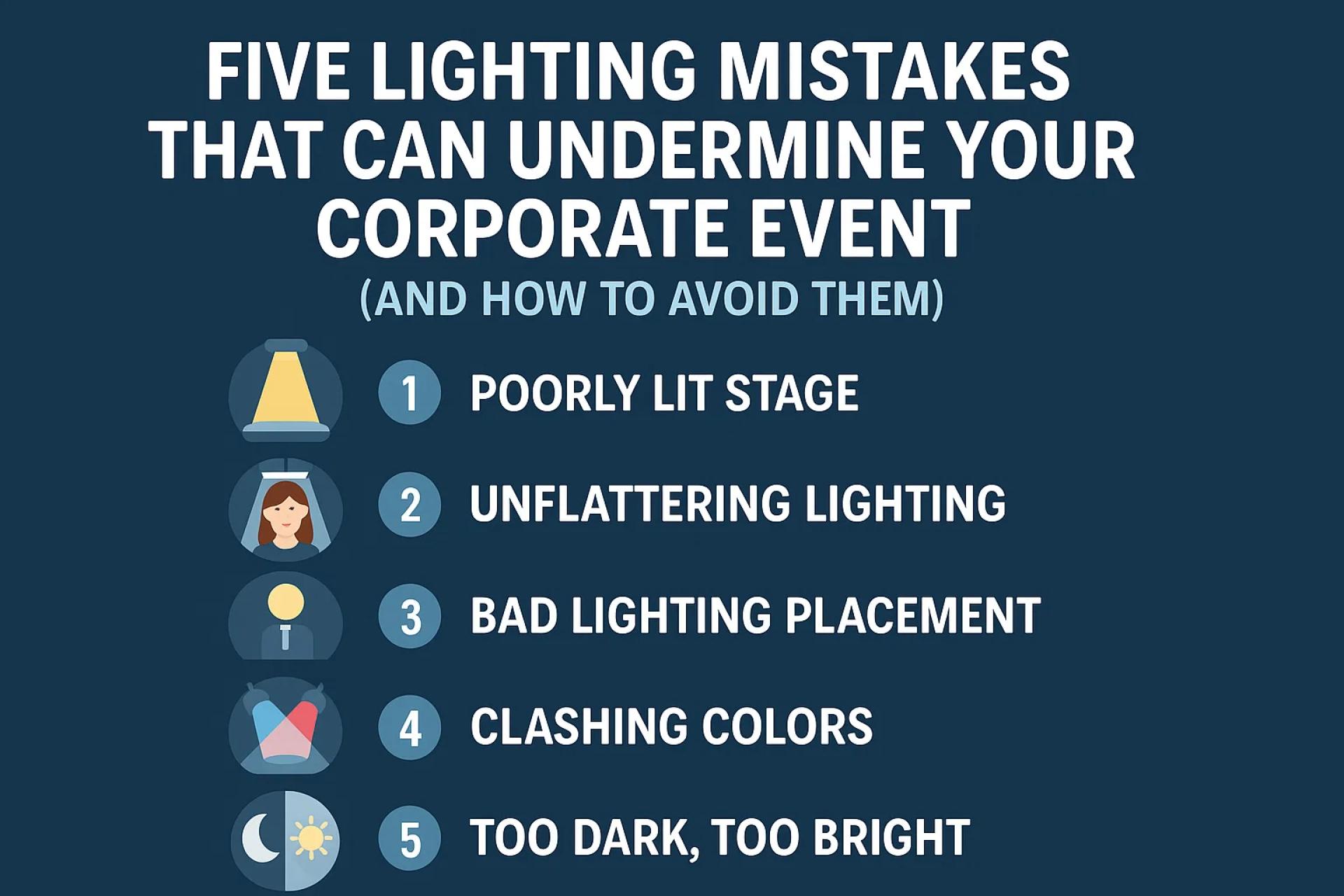

Corporate functions demand extensive commitments of energy resources, financial investment and time allocation. Event planners dedicate considerable time to selecting venues and arranging entertainment, but lighting gets less attention despite its essential role in creating the event atmosphere. Poor lighting choices can ruin even the most perfectly planned function. Knowing the common pitfalls and how to avoid them guarantees that your next corporate gathering makes the right impression.
The effects of inadequate lighting
Lighting determines the tone for your whole occasion. The initial response from people entering a poorly lit room tends to be feelings of unprofessionalism. Networking suffers under these dim conditions, while harsh fluorescent lighting also generates an unwelcoming environment that opposes the intended friendly and interactive vibe of the event.
Good lighting boosts mood, raises energy levels, and fosters participation. In contrast, poor lighting can leave guests lethargic, isolated, or itching to leave prematurely. This will have a direct impact on the success of your goals, whether they are team building, client relationship creation, or product launching.
1. Insufficient overall illumination
One of the most common errors event coordinators make is underestimating the amount of light they will need for their space. Most business settings only utilise available overhead lighting, which might be meant for regular activity as opposed to special events. This produces shadowed sections where people are isolated, and communication is forced.
The solution is to undertake a complete lighting evaluation before your event. Visit the location during your event's time of day and assess how natural light interacts with the current lighting fixtures. Consider the activities your event entails and ensure each area is properly lit. Registration stations, table seating, and presentation areas all require varying levels of lighting to function correctly.
Look for events hire Perth experts who can offer portable lighting options that complement current fixtures without overloading the venue. Placing additional light sources to strategically eliminate dark shadows creates an inviting atmosphere throughout the venue.
2. Creating correct presentation and speaking areas
Business events often include presentations, speeches, or demonstrations that need special lighting attention. A standard error is not illuminating speakers or presentation areas well enough, making important people hardly discernible to the audience. This dilutes the effectiveness of critical messages and can make speakers seem less assured or authoritative.
Good presentation lighting involves a harmony of visibility and comfort. The speaker should have enough light to be visible without being caught in blinding spotlights that cause annoying glare. The screen for presenting or visual aids also need careful attention to avoid light reflection that compromises content legibility.
3. Avoiding harsh or unflattering conditions
Corporate functions often involve networking and relationship-building, making the social environment crucial to success. Cold fluorescent lighting or hung fixtures in inconvenient locations can be harsh and cast unbecoming shadows on people's faces, presenting attendees as tired or washed out. This discourages photo-taking and detracts from the overall social dynamic of the event.
Understanding colour temperature and light direction prevents these errors. A warm lighting atmosphere feels welcoming while cool fluorescence produces a sterile appearance. Multiple light sources placed strategically at various angles remove strong shadows and achieve even illumination throughout people's faces and gathering spaces.
4. Ignoring the venue's unique characteristics
Each space features one-of-a-kind architecture, ceiling heights, and floor plans that affect lighting needs. The fallacy is to provide a one-size-fits-all solution without considering these particular aspects. This can lead to inconsistent light, the wastage of lighting assets, or the misalignment of the lighting design with the best features of the space.
Before finalising plans, you should examine the layout and architectural details of your venue. Rooms with tall ceilings require stronger fixtures or different placement strategies, unlike rooms with lower ceilings. Older buildings could use lighting that accentuates architectural features, while contemporary venues might require minimalist, clean solutions.
5. Planning your strategy
An effective corporate event lighting setup starts with clear goals and thorough planning. Determine the primary goal of your event and identify specific areas that require focus. Think through the progression of activities during the event and how light requirements may shift as the occasion unfolds.
Establish a lighting timeline that coincides with your schedule. Your opening receptions could be enhanced by warmer, more social lighting, while presentations need focused, professional light. Consider how transitions between different parts of the schedule will be addressed and whether lighting changes can help guide attendees’ attention and movement.
Well-considered lighting design helps turn corporate events into memorable experiences that get business results. Event planners can utilise strategic solutions to avoid common lighting pitfalls, to create spaces that enhance networking capabilities and make a lasting, positive impression on visitors. Professional event lighting hire services offer both specialised knowledge and the necessary equipment to create cohesive results. The investment of time and resources into lighting demonstrates your company's attention to detail and professionalism to support your brand identity.


















Sign in to leave a comment.