

Water problems in a house rarely begin as a major disaster.
A small ceiling stain, damp wall, or crack on a terrace may seem easy to ignore. But when water keeps reaching the same area, the damage can slowly become more difficult to manage.
For homeowners in Nepal, waterproofing is an important part of protecting a building from rain, moisture, and water seepage. The key is understanding the problem before choosing a solution.

Start With the Source of the Water
The place where water appears is not always the place where it enters.
For example, a water stain on a ceiling may be caused by a roof, terrace, bathroom, or plumbing problem above it.
Similarly, a damp wall could be related to rainwater, a pipe leak, poor drainage, or cracks in the exterior surface.
This is why finding the source should be the first step.
Common Places That Need Waterproofing
Different parts of a building can have different waterproofing needs.
Roofs and Terraces
Roofs receive direct exposure to rain. Cracks, damaged surfaces, blocked drains, and standing water can increase the risk of leakage.
Terraces should also be checked for areas where rainwater remains after a storm.
Bathrooms
Bathrooms are exposed to water every day.
Poorly protected floors, walls, joints, and corners can allow moisture to move into surrounding areas. In multi-storey buildings, this can sometimes lead to dampness on the ceiling below.
Exterior Walls
Outside walls are exposed to rain and changing weather conditions.
Cracks or damaged surface finishes can allow water to enter. Peeling paint and dark damp patches may be signs that the wall needs inspection.
Basements and Foundations
Basements and foundations can face moisture from the surrounding ground.
Poor drainage, groundwater, and cracks can all contribute to damp conditions. These areas may need a different approach from a roof or bathroom.
Warning Signs You Should Not Ignore
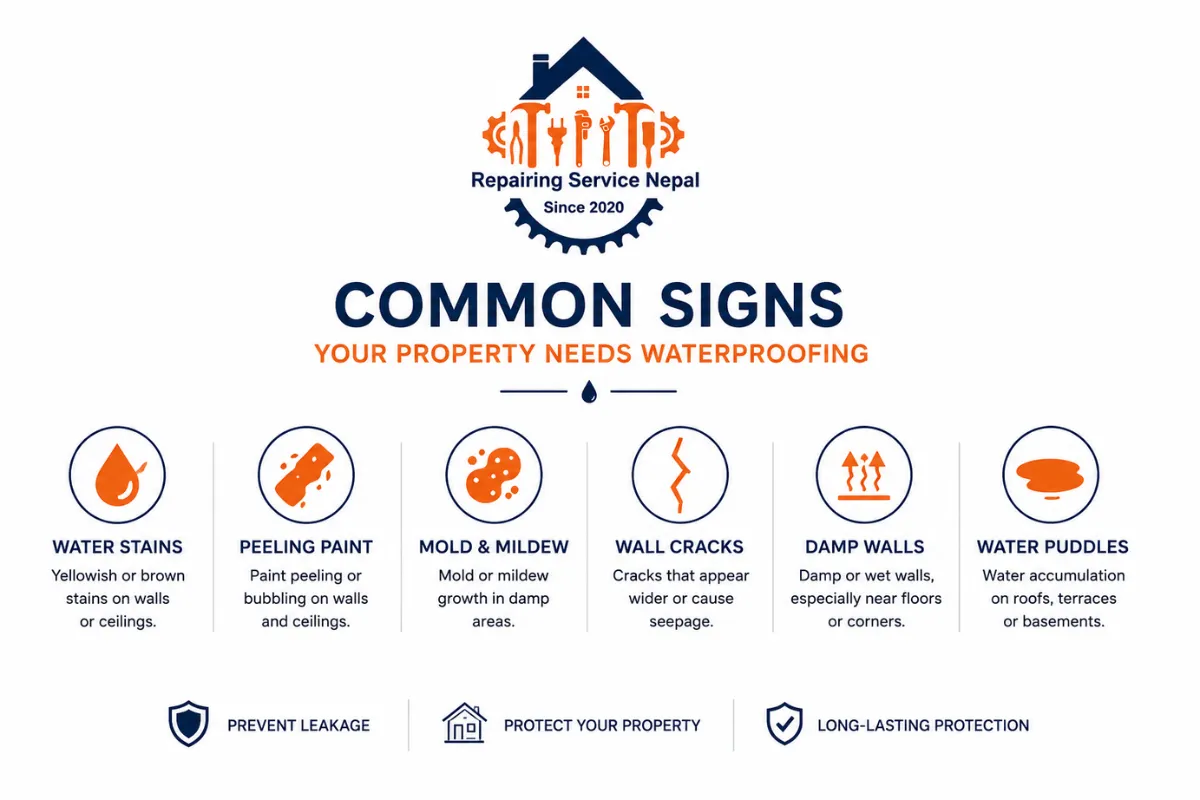
Some common signs of water-related problems include:
- Dark ceiling stains
- Damp walls
- Peeling or bubbling paint
- Mold or mildew
- Musty smells
- Cracks around roofs or walls
- Water pooling on terraces
- Leakage during or after rainfall
These signs do not always identify the exact cause, but they indicate that further inspection may be useful.
Why the Right Waterproofing Method Matters
There is no single waterproofing method that suits every building.
Common systems include cementitious coatings, liquid-applied waterproofing, bituminous materials, polyurethane products, and waterproofing membranes.
The appropriate choice can depend on the surface, source of water, building condition, exposure, and location.
A method that works for a bathroom may not be the right choice for an exposed terrace.
For homeowners researching waterproofing services in Nepal, understanding the affected area and the cause of the moisture is a useful starting point.
Surface Preparation Is Important
Waterproofing is not simply about applying a product over an existing surface.
The surface may need cleaning, crack repair, removal of loose material, or treatment of older failed waterproofing before the new system is applied.
A typical process may include:
- Inspecting the affected area
- Finding the source of water
- Preparing the surface
- Choosing a suitable metho
- Applying the waterproofing material
- Allowing proper curing or drying
- Checking the finished work
Poor preparation can reduce the effectiveness of the waterproofing system.
Waterproofing and Crack Problems
Cracks can allow water to enter a building, but not every crack has the same cause.
Some may be surface cracks, while others may be related to movement, aging, construction problems, or other conditions.
When cracks and water seepage appear together, it is useful to examine both issues rather than simply covering the visible crack.
Homeowners dealing with these problems can also learn more about waterproofing and crack repairing in Kathmandu and the types of situations where combined repair work may be needed.
What About Waterproofing Costs?
There is no single price for waterproofing.
The cost can depend on:
- Size of the affected area
- Type of waterproofing
- Surface condition
- Materials
- Labour
- Accessibility
- Number of layers
- Location of the property
A small bathroom and a large terrace can therefore have very different costs.
Getting the area inspected before receiving an estimate can provide a clearer understanding of the required work.
Preparing Before the Monsoon
Homeowners can take a few simple steps before heavy rainfall begins.
Check the roof for visible cracks. Make sure drainage outlets are clear. Look for water pooling on terraces. Inspect areas that have been repaired in the past.
Inside the home, pay attention to new damp patches, ceiling stains, peeling paint, or unusual musty smells.
Finding these signs early can make it easier to investigate the cause.
When Should You Consider Professional Help?
Professional inspection can be useful when:
- Leakage keeps returning after repairs.
- The source of water is difficult to identify.
- A wall remains damp.
- A roof or terrace repeatedly leaks.
- Previous waterproofing has failed.
- A basement has persistent moisture.
- You are planning major renovation or construction.
The goal should be to understand the cause rather than simply cover the visible damage.
Final Thoughts
Waterproofing works best when it is treated as part of proper building maintenance.
A successful solution starts with identifying the source of water, checking the surface, preparing it correctly, and selecting a method that fits the building.
For homeowners in Nepal, regular inspection of roofs, terraces, walls, bathrooms, and drainage areas can help identify problems before they become larger.
A small damp patch today may be a useful warning to investigate the problem before the next heavy rainfall.




























Sign in to leave a comment.