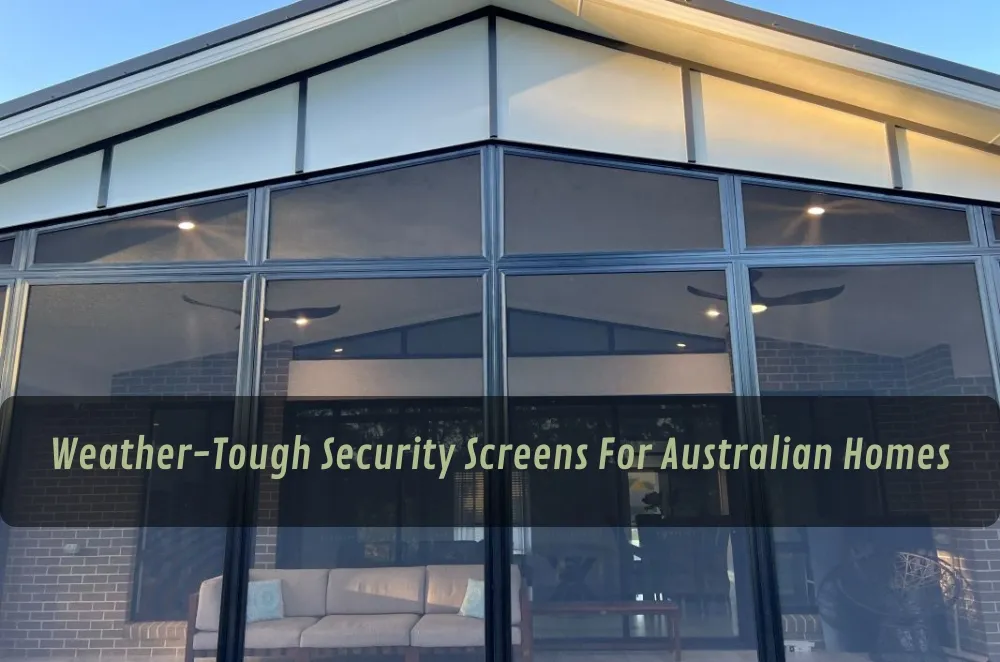

Summer glare through to winter downpours: a typical Australian year pushes every part of a house, especially the exterior doors. The right security screen door gives you a buffer against break-ins and biting insects while still letting the southerly breeze run through. Choose poorly and you end up with corroded mesh, jammed locks or a door that rattles itself loose before the first warranty check. Pick well and you gain year-round ventilation and long-term peace of mind.
The Triple Test: Heat, Storms and Intrusion
A security screen isn’t worth much if it only handles one challenge. Aluminium frames cope with coastal salt spray better than mild steel, but flimsy corner stakes can still twist under force. Stainless mesh keeps burglars at bay yet may trap heat on a west-facing patio unless the weave and coating are matched to the orientation. In practice, homeowners need a product engineered for three pressures at once:
- Thermal expansion from 40 °C summer days
- Wind-driven debris during late-season squalls
- Tampering and kicking around the latching side
Manufacturers that treat these demands separately often miss how they interact. Screens rated to Australian Standard AS5039—tested for impact, knife shear and pull—offer a baseline, but it is the build detail that decides whether standards compliance translates to real-world lifespan.
Plenty of households sidestep the trial-and-error game by starting with independently certified security screen doors built around a rivet-free retention system. Fewer fasteners means fewer points for corrosion to bloom and, in turn, fewer service calls.
Mesh Matters: Material And Weave Influence Comfort
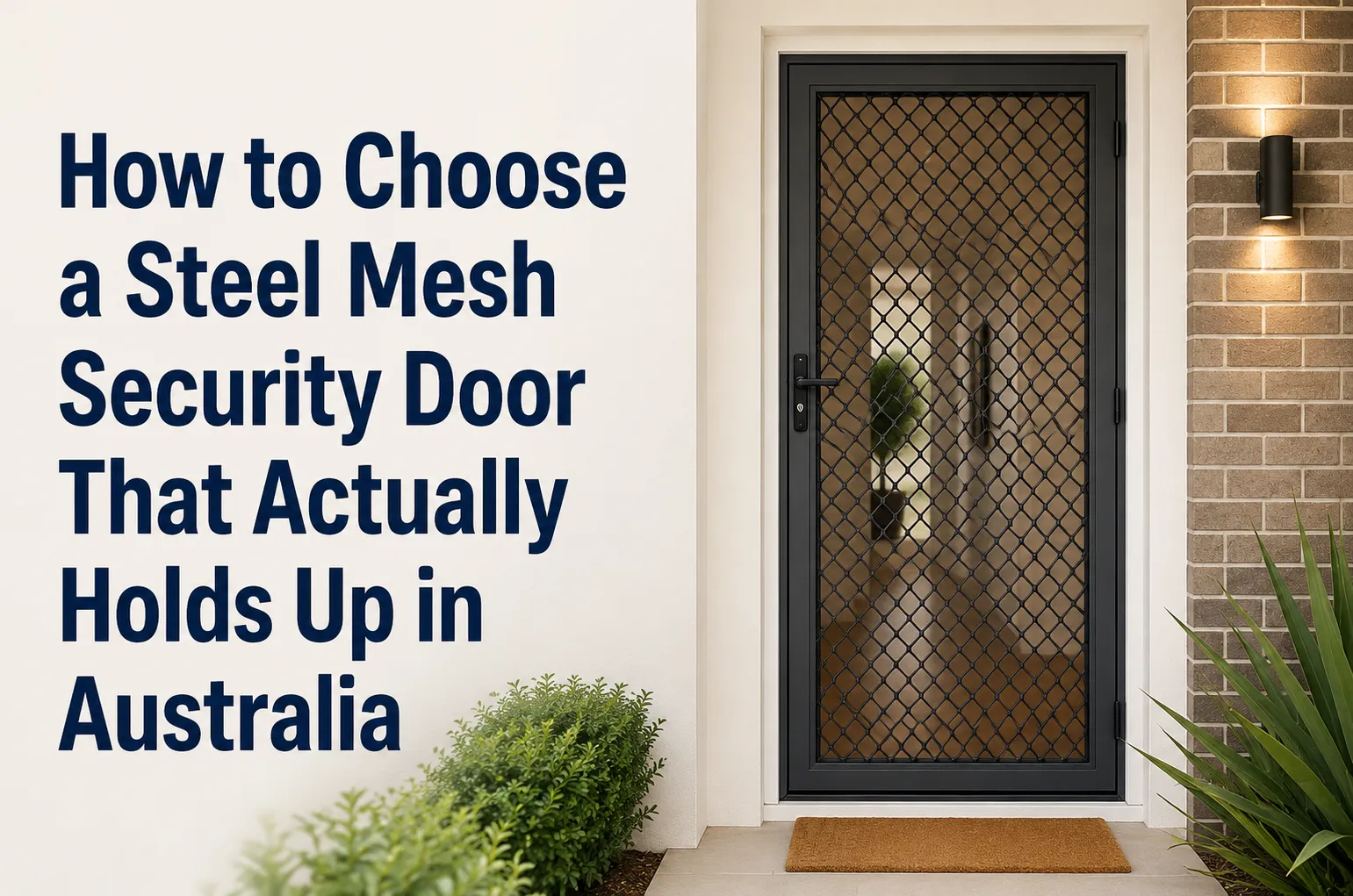
Not all 316 stainless mesh panels feel the same once mounted. A fine aperture blocks smaller insects but can throttle airflow and make a north-facing living room stuffy. A wider weave breathes better yet risks letting midges through in the tropical north.
| Mesh Aperture | Typical Airflow | Insect Exclusion | Suggested Use |
|---|---|---|---|
| 0.6 mm | Moderate | Midges, mozzies | Coastal Queensland, NT |
| 0.8 mm | High | Houseflies, moths | Temperate suburbs |
| 1.0 mm | Very High | Larger pests only | Bush blocks prioritising breeze |
Local climate should tilt decisions more than catalogue claims. Brisbane buyers, for example, often choose mid-grade 0.8 mm mesh paired with a black powder-coat that diffuses glare without hiding the view. Meanwhile, Adelaide hills residents living near native scrub shift toward fire-rated 0.6 mm stainless that passes the Bushfire Attack Level (BAL-40) ember test.
Homeowners comparing weave options can dive deeper into aesthetics, hardware finishes and screening regulations in ScreenGuard’s explainer on security screen doors—a handy reference when you want photos of installed examples rather than plain specs.
Installation Quality Is Half The Battle
Premium mesh and frames fall short if the door skews out of square. Onsite trimming, irregular jambs and loose striker plates create gaps that insects exploit and burglars prise wider. A few checks before the installer packs up:
- The door swings freely without grazing tiles or thresholds.
- Triple-locking bolts engage smoothly without shoulder force.
- Rivets or screw-clamps sit flush and show no burrs that could start corrosion.
- Water drains through sill weep holes rather than pooling under the mesh strip.
Professional installers often back these details with a workmanship warranty that sits beside the manufacturer’s structural warranty. It pays to file both certificates; the first covers fitment issues, the second the hardware itself.
Homeowners wanting extra context on style options—hinged, sliding or stacking—can scan ScreenGuard’s guide to security screen doors where photo galleries make decision-making less abstract.
Balancing Fire Safety And Natural Ventilation
Across bushfire-prone corridors—from the Blue Mountains to Perth’s outer suburbs—screen doors need to do more than block intruders. Ember attack and radiant heat can warp lower-grade aluminium or ignite plastic fixings. BAL-rated stainless mesh acts as a radiant barrier while still letting cool night air flush the house.
The trade-off is weight: heavier doors strain hinges if the framework isn’t up to spec. Look for stainless corner stakes, welded mitres or reinforced jamb channels so extra kilograms don’t sag over time. Matching door closers also prevent slams during sudden gusts—a common issue when a cool change rolls through after a 38 °C afternoon.
Mid-project revisions are harder once council compliance officers sign off framing. Owners sketching renovations should lock in door specifications early, then confirm the BAL rating aligns with the property’s latest assessment.
Ready to take the next step? Visit our Learn more to find out more.
Government Advice On Layered Home Security
Seasoned installers stress that a strong screen works best when paired with sensible habits—locked windows, trimmed hedges and clear sightlines to the street. For a broader checklist, households can cross-reference the NSW Police home security guidance. The resource runs through lighting angles, planter box heights and other seemingly small tweaks that frustrate opportunistic thieves.
Those tips cost little yet close the vulnerability gap between premium hardware and day-to-day living. Combine them with a BAL-appropriate, standards-tested screen and you end up with a front entry that feels airy in summer, safe during storms and compliant come fire season.
An effective door should fade into the background of daily life. When the screen you pick unlocks airflow, blocks pests and shrugs off both weather and forced entry, you barely notice it—exactly the outcome most homeowners want.


















Sign in to leave a comment.