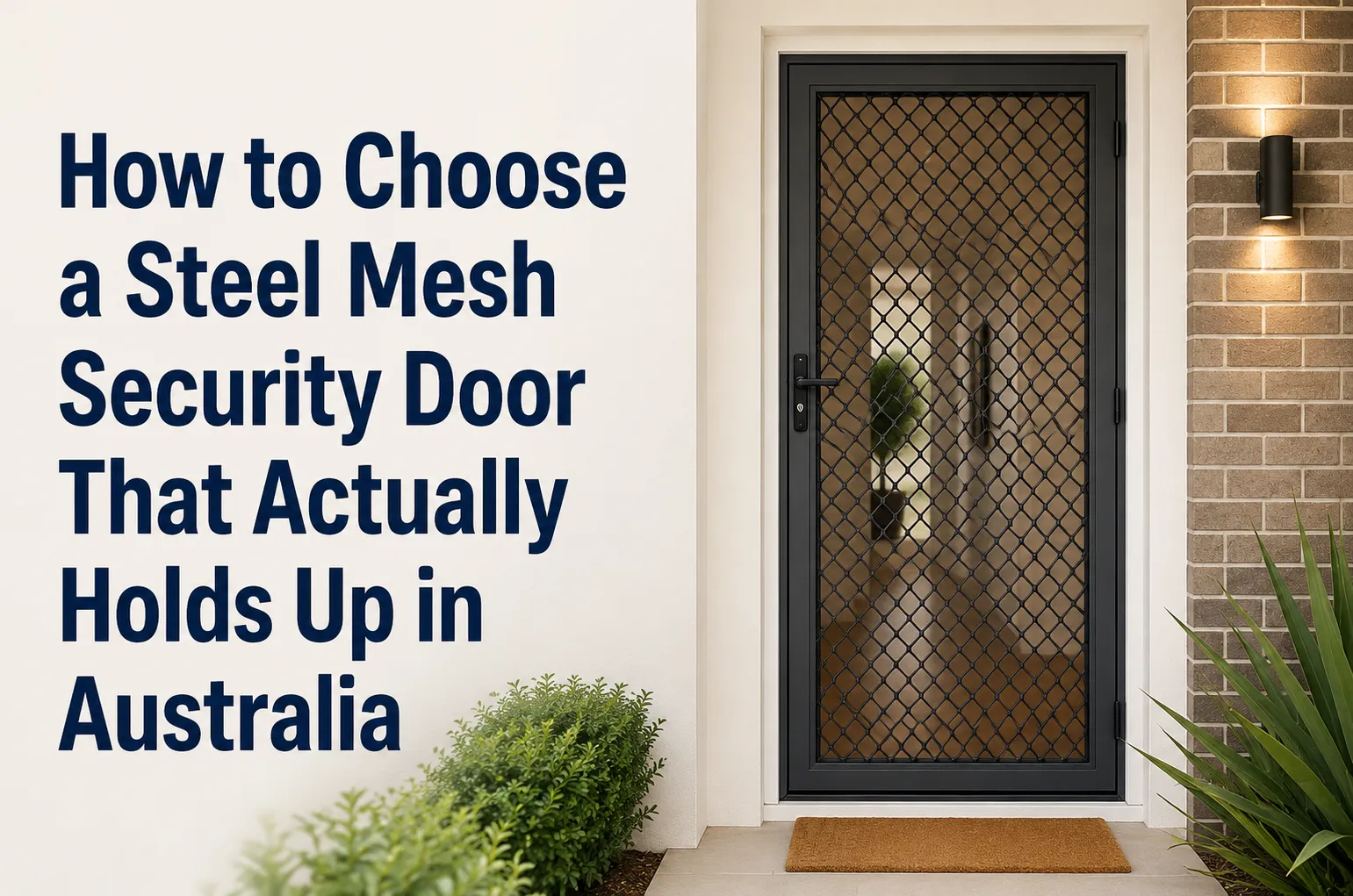

Steel mesh security doors sit in a tricky middle ground: they’re expected to be welcoming and unobtrusive, yet still act as a serious physical barrier at the front (or back) of your home. In Australia, they also have to cope with sun, coastal air, temperature swings, and the everyday wear that comes from being the most-used opening in the house.
If you’re looking for proven tips for choosing steel mesh security doors, the most useful approach is to think in systems rather than single features. A strong mesh alone isn’t enough if the frame flexes, the fixings are weak, or the lock only secures one point on the door. The best results come from materials, design, hardware and installation working together.
Below is a practical, non-salesy set of checks you can use to compare options, whether you’re upgrading from a basic flyscreen or replacing an older “security” door that never felt particularly secure.
Start with the mesh: grade, construction, and corrosion reality
Steel mesh is often described in broad terms (“stainless”, “marine grade”), but the details matter, especially in coastal and high-humidity areas.
Look for 316 stainless steel if corrosion resistance is a priority
316 stainless steel is widely used where extra corrosion resistance is needed (compared with some other stainless grades). Some systems specify 316 marine-grade stainless steel mesh and position it as a durability choice for Australian conditions.
Ask how the mesh is protected and finished
Beyond the base metal, coatings and finishes can affect long-term appearance and maintenance needs. Whether you choose one brand or another, the useful takeaway is to ask: what is the mesh finish, and what does it change about cleaning and longevity?
Don’t ignore visibility and airflow
The point of a mesh security door is that it lets you keep the main door open without feeling “closed in”. Compare how the mesh looks from inside looking out (and vice versa), and check whether the door design affects the sense of openness, especially if this is your main entry.
Check the frame and the way the mesh is retained
A common weak link in security doors isn’t the mesh, it’s what the mesh is mounted into and how it’s held there.
Frame strength and build quality matter as much as the mesh
For your own comparison shopping, translate that into questions you can ask any supplier:
- What is the frame material and construction method?
- How does the design resist flexing under load?
- How is the mesh fixed to the frame, and can the retention method be explained clearly?
Ask about corner strength and overall rigidity
Corners and joins are stress points. If a door can rack or twist, locks don’t align properly, and the “system” becomes easier to defeat (and more annoying to live with). You don’t need to be an engineer, just ask what the door does to resist racking, and whether the design has been tested as a complete assembly.
Standards and testing: what to look for (and how to sanity-check it)
In Australia, security screen doors are commonly assessed against Australian Standards referenced as AS5039 (security screen doors) and AS5041 (security screen windows grilles), and reputable suppliers often discuss testing in those terms.
Ask for evidence of compliance or test outcomes
A supplier should be able to point you to what standard(s) their product has been tested against and what that testing involved. The practical buyer’s move is to go one step further:
- Is the door system (mesh + frame + fixings + lock) tested, or only individual components?
- Are the test references current and clearly described?
- Can the supplier explain what the testing means for real-world use?
Treat vague language as a yellow flag
Phrases like “security grade” or “tough mesh” don’t tell you much. Look for specific references to standards, test types, and how the door is meant to perform under impact and leverage attempts.
Locking hardware: why “more points” can matter
Lock choice is one of the easiest ways to spot whether a door is designed as a true security product or just looks like one.
Prefer locks that secure the door at multiple points
Multi-point locking is often discussed as a meaningful upgrade over single-point locks because it engages at more than one point along the frame. For a buyer, the actionable checks are:
- Does the lock secure the door in more than one place?
- Are the locking points aligned with reinforced areas of the frame?
- Is the lock easy to use daily (because “secure” only helps if you actually lock it)?
Ask what happens over time
Hardware that feels smooth on day one can loosen or misalign as a house settles or if the door is used heavily. Ask how adjustments are handled, what maintenance is recommended, and what parts are most likely to wear.
Fit and installation: the unglamorous deal-breaker
Even excellent products can underperform if they’re poorly measured, poorly fitted, or installed into compromised door surrounds.
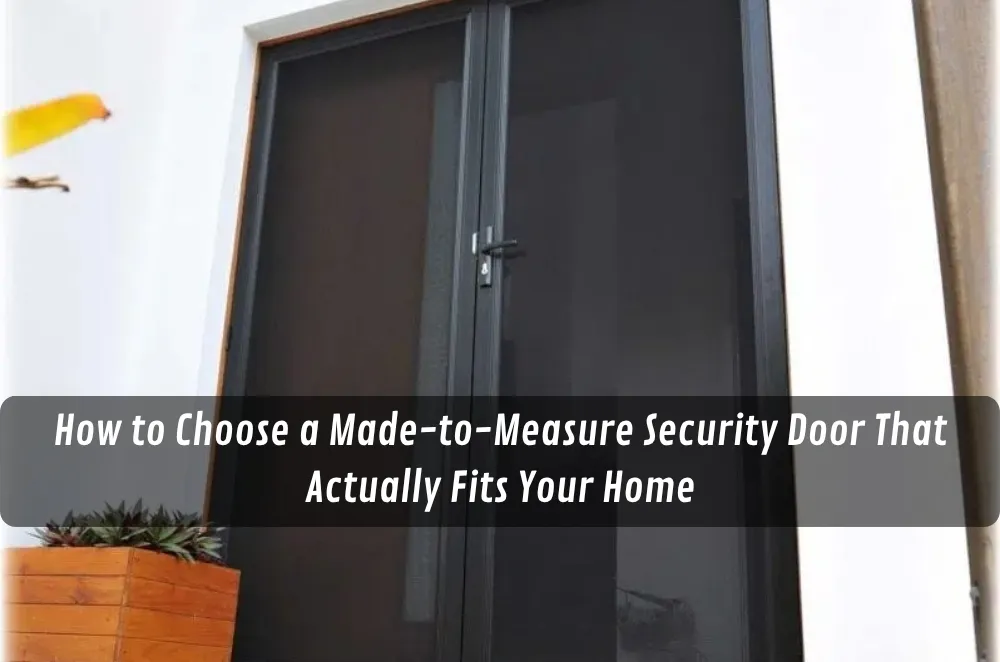
Confirm the door is made to measure
Security doors need a precise fit so gaps don’t become leverage points and locks align properly. You want a process that prioritises measurement accuracy and a secure fit.
Look at the door surround, not just the door
If the existing frame is out of square, rotted, or loose, a new security door can’t compensate. A good installer will flag issues and explain what needs fixing first (or what won’t be included).
Ask what’s included, and what isn’t
Some suppliers explicitly separate the product supply from structural repairs or building modifications. This matters because “surprises” often live in the doorway rather than the door.
Environment and use-case checks Australians should prioritise
Coastal and high-pollution areas
If you’re near the ocean or in an industrial corridor, corrosion resistance and cleaning routines become more important. Ask what maintenance is recommended and how often (and make sure it’s realistic for you).
Bushfire-prone regions
If you’re in a bushfire-prone area, you may see products described as bushfire rated and referenced against Australian bushfire construction standards. If this is relevant to your property, don’t rely on marketing language, ask exactly what rating/testing applies to the specific door configuration you’re choosing.
Kids, pets, and everyday living
Security is one part of the story; livability is the other. Consider:
- Will the handle height and lock operation work for your household?
- Is the door likely to be slammed by kids running in and out?
- Do you need a solution that holds up to pets leaning or scratching?
A quick comparison checklist you can use on quotes
When you’re looking at two or three options, these questions tend to cut through the noise:
- What grade/type of stainless steel is the mesh, and how is it finished?
- How is the mesh retained in the frame (and how does that resist prying)?
- What standard(s) is the complete door system tested against, and what do those tests cover?
- What locking system is used (single vs multi-point), and how many locking points engage?
- What is the frame construction (material, rigidity, corners/joins)?
- Is it made to measure, and what does installation include/exclude?
- What maintenance is recommended for your environment (coastal, high dust, etc.)?
Key Takeaways
- Treat steel mesh security doors as a system: mesh, frame, retention method, lock hardware, and installation all matter.
- Look for specific material details (for example, 316 stainless steel where corrosion resistance is important).
- Ask for clear standards/testing references (commonly AS5039/AS5041 for security screens) and what the tests mean in practice.
- Multi-point locks can improve resistance to forced entry compared with single-point locks, and are worth comparing between options.
- Installation quality and doorway condition can make or break performance, confirm what’s included and what isn’t.



























Sign in to leave a comment.