

A garden can feel completely different when the right music fills the space. Restaurants use outdoor audio to create a welcoming atmosphere for diners. Resorts place speakers across landscaped areas to improve the guest experience. Homeowners install sound systems around patios, lawns, pools, terraces and outdoor seating zones.
A well planned system allows music to spread evenly without requiring a large speaker in one corner The result feels more natural because the sound becomes part of the surroundings rather than overpowering them.
Yet many outdoor audio systems begin to lose performance after a few months. One speaker may sound weaker than another. Connections become unstable. Crackling appears after heavy rain. Volume levels may change without warning. In some cases, the entire system stops working.
The speakers often receive the blame, but the real problem may be hidden below the surface.
Outdoor audio depends on more than weather resistant speakers. It also requires an underground speaker wire that can carry the signal through changing temperatures, moisture, soil pressure, irrigation, and regular garden activity. A high quality speaker cannot deliver consistent sound when the cable connected to it has started deteriorating.
This becomes especially important in larger properties, hospitality spaces, clubhouses, farmhouses and outdoor commercial areas. These systems often use long cable routes and multiple speakers. A small weakness in the wiring can affect a large part of the setup.
As outdoor living and landscape audio systems continue to grow in 2026, cable selection has become a central part of reliable system planning. Buyers now need to consider not only sound quality, but also how well the complete system will perform after several summers, monsoons and landscaping cycles.
So, what separates a lasting outdoor installation from one that requires repeated repairs?
Outdoor Conditions Change the Rules of Audio Wiring
Indoor speaker systems operate in relatively stable surroundings. The cable remains protected from rainfall, soil, direct sunlight, gardening tools, insects, and major changes in temperature.
Outdoor wiring does not receive the same protection.
A cable installed across a garden may face monsoon rain, sprinkler water, soil movement, sunlight, sharp stones, plant roots, pests and accidental damage during landscaping. Even when the cable is hidden underground, it remains exposed to moisture and physical pressure.
Ground conditions can also change throughout the year. Soil may become soft and waterlogged during the rainy season, then dry and compact during hotter months. These repeated changes can place stress on cables especially when the outer jacket is not made for underground use.
This is why ordinary indoor wire should not be treated as a suitable speaker wire for garden installations. Its outer covering may not be designed to remain in damp soil or withstand long term outdoor conditions. It may perform properly at first, but gradual deterioration can begin without any visible warning.
Moisture is one of the most serious concerns. Water may enter through a damaged jacket, an exposed connection, a poorly sealed terminal, or an unsuitable underground joint. A minor cut caused during installation may also create an entry point for moisture.
Once moisture reaches the conductor, oxidation can begin. Over time, this may increase electrical resistance and weaken the connection. The signal reaching the speaker may become inconsistent particularly when the cable run is long.
The listener may notice uneven volume, sound distortion, intermittent performance, reduced clarity, or a complete loss of audio. These issues may appear only during wet weather at first, which can make the actual cause difficult to identify.
Poor cable placement creates another risk. A wire routed too close to the surface can be damaged by a garden shovel, lawn edging tool, tent anchor, or landscaping equipment. Cables placed near irrigation lines or areas with poor drainage may remain exposed to moisture for longer periods.
The challenge becomes greater in large outdoor areas because the cable often travels farther. A single garden audio system may connect speakers across lawns, pathways, pool areas, outdoor dining zones and landscaped corners. Each additional metre increases the importance of cable quality, conductor size, joint protection and route planning.
Longer cable runs also create more opportunities for damage. The route may pass below pathways, around trees, near water features or through areas that are regularly maintained. Planning these sections carefully can reduce the risk of future repairs.
The speaker may be visible, but the reliability of the system is often decided by the cable hidden beneath it.
Underground Speaker Wire Is Made for Demanding Environments
Not every cable marked for outdoor use is automatically suitable for underground installation.
An outdoor rated cable may be designed to tolerate sunlight, humidity or occasional water exposure when installed above ground. A direct burial cable, on the other hand, is designed for underground use, provided it is installed according to the manufacturer’s instructions and relevant local requirements.
This difference matters because outdoor exposure and underground exposure create separate challenges. A cable fixed along an exterior wall mainly faces sunlight, heat, rain and humidity. A cable placed below the ground must also handle soil contact, pressure, standing moisture, abrasion, and possible movement around the installation route.
Major cable manufacturers list indoor and outdoor suitability, wet location use, sunlight resistance, and direct burial as separate product characteristics. This is an important detail because one rating does not always confirm the others.
For example, a cable may resist sunlight but may not be approved for direct contact with soil. Another may tolerate moisture inside a protective conduit but may not be suitable for burial without additional protection Buyers should therefore examine the technical details rather than relying only on the word “outdoor” on the packaging.
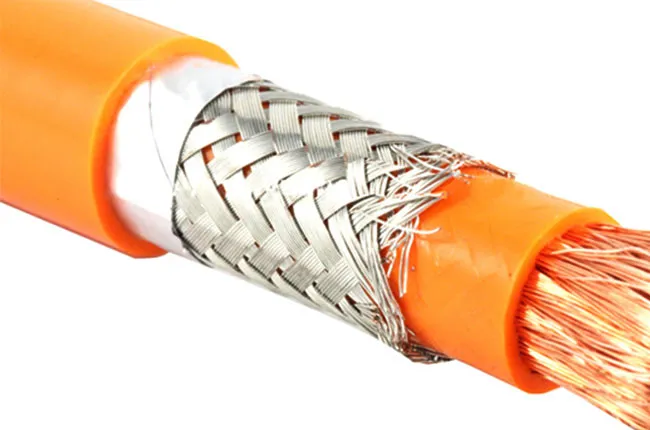
A suitable underground speaker cable outdoor solution normally uses a durable outer jacket that helps protect the internal conductors from moisture, abrasion, and soil contact. The jacket needs to remain flexible enough for routing while being strong enough to tolerate the surrounding environment.
Depending on the product and application, the cable may also include water blocking materials, additional insulation or construction intended for difficult outdoor environments. Some installations may still benefit from conduit, particularly where the route passes below a driveway, walkway, parking space, or frequently maintained garden area.
The conductor material matters too.
High conductivity copper supports reliable signal transfer between the amplifier and speakers This becomes important when sound must travel over longer distances without unnecessary resistance or performance loss.
Stranded conductors also offer flexibility, which makes the cable easier to route around garden features, corners, walls, trees, raised beds, and underground pathways. Flexible construction can make installation more manageable while reducing unnecessary stress on the conductor during bends.
Cable thickness should also be selected carefully. A smaller outdoor system with short runs may have different requirements from a resort, restaurant, or landscaped property with speakers placed far from the amplifier. Longer routes, lower speaker impedance, and higher power requirements may call for a thicker conductor.
This is why cable choice should consider the complete system rather than only the speaker model. Installers need to review the route length, amplifier output, number of speakers, expected sound level, speaker impedance, and surrounding conditions.
Professional speaker cable ranges are available in different configurations for indoor and outdoor use, direct burial, commercial installations, and other application specific requirements. Belden, for example, lists separate speaker cable options for indoor and outdoor use as well as direct burial applications.
The same careful approach should be followed when planning a waterproof speaker wire installation. The term waterproof should not refer only to the cable jacket. Connections, joints, speaker terminals, entry points, and junction boxes also need suitable protection.
A durable cable can still fail when connected through an exposed splice or loosely sealed terminal. For this reason, reliable outdoor audio depends on the complete installation method, not one product feature alone.
When the right cable, connections, and route are planned together, the system gains a much better chance of delivering clear and consistent sound through changing seasons.

























Sign in to leave a comment.